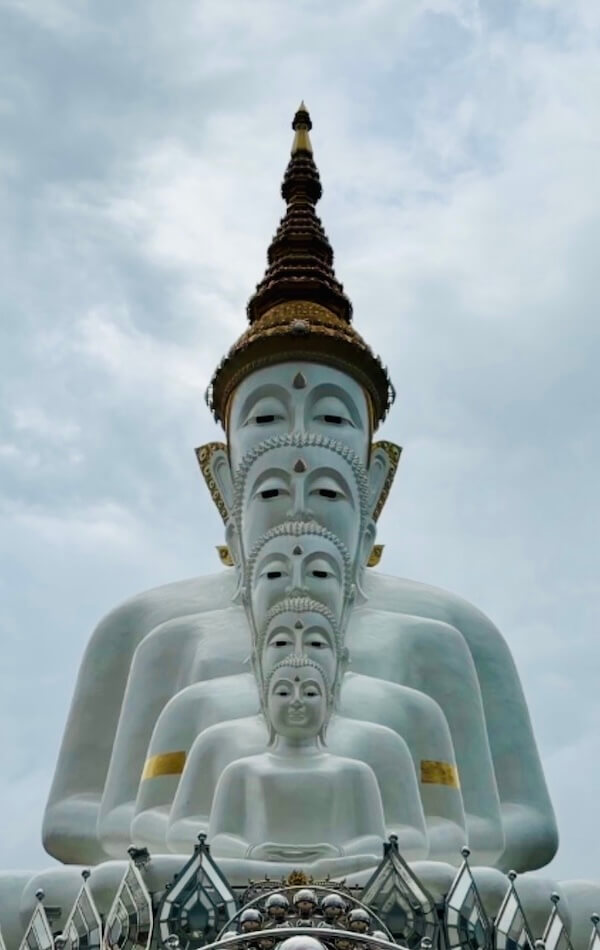
A narrow, 300-kilometer province whose mountains divide the Isan Plateau from the rest of Thailand, Phetchabun is the definition of a borderland. Reaching it requires at least a four-hour drive from any of Thailand’s major cities, but its isolation makes it all the more worth visiting.
We were heading north to Loei and Uttaradit provinces as part of a two-week road trip around Isan, and driving through Phetchabun was a far more attractive route dthan the fast, but very dull, drive straight north from Bangkok through the Chao Phraya River valley. But if it hadn’t simply made logistical sense on this trip, we might have missed this worthy province altogether.
In the south of Phetchabun, we visited Si Thep, a 1,500-year-old city rediscovered only in the early twentieth century. As we headed further north to the mountains of Khao Kho, the temperature dropped as the elevation climbed, but we warmed ourselves with Wichianburi’s famous grilled chicken.
In the Phetchabun highlands, we explored the striking modern temple complex of Wat Phra That Pha Sorn Kaew, and rewarded the kids with a few of Khao Kho’s less highbrow, more kid-friendly attractions. Hello, Amazing Dinosaur.
Prefer to watch the journey? Check out our full family road trip through Phetchabun below:
Getting to Phetchabun, With Seafood on the Side
Phetchabun is a solid four-hour drive from Bangkok, and there’s just no way to avoid it, though stopping for lunch halfway is a nice way to break up the drive. There are many good options, but we went with Ae Fried Fish near Ang Sep Lek reservoir, a reminder of one of the great pleasures of traveling in Thailand: extraordinary food is available almost anywhere.
We ate by the side of a busy road, hours from the sea, enjoying prawns so delicately prepared they were closer to ceviche than anything fully cooked. Not surprisingly, the owner recommended the namesake deep-fried fish. This isn’t always the most inspiring preparation, but somehow an almost citrusy brightness came through the sweet, crisped meat. Isobel seemed to thoroughly enjoy crunching through the heat-brittled bones.
Si Thep Historical Park: Recovered from the Jungle
We arrived at Si Thep Historical Park later in the afternoon. Putting aside the entirely relevant question of midday heat, there is an aesthetic principle here too: ruins look much better when the sun is low on the horizon.
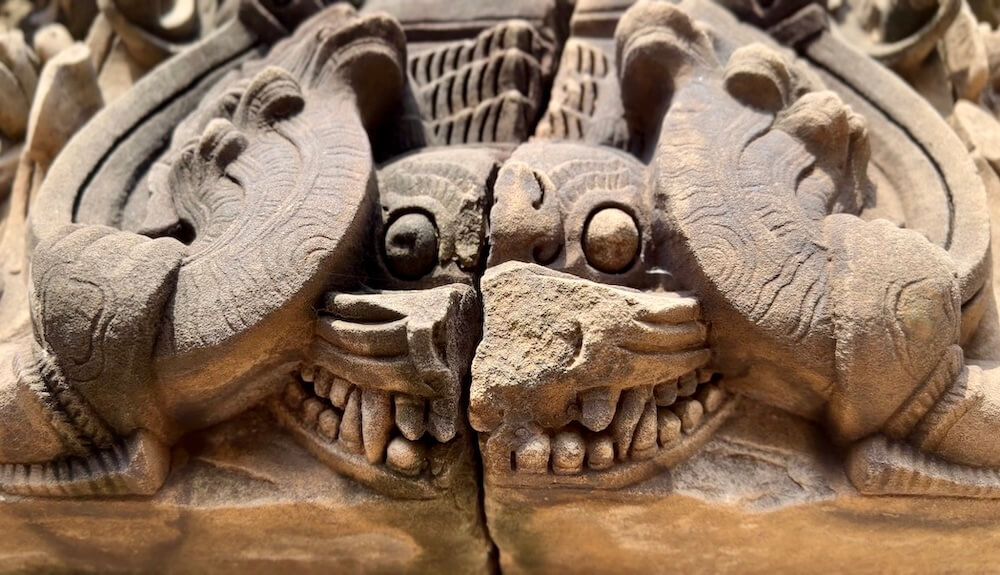
The historical park runs an electric shuttle that carries visitors from the parking and ticketing areas to the heart of the park. The short drive includes a recorded overview of the site in Thai. I expect Kat understood more than I did, my understanding was limited to scattered words like “art,” “culture,” and “ancient.”
Si Thep’s Prehistoric Excavations
Our driver initially drove us past a few of the Khmer-era prangs before stopping at a small building. He gestured for us to go inside, telling us we had ten minutes. The structure sheltered an excavation containing several skeletons: a human, an elephant, and a dog.
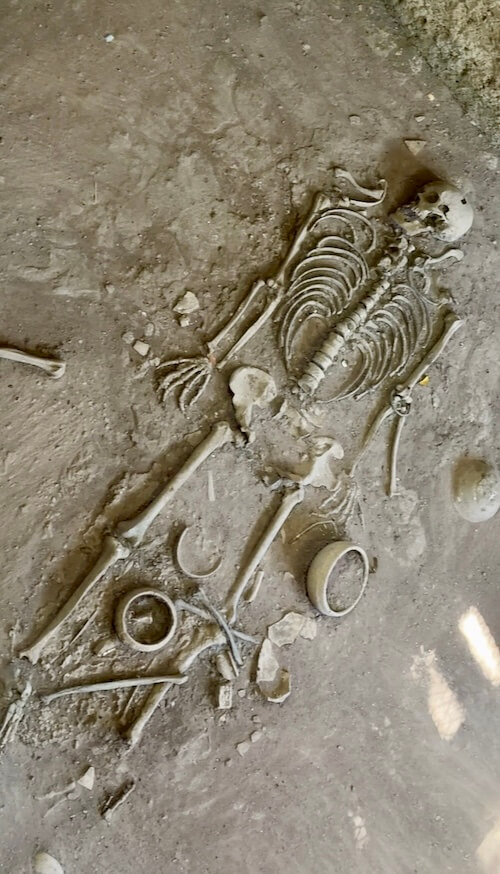
There was no signage explaining what we were looking at, but later research revealed it to be the burial site of a prehistoric woman. She was nearly six feet tall, impressive at any time but in the prehistoric she would have been truly astonishing.
From the doorway of her enclosure, we could see the 12th-century Khmer-era towers, and the even-earlier Dvaravati foundation of the massive Khao Khlang Nai mound. Millennia of history all visible from the shade of a White Meranti tree.
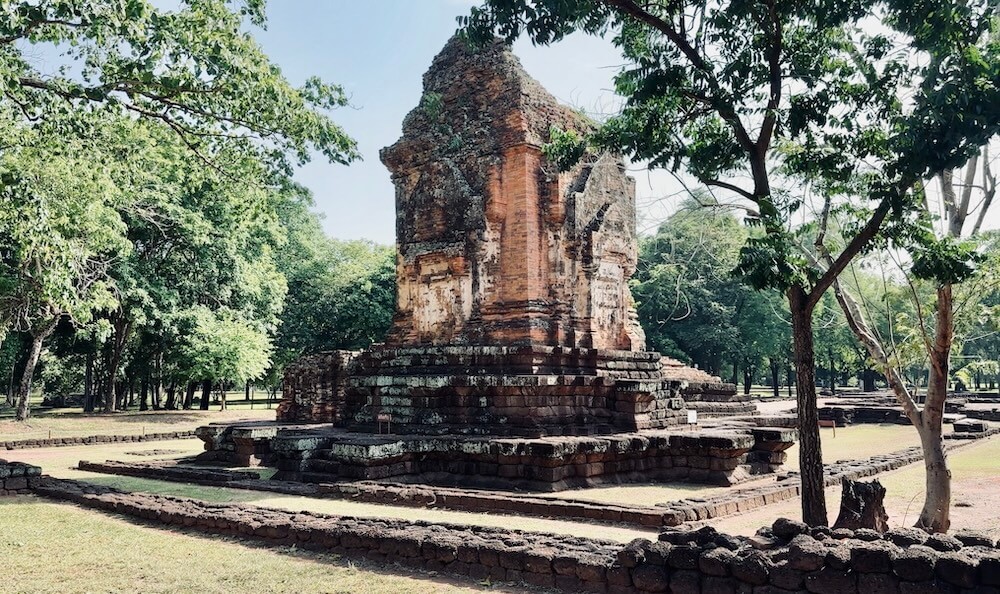
Beyond the Khmer prangs and Khao Khlang Nai, not much else of Si Thep remains standing. The lines of stepped foundations, formed of blocks of black laterite, suggest how extensive the city must have once been. That “laterite” is the only type of stone the kids can reliably identify tells me we’ve visited a lot of Southeast Asian archaeological sites.
Khao Khlang Nai’s Romantic Mountain of Stone
The later Khmer architecture is better preserved, but for me, the most evocative part of the historical park is the weathered stone base of Khao Khlang Nai.
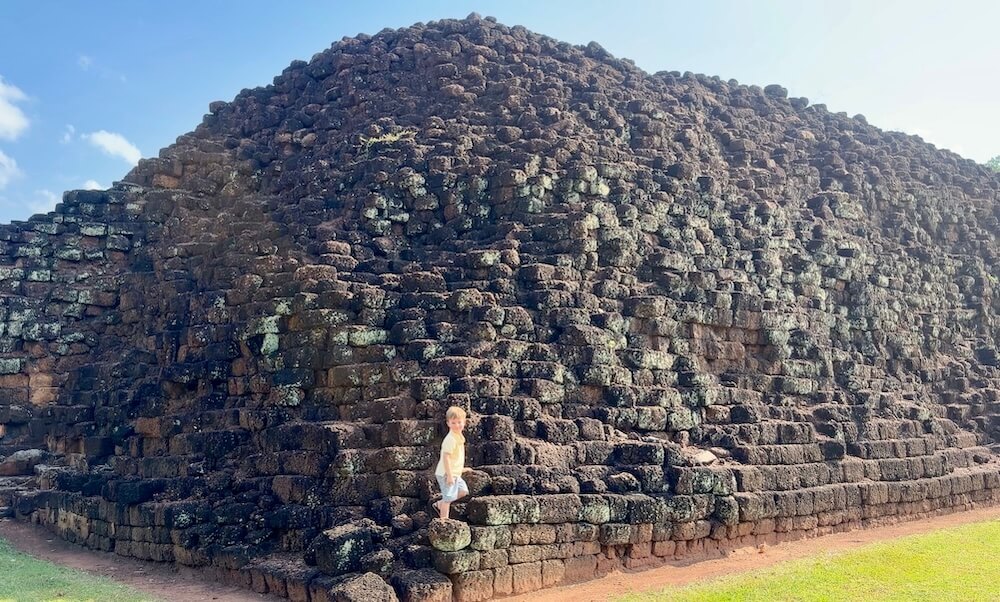
Its sheer mass, rising out of the manicured lawns that surround it, could easily be mistaken for a natural hill. A closer inspection, however, leaves no doubt that human hands shaped and stacked these stone blocks. Out of respect for that craft, I redoubled my efforts to keep Charlie from trying to summit the mound.
Khao Khlang Nok: The Perfectly Preserved Stupa
With its rigid geometry and sharp lines, there is no mistaking Khao Khlang Nok for a natural hill. Its stone blocks are in such fine condition that it looks almost like a modern reconstruction.
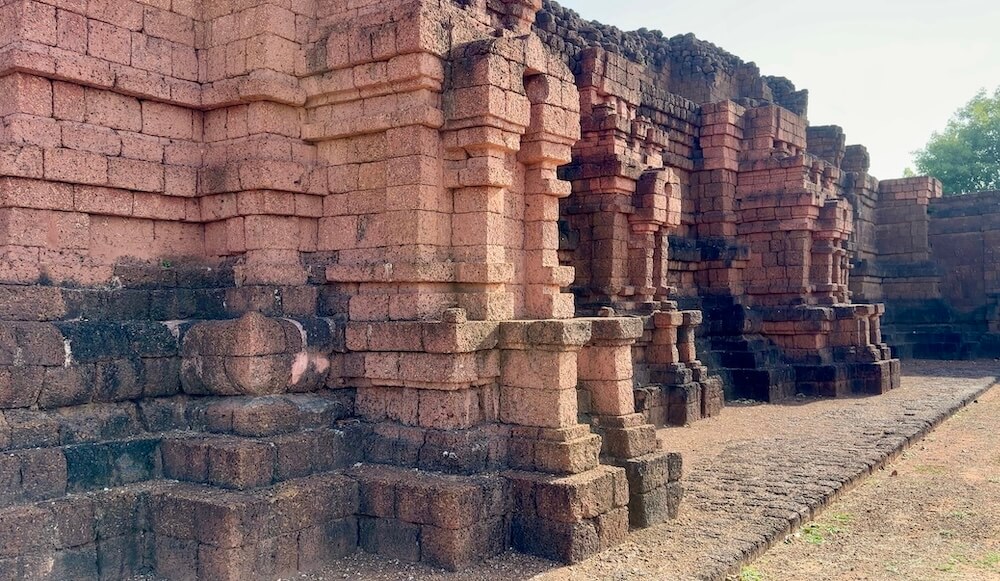
Khao Khlang Nok owes its superb preservation to the fact that, until very recently, everyone believed it was a natural hill. Only in 2008 did archaeologists begin to excavate the green mound outside town, which had, for more than 1,000 years, protected all but the very top of the structure from the elements.
It’s a marvelous site, and one we had almost entirely to ourselves. Perhaps because it sits a couple of kilometers outside the main park, it didn’t have any other visitors. For half an hour, we ambled around the remarkably well-preserved base of this monumental Dvaravati stupa, the largest such structure ever found in Thailand.
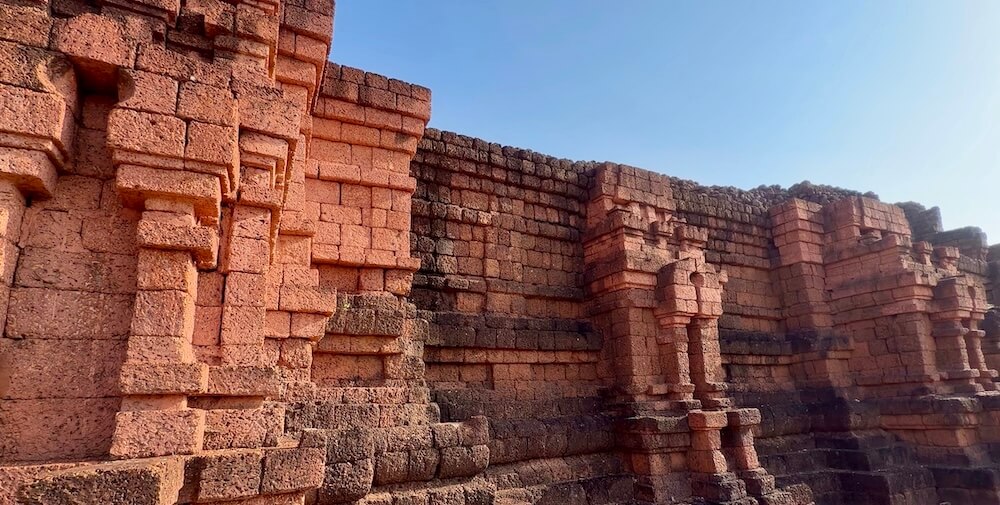
That something so colossal–64 meters on each side and 20 meters tall–went undiscovered until less than two decades ago is a thrilling reminder of how much more there is to discover about early Southeast Asian cultures.
Wichianburi Chicken: Thailand’s Best Roast Chicken
We traveled north from Si Thep to Wichianburi, where we spent the night among the rice fields at the lovely Hug Home Resort. Thailand has so many wonderful places like this thanks to its enormous domestic tourism industry. Almost anywhere we’ve traveled, we’ve found stylish and affordable places to stay, though Hug Home exceeded even that high bar.
But why Wichianburi? For us, it was simply about as far as we could reasonably travel that day, but a good second reason is the local chicken. Wichianburi is famous for its roast chicken, typically grilled roadside: a whole chicken spread between bamboo splints and cooked at an angle over charcoal.
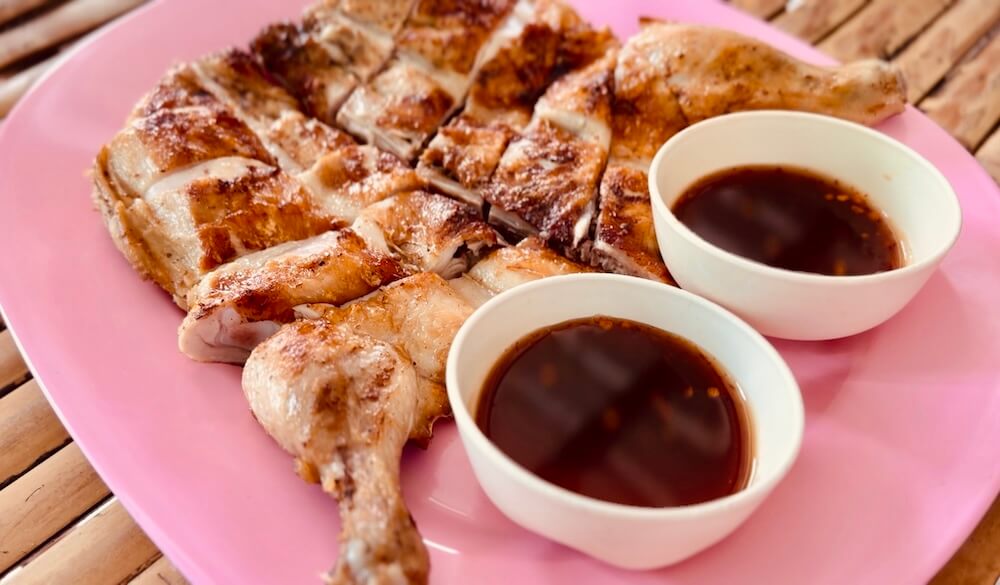
This method ensures crispy skin and tender meat, and Wichianburi has developed what is perhaps the most famous version in the country. Its marinade is more garlic- and herb-forward than other versions, but it’s the dipping sauce (Nam Jim Makham) that really makes the dish. Phetchabun is famous for its tamarinds–an enormous golden tamarind monument sits next to a car-battery wholesaler on the provincial capital’s main street. Wichianburi chicken uses boiled tamarind pulp, palm sugar, fish sauce, chili flakes, and toasted crushed rice.
We ordered two chickens and a som tam, which easily fed the family. Isobel declared it some of the best chicken she’d ever eaten. Not bad for less than $10.
Petchabun Intrachai Archaeology Hall: Charming Cultural Stop in the Capital City
The attendant ran ahead, switching on lights and A/C units, while I sat transfixed, watching a recording of one of Phetchabun’s bygone water ceremonies: men in brocaded silk emerging from beneath the river’s surface, carrying a Buddha on a palanquin.
I’m not sure how long we watched, but it was long enough for the attendant to switch on the whole museum, find the director, and bring her over to introduce herself. She had, we suspect, put on high heels and a bit of jewelry as well. There’s a reasonable chance we’ll appear in next season’s brochures.
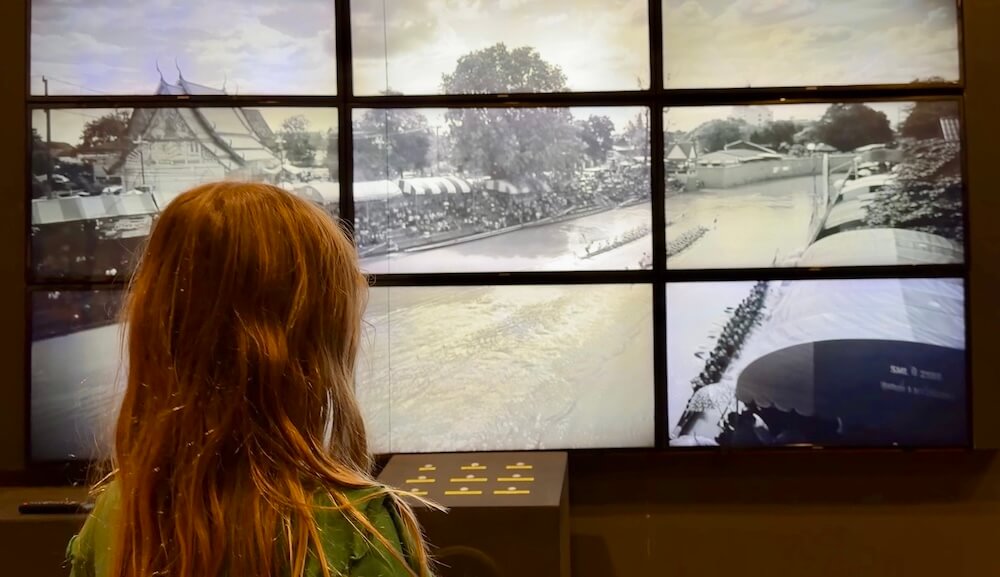
The museum covers the full sweep of Phetchabun’s history, from prehistoric excavations to communist insurgencies to the best examples of local cuisine. Audio, video, dioramas, and life-size recreations had the kids running from gallery to gallery with more than usual enthusiasm.
Among the most compelling exhibits was a hall of local myths, seven or eight stations sharing stories and legends about Phetchabun place names and traditions. The English translations are shaky, while the Thai, laden with cultural terms and place names, was beyond even Kat. Laden with place names and obscure cultural references, the stories were even more fun for their abrupt delivery.
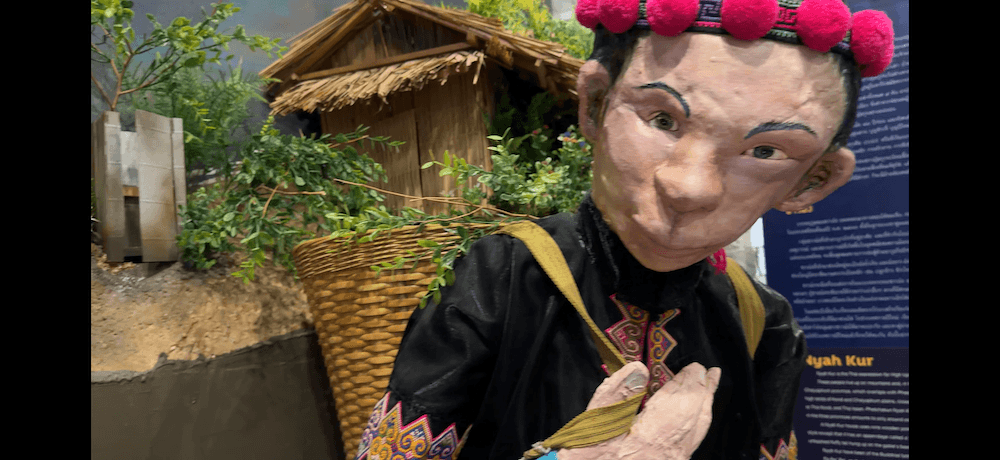
Why does the Phetchabun governor only serve a three-year term? Because an early city leader, following the custom of burying alive under the newly-built city walls anyone with certain auspicious names, denied a final meal to two novice monks who had volunteered their lives on behalf of the city. Their outraged abbot cursed the governor and his successors, warning that disaster would strike should they seek a longer term. Lots to unpack there.
The Odd Roadside Attractions of Khao Kho
Leaving Phetchabun Town behind, we began our climb into the mountains of Khao Kho. July might not be Thailand’s hottest month, but it’s not known for being especially comfortable either. I watched with something bordering on disbelief as the temperature on the dashboard kept dropping as we wound our way higher.
The cooler temperatures have made these highlands a popular summer retreat, far from Bangkok but more accessible than the high mountains of Northern Thailand. This has apparently earned Khao Kho the nickname “the Switzerland of Thailand.” News to me, but Khao Kho seems to be marketed almost entirely to domestic tourists.
Amazing Dinosaur: The Crossover Event You Never Knew You Needed
Thai tourists do love a theme park and Khao Kho certainly caters to those tastes. With eyes bulging, the kids pointed out rainbow-colored alpine slides and adventure rope courses as we sped past. We skipped these, but the kids had earned a reward for enduring long hours in the car. Once we saw the name on the map, there could be no destination other than Amazing Dinosaur.
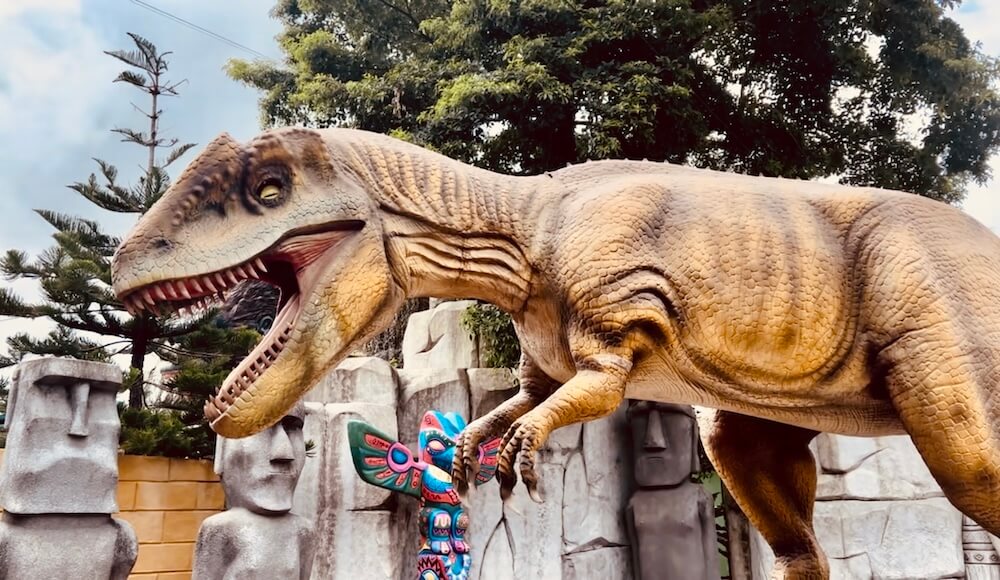
I’d love to talk to the entrepreneur behind this. It’s insanely eclectic, but surprisingly well executed. Dinosaurs seem to be the unifying principle, but the job of bringing together Ancient Egypt, Medieval Japan, Easter Island, King Kong, a shark tank, and 1960’s LSD culture is a lot to weave together. The kids, unsurprisingly, ate it up.
Wat Phra That Pha Sorn Kaew
We caught our first glimpse of Wat Phra That Pha Sorn Kaew many miles before we reached it. At first, it looked just like so many other of Thailand’s hillside shrines, but as we drew closer, its scale and unique design revealed why this has become Phetchabun’s most recognizable symbol.
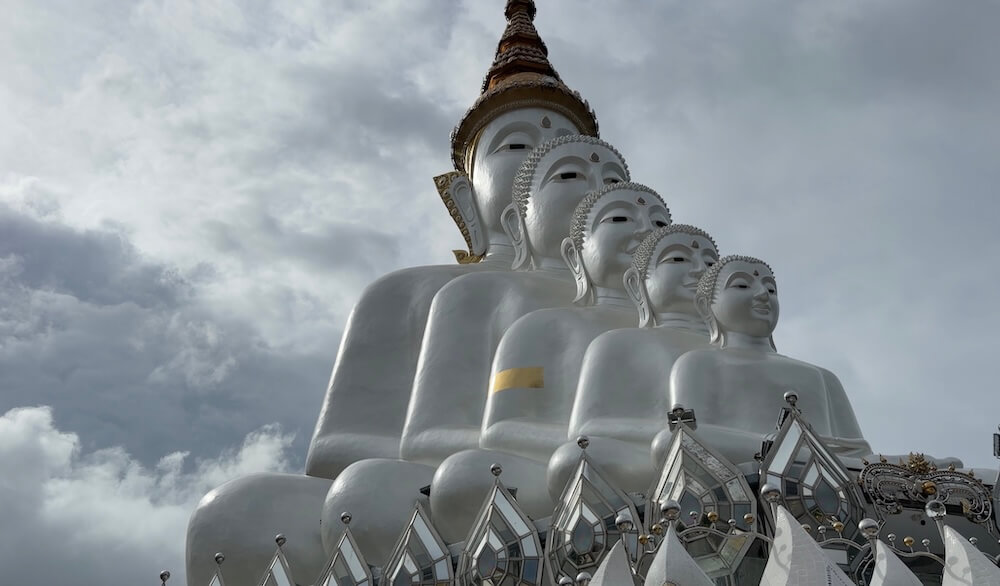
Perched high on a ridge, the five glimmering-white nested Buddhas of Wat Phra That Pha Sorn Kaew look out over the Phetchabun highlands. It’s a stunning creation, relying perhaps on size more than subtlety, but it works.
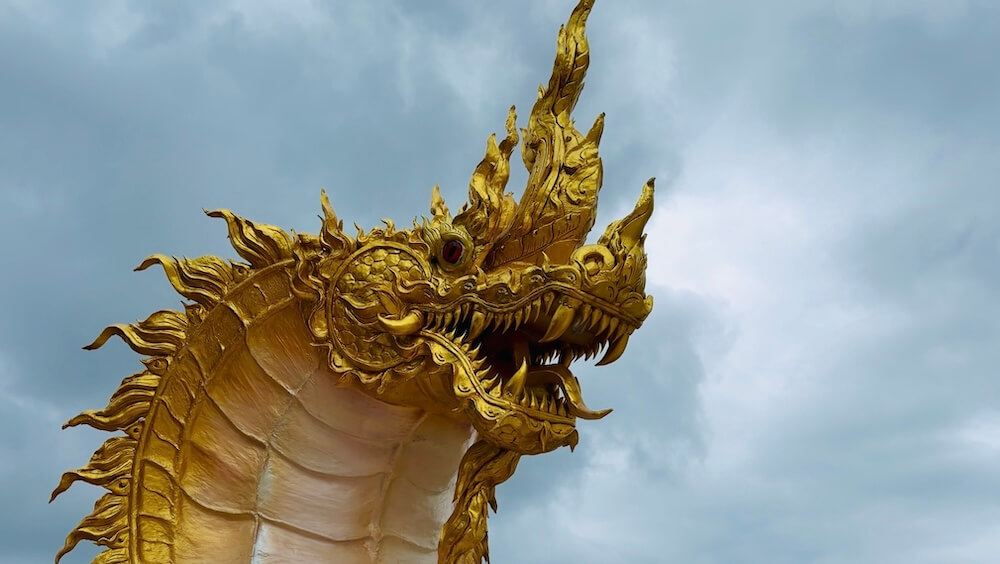
The rest of the complex adopts a different decorative approach: more than five million glittering tiles, gems, and crystals adorn the Mosaic Lotus Pagoda while golden chedis rise alongside it.
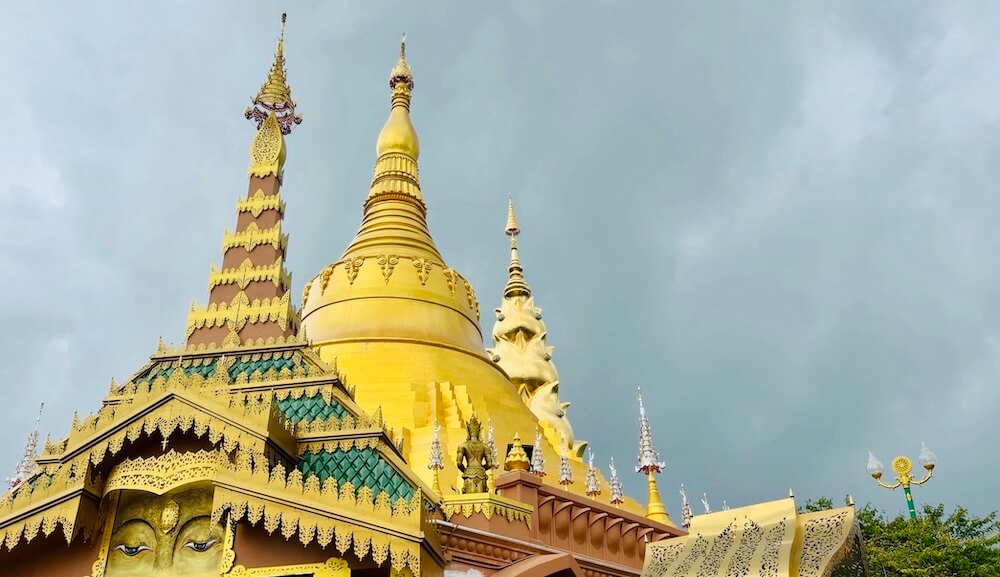
The fluid style and heavy ornamentation reminded me very much of Gaudí’s work in Barcelona, and I’d be very surprised if that weren’t a major influence here.
Like Chiang Rai’s White Temple and others of Thailand’s most interesting religious sites, Wat Phra That Pha Sorn Kaew is quite new. Twenty years ago, only a couple of thatched cottages dedicated to the study of Dhamma meditation sat where now stands a vast, multi-million dollar temple complex.
There is something vaguely commercial about the whole enterprise, but not any more than most well-trafficked Buddhist wats. I suspect this is true of any religious site still inhabited by belief. Some of the more energetic Western churches, as near as I can tell, are barely concealed business operations, while the tasteful and restrained churches and cathedrals I love have long been divorced from any real religious function.
I’ve come to see cash boxes, donation plates, raffles, blessings, and indulgences as signs of living belief, rather than what I might have once thought of as a bit crass. Wat Phra That Pha Sorn Kaew is a product of devotion, and I imagine the devotees are even more pleased to have contributed to its construction than I am to simply enjoy my visit to this special place.
Khao Kho’s Sea of Clouds
Thunderstorms were building behind the five Buddhas as we drove back to our hotel for the night. Like Wat Phra That Pha Sorn Kaew, it sat high on a ridge overlooking a green valley checkerboarded with farms and orchards.
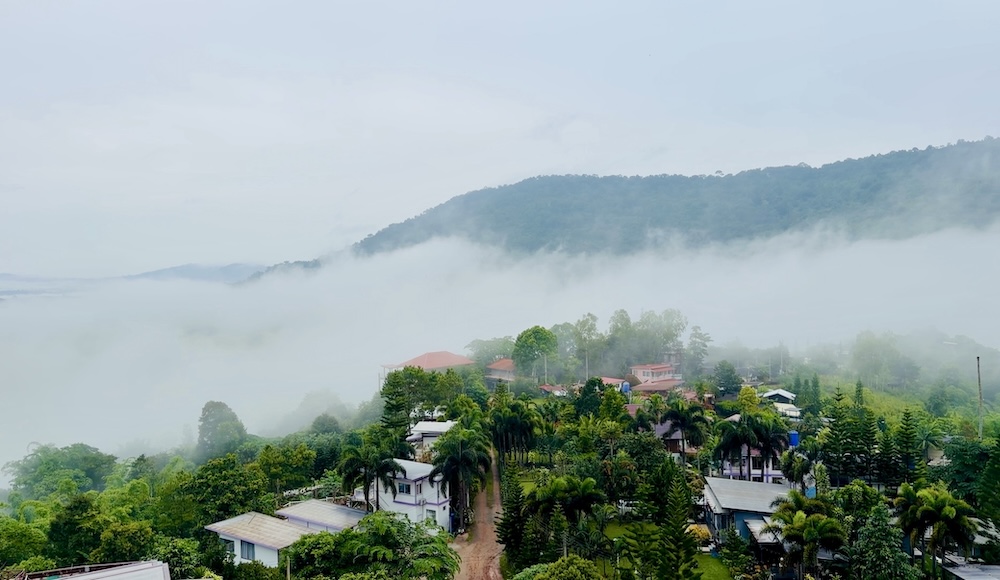
The monsoon season is a time for repairs and rebuilding. At many of the hotels, including ours, there were more builders than guests, but we all enjoyed the same view. Like Phu Lanka, Khao Kho is famous for its sea of clouds. We watched them roll in all evening. By morning, the whole world was covered in a whirling mist.
As the sun rose, the clouds began to break. The valley beneath us again revealed itself, and we watched as the farms below came to life. It was time for us to be on our way too. We packed our bags and prepared for the drive north to higher peaks, the border mountains of Phu Soi Dao.
Plan Your Trip to Phetchabun
Some links below are affiliate links. At no extra cost to you, we earn a small commission if you make a booking, which helps us keep our family on the road. Thank you for your support!
Getting There
By Car: A self-drive road trip via Highway 21 is the most convenient way to explore Phetchabun province. From Bangkok, the drive to Si Thep Historical Park takes roughly 3.5 to 4 hours. From Si Thep, continuing north to Khao Kho takes another 2 hours.
The Route: Highway 21 is a well-maintained main arterial road, but the final ascent up the mountain switchbacks to Khao Kho along Highway 2196 involves steep inclines and sharp turns. Exercise extra caution during rainy season mist.
For Thailand, and indeed, much of East Asia, 12go.asia is by far your best resource for booking transportation of all kinds..
Where to Stay
Near Si Thep Historical Park: Options near the park are very limited, but improve if only a 20-30 minute drive out.
Set among peaceful rice fields near Highway 21, Hug Home Resort provides cozy, air-conditioned wooden chalets just minutes from Wichianburi’s famous chicken stalls and Si Thep. It is an ideal, quiet roadside stay for families breaking up the drive toward Khao Kho.
Accommodation along Khao Kho’s high-elevation ridge favors boutique resorts, eco-cabins, and family homestays designed to maximize sunrise valley views.
Campson Heaven Resort A scenic, cool-mountain village along Highway 12 in Khao Kho, famous for its elevated hillside cafes, foggy valley views, and close proximity to Wat Phra That Pha Sorn Kaew.
เข้าค่าย Cafe & Resort A charming, camping-themed mountain getaway in Khao Kho featuring cozy glamping tents, outdoor fire pits, and an aesthetic cafe overlooking rolling green hills.
When to Go
The “Sea of Clouds” Season (July to November): Rainy season through early winter brings high humidity and cool mountain mornings, creating the classic temperature inversion fog that fills the Khao Kho valleys.
Sunrise & Mornings: Plan to be at your viewpoint or balcony by 5:45 AM to catch the cloud inversions. Visit Wat Phra That Pha Sorn Kaew right at its 8:00 AM opening to beat both the afternoon heat and heavy tourist buses. Late afternoons work as well, just be sure to check (and beat) the closing times.
Mid-Week Advantage: Khao Kho is a massively popular weekend getaway for local travelers from Bangkok. Schedule your visit Monday through Thursday for quiet roads and empty temple grounds.
What It Costs
Historical Sites: Si Thep Historical Park entry is THB 100 for foreign adults (THB 20 for Thais), plus a nominal THB 20–30 fee if taking the open-air shuttle tram around the expansive grounds.
Temples & Attractions: Entrance to Wat Phra That Pha Sorn Kaew is free, though local parking lots nearby charge THB 20–50. Amazing Dinosaur Theme Park in Khao Kho charges around THB 100–200 per ticket.
Meals: Roadside dining is very affordable. A full spread of famous Wichianburi grilled chicken with sticky rice, som tum, and tamarind dipping sauce costs around THB 200–300 for a family.
Accommodation: Standard mid-range family rooms and mountain cabins range from THB 1,500 to THB 3,500 per night, including basic breakfast.
Pingback: Chiang Khan: Thailand’s Charming Mekong Riverside Town