If you’re looking to see wildlife near Bangkok, most people will send you north to Khao Yai. With wild elephants, troops of gibbons, and birds of all kinds, it’s not a bad choice. The problem is that everyone else is making the exact same choice.
For amazing animal encounters without the crowds, head south to Phetchaburi. The drive is no farther, but you’ll feel like you’ve entered another world. We’ve stopped here on dedicated trips and quick detours alike, and this magical province has never failed to deliver the extraordinary.
Here, we’ll share three excellent destinations that get you close to the animals but keep you far from the crowds.
Peacocks and River Runs at Kenaray Farmstay
The first sign that Kenaray is an unusual place comes during the final drive. On this lonely dirt road, you arrive to a remotely controlled traffic barrier. What traffic they’re controlling was never clear, but we pushed a button to chat with the staff and they buzzed us through.
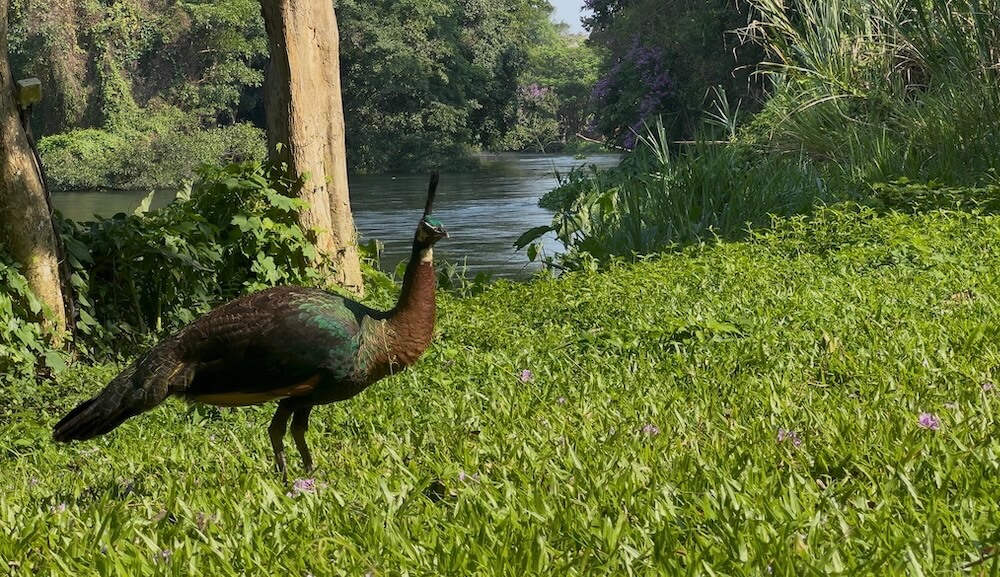
What they were protecting soon became clear. As we took our bags out of the car, a magnificent green peafowl strutted past. We’d seen them before at Doi Phu Nang National Park, but never at this distance, never this casually.
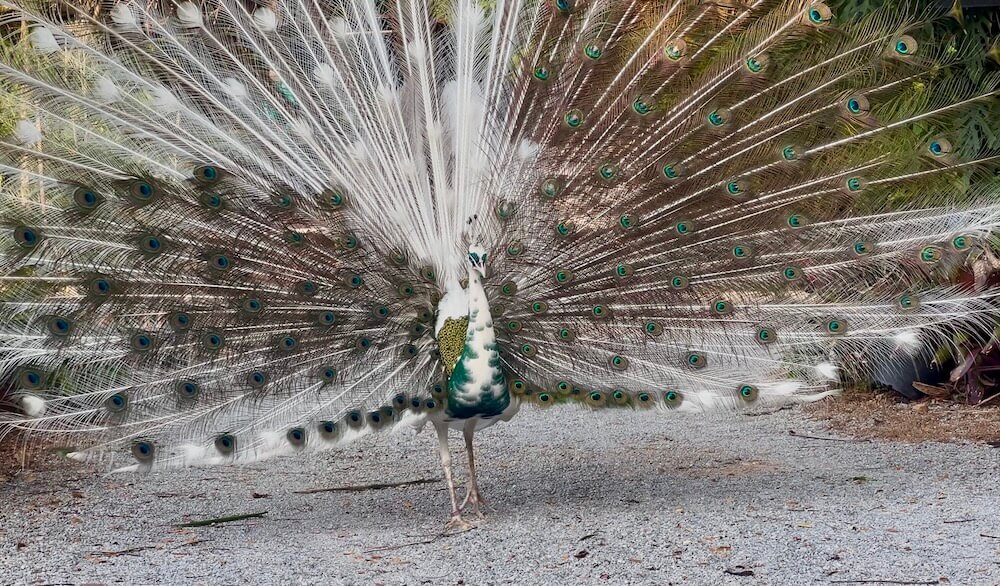
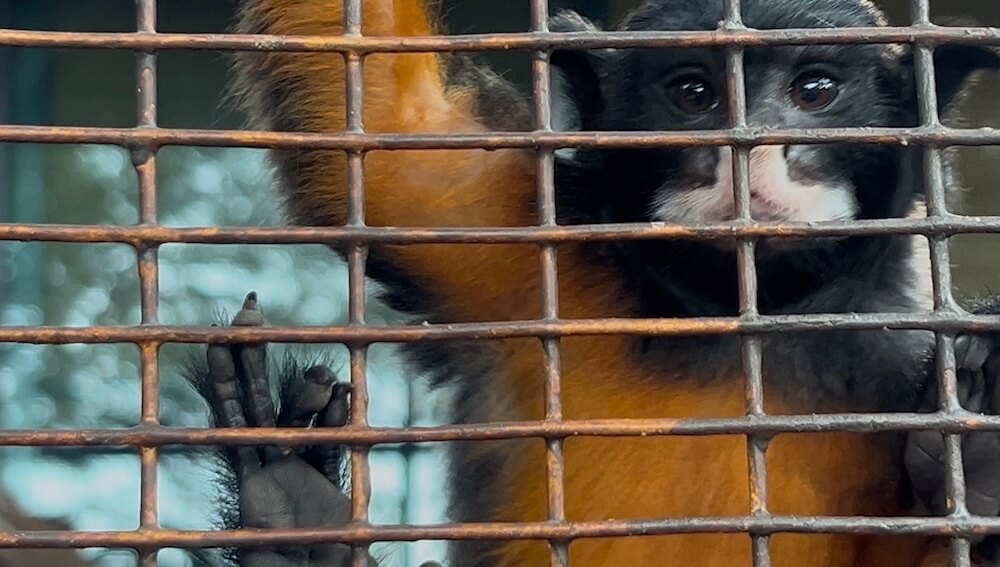
Kenaray is a peacock farm, but that was only the beginning of the interesting animals here. In large enclosures near reception are exotic birds like toucans and birds of paradise, Geoffrey’s Marmosets and Cotton-top Tamarins. And then, of course, all the varieties of peacocks. In the high branches of enormous rain trees, we could see the silhouettes of half a dozen, their long tail feathers backlit by the fading sun.
Bungalows on the Phetchaburi River
The staff led us down a rough stone path to our room. Our cabin sat among a landscaped jungle, just above a lush, slightly wild lawn that stretched down to the Phetchaburi River, which was running high and fast.
Everywhere was a riot of life: red beetles with spidery legs and long antennae congregated on tree trunks in the spotlights. The birdsong that had filled the air since our arrival began to fade as bats took over the evening sky. Not for the last time, a peafowl sang out its haunting cry.
Kenaray served us dinner in our room. They pride themselves on pizza and burgers, but their Thai food is the real standout. We ordered sliced beef with a kind of jaew sauce and a wonderful green curry and roti that was marred only by my having gotten a chili from it in my eye. Hard to blame the chef and it didn’t stop me from finishing every last spoonful.
Morning opened with the same full orchestra of birdsong. The cabins at Kenaray have windows running the length of them; once you’ve drawn the curtains, you feel you’re outside already.
From our beds, we had a clear view of the Phetchaburi River, rushing along at the bottom of the garden. The green peafowl had come down from the trees and were now stalking the lawns near the river.
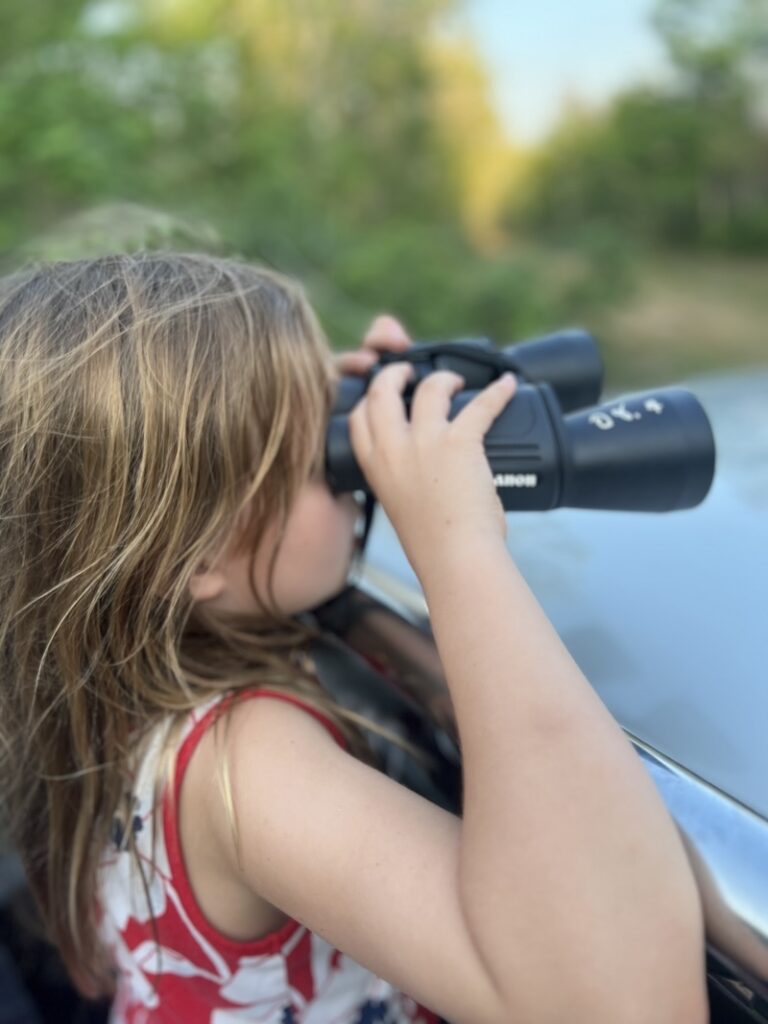
The boys couldn’t wait to get outside and “look at animals.” I wasn’t sure whether that meant the on-site menagerie or the wild animals along the riverbank.
“Either, both,” was their answer.
Floating Down the Peaceful Phetchaburi
After enjoying one of the best hotel breakfasts we’ve had in Thailand, the kids continued their exploration of the grounds until it began to warm up. The next step was obvious: with access to a river like this on a hot day, you float.
We arranged the excursion through the farmstay. They loaded us into the back of a truck for a twenty-minute drive further up the river and, just past a bridge, put us in a raft with a guide and sent us drifting downstream.
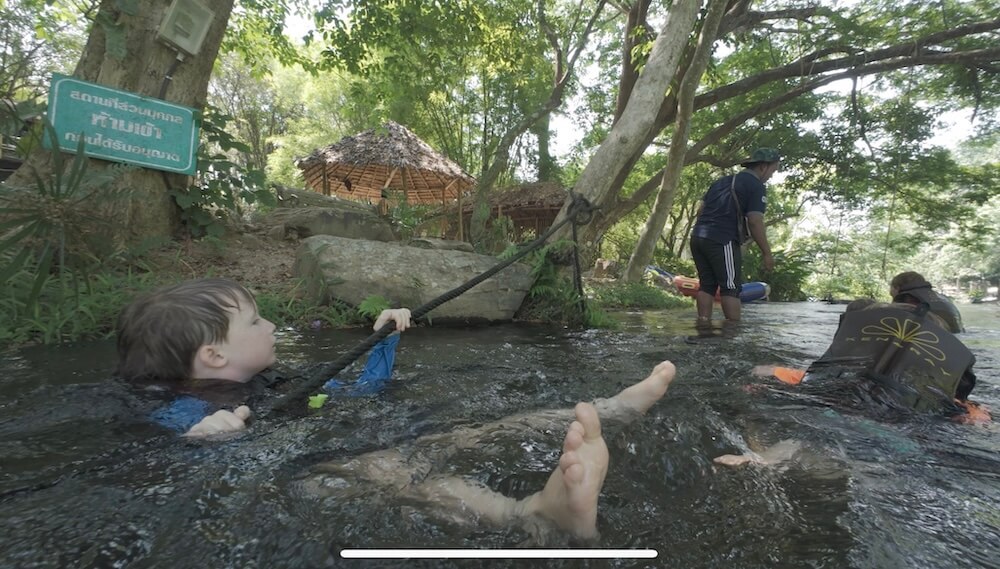
It took about an hour to float back to Kenaray, even with the current running swifter than usual. It’s a calm drift past low forest, fields, and quiet riverside bungalows. There’s even an eerily abandoned-looking waterpark called Puppy Love, which confirmed there’s no waterslide so unsettling the kids won’t ask to try it.
The riverside was rich with birdlife. White egrets gathered on trees like Christmas candles, bright kingfishers perched on low branches close to the waterline, and Greater Racket-tailed Drongos swept between the banks, their long tails trailing behind them.
For the final stretch, we slipped out of the raft and floated down the river in life jackets. From behind us, the oarsman called out instructions in Thai, which were mostly “go to the middle!” It was a slow, easy float and easily the highlight of the morning.
Baan Maka Nature Lodge at Kaeng Krachan
Set on the edge of the national park, Baan Maka Nature Lodge has built a reputation among birders for one simple reason: the wildlife comes to you. From the dining pavilion, from the garden, and even from your room, there’s always something moving in the trees.
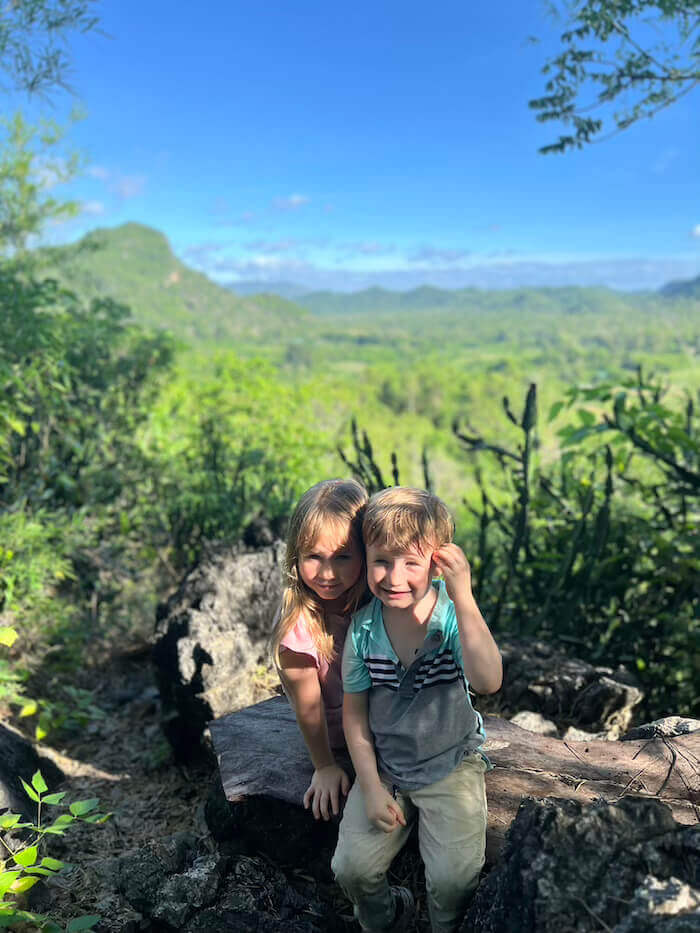
But even if, like us, you’re not yet a dedicated birder, there’s plenty else to see, and it’s an excellent base for exploring Kaeng Krachan. We visited in May, still early in the monsoon season, but already a rich green had pushed aside the crisp browns and brittle greys of nearly six months without rain. Low season had just begun, and we had the place largely to ourselves.
Rain had already cut short our afternoon visit to Kaeng Krachan, so we dared risk only a short walk on one of the nature trails on the lodge grounds. With no one else around, we heard only birdsong. In all our years in Thailand, I’m not sure I’ve ever seen the common koel, though I’ve heard its call nearly every day. Other than the 7-Eleven welcome chime, no other sound is as emblematic of Thailand.
Surviving the Flying Swarms
Dinner at Baan Maka always involves a few bugs. Moths at the lights, ants on the table, and beetles at your feet. As our first meal came to a close, we started seeing a scattered few flying insects clumsily landed on our plates, our drinks, or whatever else they could find. With bodies like fat termites and long ivory-colored wings, we weren’t sure what they were.
As we walked back to our cabin, we saw more of them. Many more. Looking above us, we could see hundreds and then thousands of these winged insects, swarming in every direction.
A delighted panic began to build in the kids as the swarm thickened with every step. They squealed as they dashed for the door, shaking insects free from their hair while I searched for the keys.
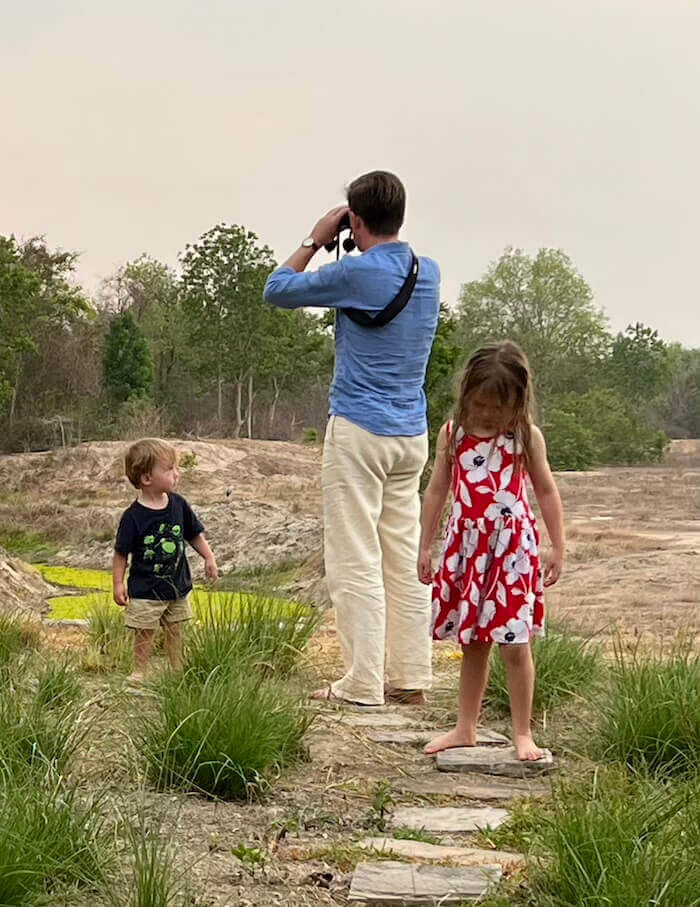
Safe inside (only a dozen or so creatures flapping their wings frantically in the corners of the room), giddy recollections began immediately. “One almost got in my mouth!” “One did get in my ear!”
I’d caught the few that had come in with us and opened the door to set them free; as they left, another couple dozen flew in. This sent the kids into fresh hysterics, screaming every time the poor bugs took off or landed.
With the last bugs gone, the adrenaline began to wane. Whispers soon turned to the steady breathing of exhausted kids, fast asleep.
We had just seen the maeng mao (“drunken insects”) phenomenon. Male termites wait until conditions are perfect, usually the first few big rains of the monsoon season, to exit the nest en masse to find mates and establish new colonies. Each nest has roughly the same triggering conditions, so a single big storm can be enough to set them all off at the same time. Millions can emerge at once, which certainly matched what we’d just seen.
The next morning, the ground was littered with discarded wings. Alates that had failed to meet the demands of the biological imperative lay dying on the ground. A group of hornbills hopped among these, snapping up the remainders of this once-a-season windfall.
Pala-U Waterfall and Kaeng Krachan National Park
Walking to the car through a million abandoned wings fluttering down the road like autumn leaves, we felt more than usually prepared for the oddities Mother Nature might send our way. She still managed to surprise us.
We arrived early at the Pala-U Waterfall trailhead. Even in high season, an early start ensures solitude. This time of year, we were the first to arrive and wouldn’t see other visitors for hours.
May might not be the peak season, but it’s the ideal time to see Thailand’s butterflies, including at Kaeng Krachan. They gather by the thousands on exposed boulders and salt licks, harvesting the salts and minerals their nectar-heavy diets don’t otherwise provide.
Beams of low morning light pierced the jungle canopy, illuminating the trail that ran alongside the Pranburi River. Sudden clouds of startled butterflies in the dappled light lent an even more enchanted air to the hike.
These forests, which stretch deep into neighboring Myanmar, are thick with life. We avoided webs of giant orb weavers only because the light and dew silvered the threads just enough to warn us before we walked into them. Along the path, Henry and Isobel spotted a giant venomous centipede and, instead of running away in terror, shouted at Mum to hurry before she missed it.
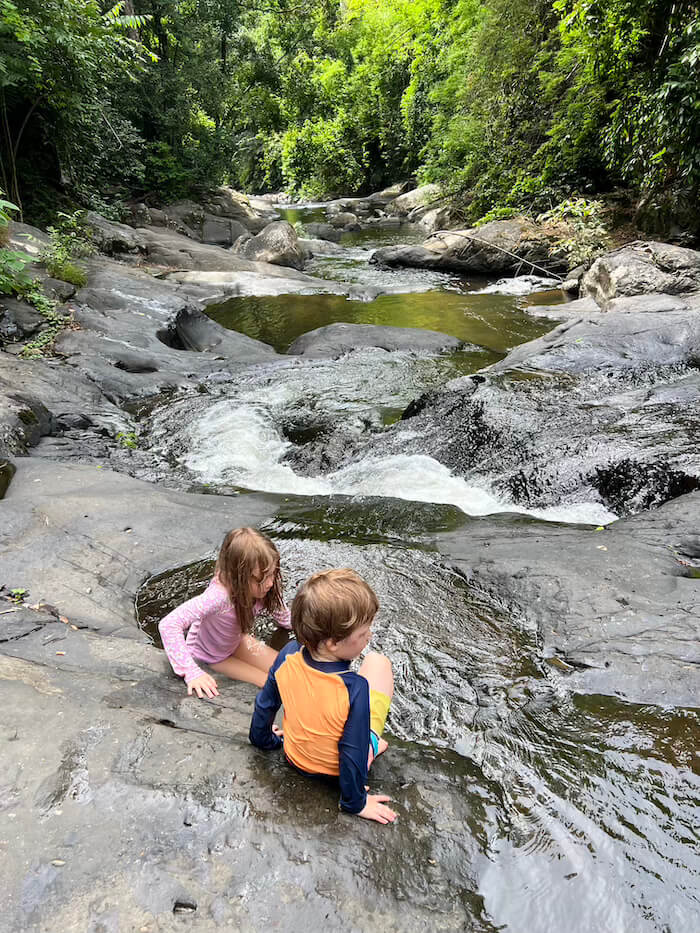
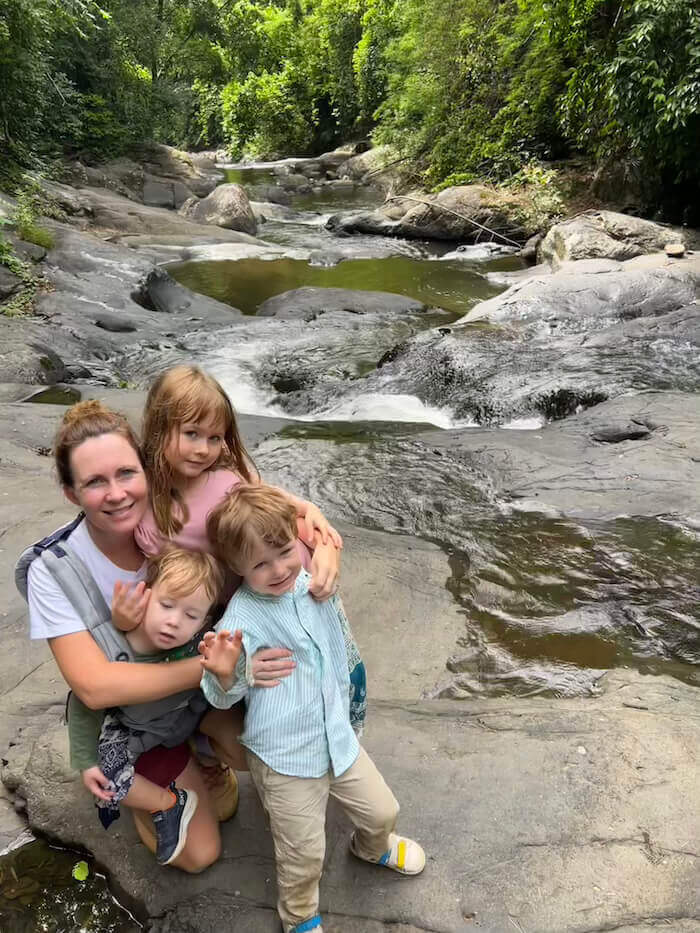
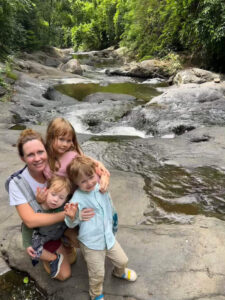
When we arrived at the falls, they were still tame so early in the season: a series of pools linked by shallow streams. Shallow, but enough of a path for the river carp to follow Isobel from pool to pool. Whichever one she entered, the fish slid, half-exposed, over the mossy rocks to join her.
Henry was having none of it. He may not have dared face them in the water, but he sat on the banks, shouting at the carp to stay in their own pool and leave his sister alone. Whenever she switched pools, he was there, splashing water at the fish and warning Isobel that they were coming.
There are 15 or so tiers of Pala-U Waterfall, but these become increasingly sketchy (in terms of both terrain and geopolitics) the higher you climb and the closer you come to the Myanmar border. The whole circuit shouldn’t take more than a few hours, but with a young family, we didn’t go much further than the fifth tier before we met signage indicating the route was closed. In the dry season, you could likely go further, though the falls lose some of their energy in the drier months.
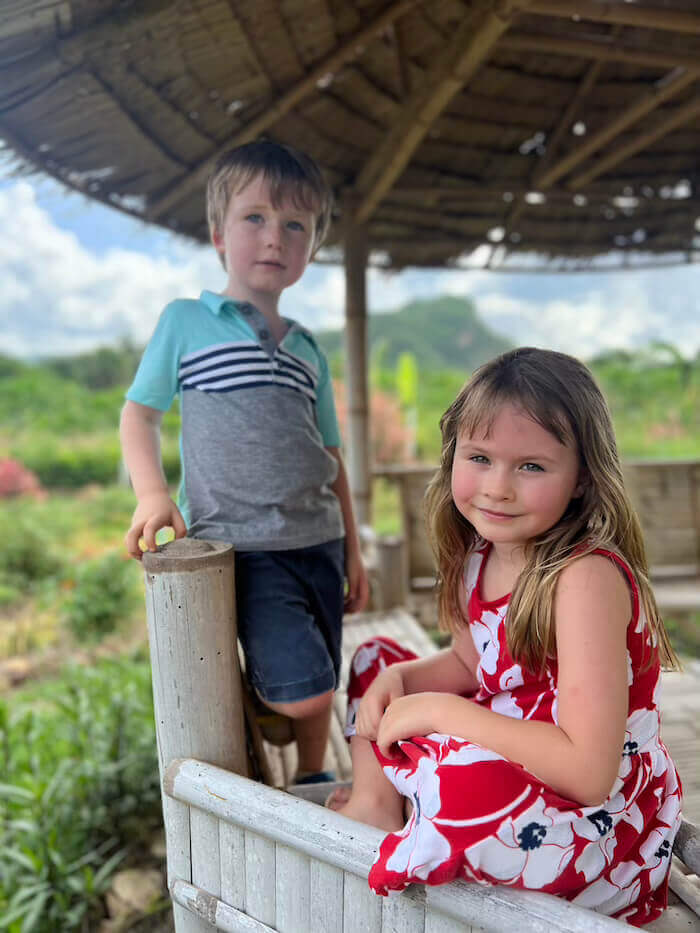
We returned instead to Baan Maka Nature Lodge to explore its lovely gardens, which also include a bar, though I suspect it needs more than just a young family to justify opening. We tried to play pétanque, but termites had almost completely devoured the case that held the boules, which in any case had begun to rust.
The kids instead ran around the garden. A species of small red beetles, I don’t know what kind, seemed to have joined the termites in choosing these first few weeks of the monsoon to burst into activity. Harry couldn’t keep his hands off them and spent a whole afternoon chasing them from leaf to new leaf. I suspect there were birds watching too—but I could only hear them.
I Love Phants – Wildlife Friends Foundation Tour
If you’re hoping to see an elephant and won’t have an opportunity to see them in the wild somewhere like Kuiburi , the next best thing is a reputable rescue operation. I haven’t encountered one that deserves that title more than “I Love Phants,” the on-site lodge for the Wildlife Friends Foundation Thailand (WFFT).
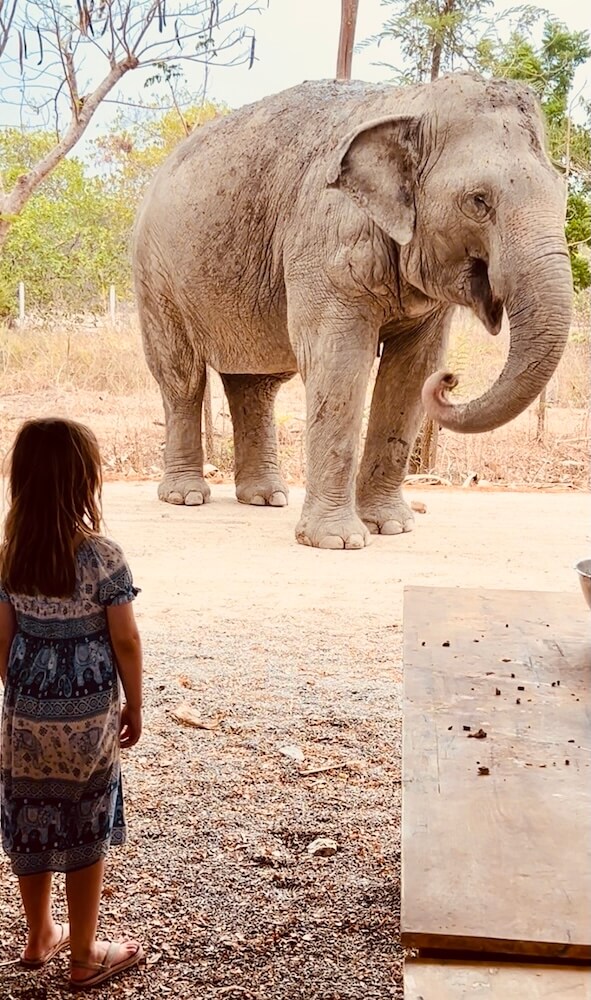
Too often, a “rescue” operation is just an elephant camp that’s recognized the ethical landscape has moved against the business and so has pivoted to “rescuing” their own animals. Same business, same actors, slightly different show. WFFT and the “I Love Phants” lodge are different. You can see it in the way you’re most likely to encounter the wildlife living on this vast spread.
Bungalows Above the Elephant Fields
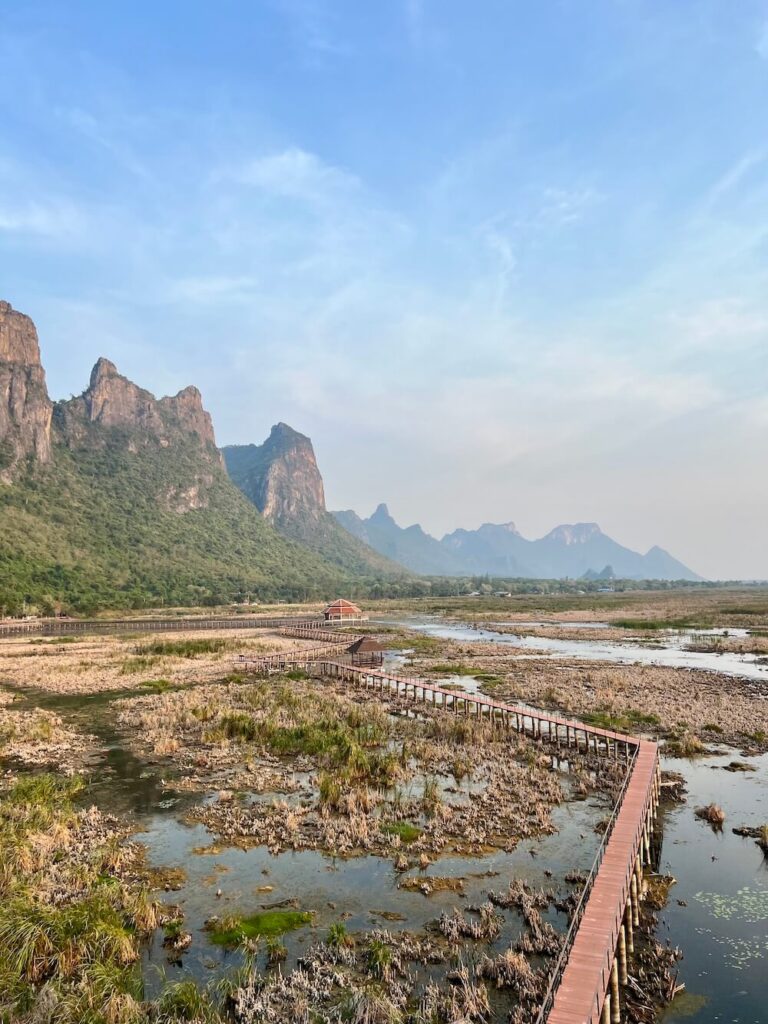
We booked a two bedroom pool bungalow with a view of the elephant fields and the Tenasserim Range behind them. Even if there were no animals within 50 kilometers, this would be a pleasant way to spend a weekend.
We drove straight to a fully equipped, modern, open-air home. The kids especially appreciated the small plunge pool in the backyard. Because the bungalows are set above the fields at the top of a walled embankment, they provide expansive views over a broad vista of open scrub, forest, streams, and lakes.
As the kids splashed in the pool, we caught sight of a broad gray back, its mass swaying with every thunderous step. No handlers, no intrusive fencing, and no risk to either the animals or ourselves. It was as close an experience as you can get to seeing elephants in the wild.
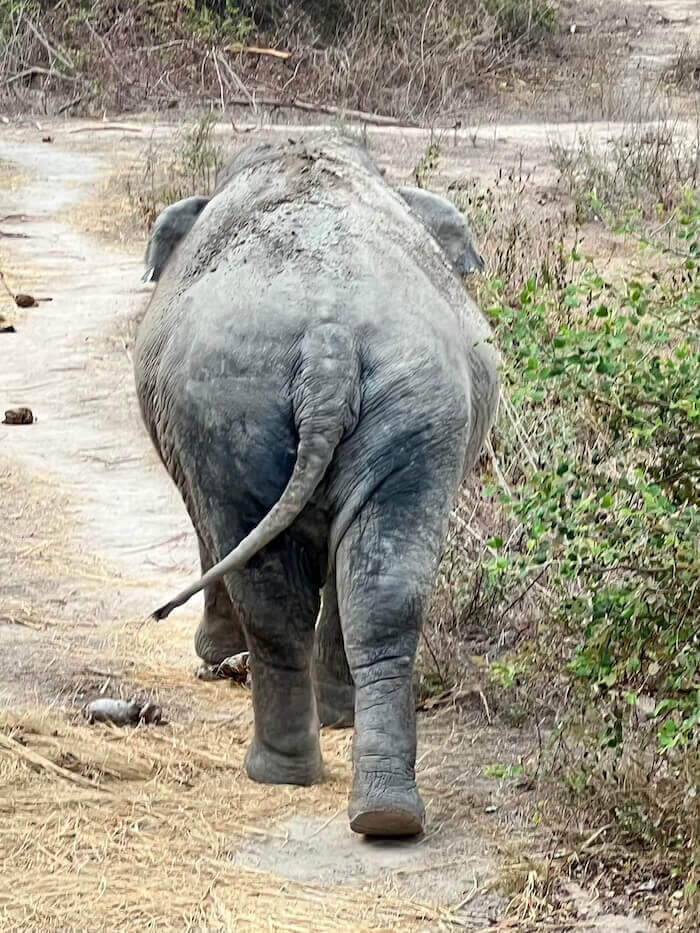
WFFT was founded by Edwin Wiek, a long-time animal welfare advocate and a vocal critic of the animal “entertainment” industry. I Love Phants doesn’t do shows, they don’t do riding, and they don’t do “mahout for a day” style bathing.
An important part of the organization’s work is rescuing wildlife from the “exotic pet” industry, which is big business in Thailand. It isn’t uncommon to find adult gibbons or macaques kept as status symbols, only to be abandoned when they become too difficult to manage.
Among the recent rescues was a chimpanzee, which Edwin explained had given him a light mauling, which left his arm covered in thick bandages. This didn’t stop WFFT from putting on a large anniversary party for its healthy troop of volunteers, who pay to keep this large and growing operation running. Think of it as a charity subsidized by the parents of well-intentioned kids, with the animals (and visitors like you) the prime beneficiaries.
Wildlife Friends Foundation Tour
We had booked a tour of the facilities for the following afternoon. The excursion requires a fair bit of walking, and I was worried the kids would suffer in the extreme heat. I needn’t have worried at all. This was an engaging and expertly conducted tour. Like the rest of the operation, it was strictly observational, but that was only as it should be.
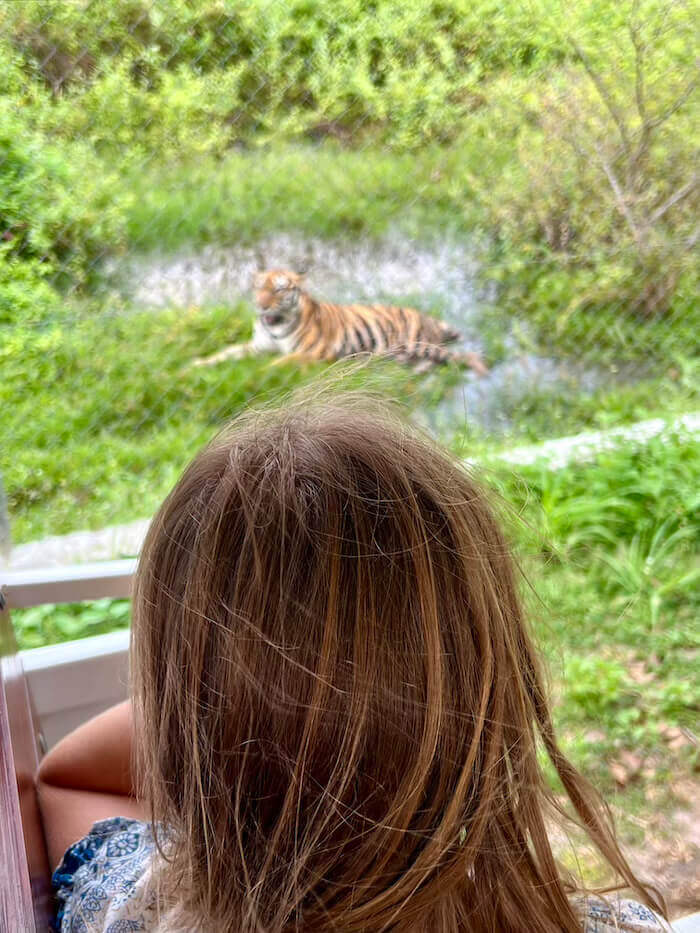
Not for a second of the nearly two hours of walking and driving among the animals did the kids’ attention flag. Gibbons, tigers, macaques, and sun bears and, of course, elephants. These majestic animals roamed at will within their natural habitat, entirely safe from the threats that have pressured populations across Southeast Asia.
“Ethical” is an adjective that nearly every elephant camp has taken to using. It’s almost impossible to determine which of them deserve to use it. With WFFT and I Love Phants, you can rest assured that you’re interacting with nature in as safe, natural, and ethical an environment as possible.
To learn more about seeing wild elephants in their natural habitat, you can try Visiting Kui Buri National Park.
Plan Your Trip to Phetchaburi
Some links below are affiliate links. At no extra cost to you, we earn a small commission if you make a booking, which helps us keep our family on the road. Thank you for your support!
Getting There
Phetchaburi is roughly 2.5 hours south of Bangkok and 1 hour north of Hua Hin.
Self-Drive: This is the best way to explore the region, especially for reaching the “lonely dirt roads” leading to Kenaray and Baan Maka.
Private Transfer: If you aren’t driving, a private taxi from Bangkok (approx. THB 2,300) or a minivan is the most efficient way to navigate the spread-out nature of these lodges.
Where to Stay
Phetchaburi offers everything from riverside farmstays to dedicated nature lodges. We’ve stayed in these and highly recommend them for families:
Kenaray Farmstay is a homey, riverside retreat in Kaeng Krachan. Perfect for families who want to wake up to the sound of peacocks and spend the afternoon floating down the river. The Thai food here is a must-try.
Baan Maka Nature Lodge is the gold standard for birders and nature lovers. It’s unassuming, quiet, and the wildlife literally comes to your doorstep. An excellent, budget-friendly base for exploring the national park.
I Love Phants Lodge (WFFT): For a truly unique experience, stay on-site at the wildlife rescue center. Their two-bedroom pool bungalows offer unparalleled views of rescued elephants roaming in the fields below.
When to Go
Phetchaburi is a year-round destination, but each season offers a different “show.”
Cool and Dry Season (November – February): The most comfortable weather for hiking and exploring Kaeng Krachan.
Hot Season (March – May): Peak time for butterflies at Pala-U Waterfall and great for river activities, though the midday heat can be intense.
Rainy Season (June – October): This is when the “Drunken Insects” (Maeng Mao) swarm and the forest turns a brilliant, lush green. It’s the best time for spotting hornbills and other birds, though some upper levels of the national park may close.
What It Costs
Kaeng Krachan National Park: Entry is THB 300 for adults and THB 150 for children. The gate opens at 5:00 AM—early starts are highly recommended for wildlife spotting.
WFFT Tours: You must pre-book your visit to the Wildlife Friends Foundation. They offer full-day and half-day experiences that are strictly observational and highly educational for kids.
Baan Maka Guiding: If you are a serious birder or want a guided night walk to find owls and reptiles, Baan Maka offers expert local guides starting at around THB 3,600 for a full day.
Booking/Tours
With a well-established tourism sector catering to backpackers, tours and trips are easy to find. You can book in advance or when you reach Vang Vieng. There is no shortage of providers ready to offer you as much (or as little) support as you like.
Wildlife Friends Foundation Thailand Full-Day Visit
- Duration: 6 hours.
- Includes: Round-trip transfers, fees, and taxes, as well as lunch.
- Vibe: Small group. All ages welcome. Discounts available for children six and younger.
- Flexibility: Reserve now, pay later. Free cancellation up to 24 hours before the trip starts.
- Cost: From THB 2500 per person.
Pala U Waterfall Natural Tour
- Duration: 7 hours.
- Includes: Entrance fees, lunch, transportation, and guides.
- Vibe: Private tour. Children must be at least twelve years old.
- Flexibility: Reserve now, pay later. Free cancellation up to 24 hours before the trip starts.
- Cost: From USD $120 per person.