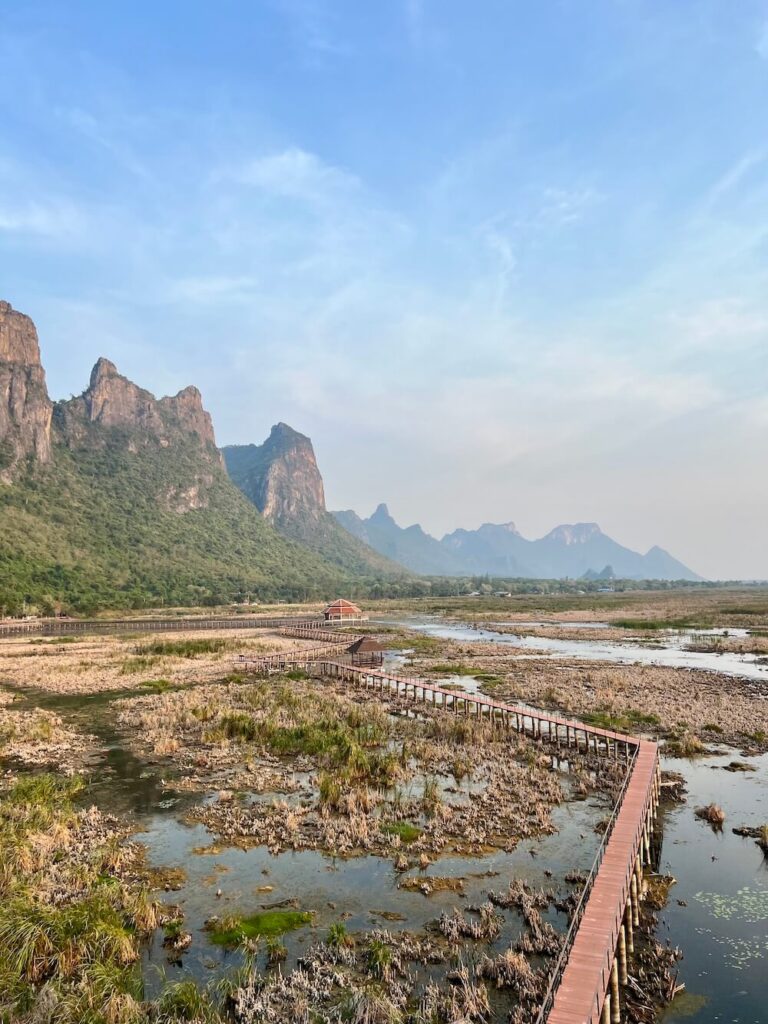
Only a twenty-minute longtail ride from Thailand’s Andaman coast lies a quiet island of golden-sand beaches, sleepy fishing villages, and rock pools brimming with life. Here, in Koh Libong’s shallow seas, you have your best chance of encountering Thailand’s last remaining dugongs as they placidly graze in meadows of seagrass.
Despite these attractions, Koh Libong sits well-off the tourist map. Even my Thai friends looked puzzled when I told them we planned to spend an entire week on the island.
Koh Libong lies just south of Koh Ngai, Koh Mook, and Koh Kradan, islands we already love and have written about before. Maybe that’s the problem: Koh Libong is not exactly undiscovered, it’s simply overlooked in favor of the far better-known Trang Islands.
We think that’s a mistake.
Not because the Trang Islands aren’t wonderful, they absolutely are, but because Koh Libong more than holds its own. The island has plenty to offer on its own terms, but what’s most compelling is what’s absent: throngs of tourists and beaches so crowded with longtails you can barely see the sea.
Before we get into the details, here’s a quick look at the island — including the freakish creatures of the low-tide landscape that kept our kids busy for an entire week.
Libong is cheaper, quieter, and frankly just more relaxing. And if you’re craving a bit more activity, the other islands are only a short boat ride away. Hiring a longtail for half a day costs only a fraction of what you save by staying off the beaten path.
Getting paid for peace, I like it.
How to Get to Koh Libong
Coming from anywhere but the surrounding islands usually means flying to Trang (TST) or Hat Yai (HDY). We’ve taken the morning AirAsia flight from Bangkok each time, and Trang recently finished a fancy new airport that makes arrival even easier.
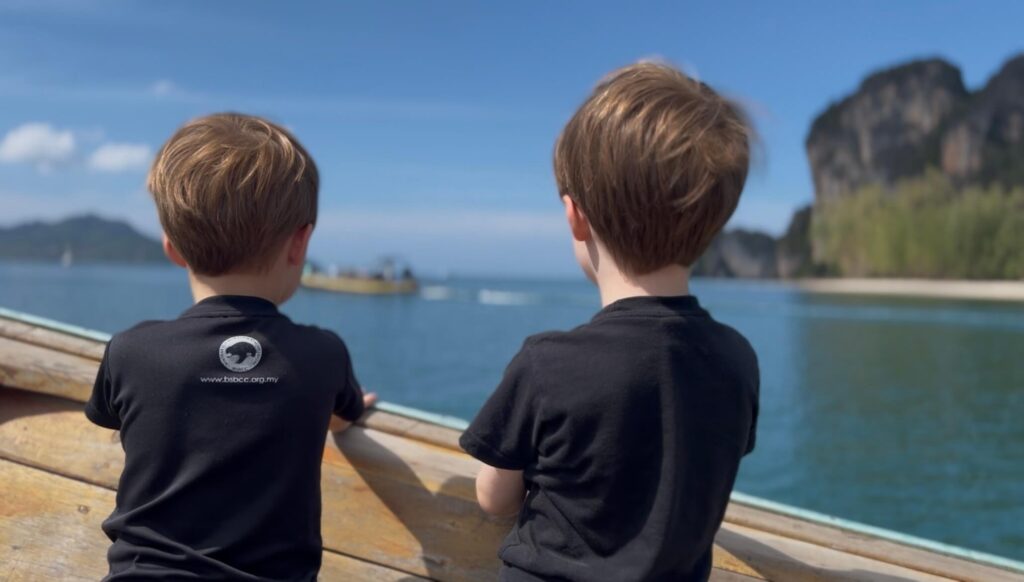
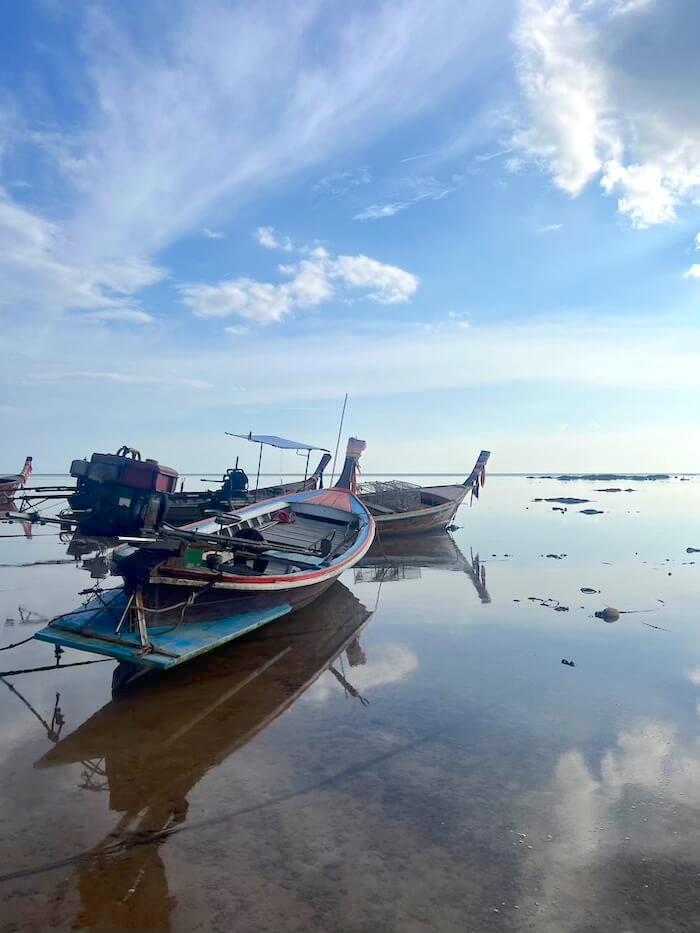
From the airport, it’s about an hour to the coast, where you’ll catch a boat to the island. Which pier you use depends on where you’re heading. Hat Yao Pier serves Koh Libong, and your best bet is to arrange a longtail in advance through 12go.asia or your hotel.
We traveled in the final months of our working lives, when we had more money than time, so didn’t mind splashing out and letting the hotel organize everything. Today, we’d unquestionably book through 12go.asia.
After a 15-20 minute boat ride, we arrived at Banphrao Pier and transferred to a songthaew for a 15-minute drive across the island. Lang Khao Beach, a kilometer-long stretch of golden sand, hosts most of the island’s rooms, scattered among small resorts and homestays.
We stayed at Andalay Beach Resort, the flashest place on the island and the only one with the pool, but still quite affordable compared to Libong’s sister islands.
Koh Libong’s Lang Khao Beach
Unlike the white coral sands of the nearby Trang islands, Lang Khao Beach is genuinely golden. In Thailand, “golden sand” can sometimes be a polite euphemism for not that great, but this stretch of beach is truly lovely.
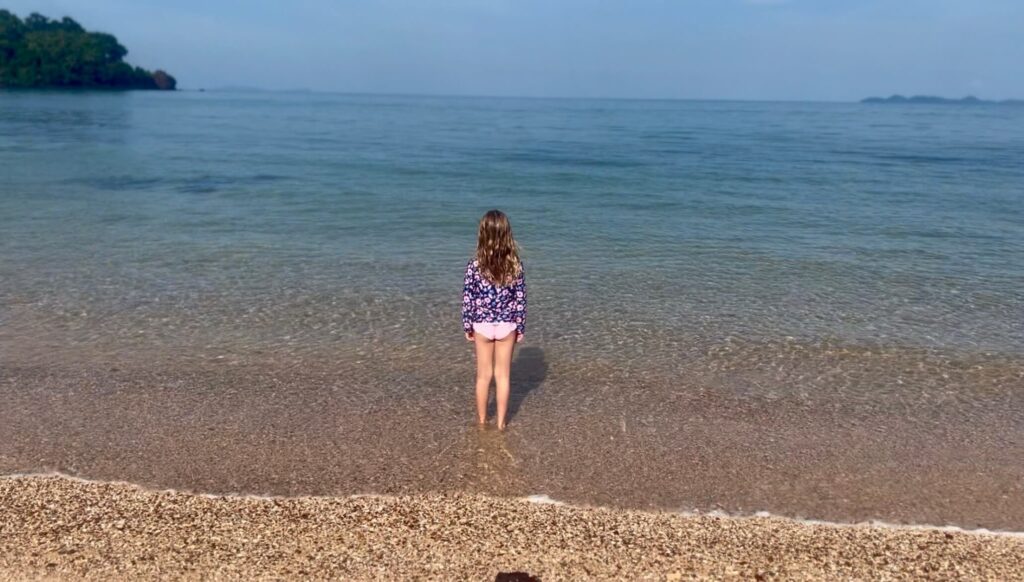
We were in the water with snorkels on soon after arriving, drifting among reef fish as they moved between scattered blocks of coral. While the visibility is good, it’s not the most vibrant reef in the region. Rather than fight the current to hunt for fish, we were content to let it carry us slowly along the shoreline.
Soon, though, the tide retreated. By late afternoon, we were sitting in knee-deep pools of warm water. Planning around the tides, we quickly learned, would be essential.
But it wasn’t until the sea had receded completely, leaving acres of exposed rock, coral, and mudflats, that we discovered the activity that would occupy the children for the rest of the week.
Koh Libong’s Crabs, Crawlies, and Other Tidal Pool Treasures
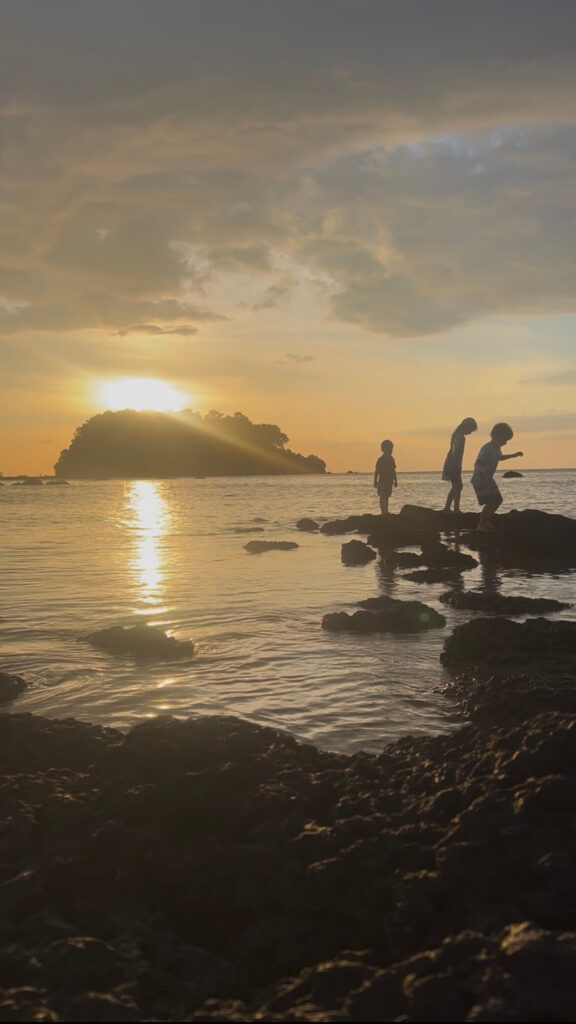
Just offshore from Lang Khao sits a jungle-covered outcrop of black stone called Koh Nu, or “Mouse Island.” At low tide, the sea retreats far enough that you can walk between the two islands on dry land, which quickly became our first mission.
The exposed seabed is pocketed with dozens of tide pools, each one full of life. We spotted half a dozen different types of crabs. Some were box crabs that folded themselves into a perfectly fitted half-egg of armor. Others were vibrant red or turquoise green. Beyond the well-known hermit and fiddler crabs, the kids identified a new species they called “aggressive crabs” for no better reason than an unwillingness to submit to inspection.
Sea cucumbers thrived in the shallow pools as well. Their shape, color, and lurching crawl earned them the unfortunate name of “pooh bugs” from the kids.
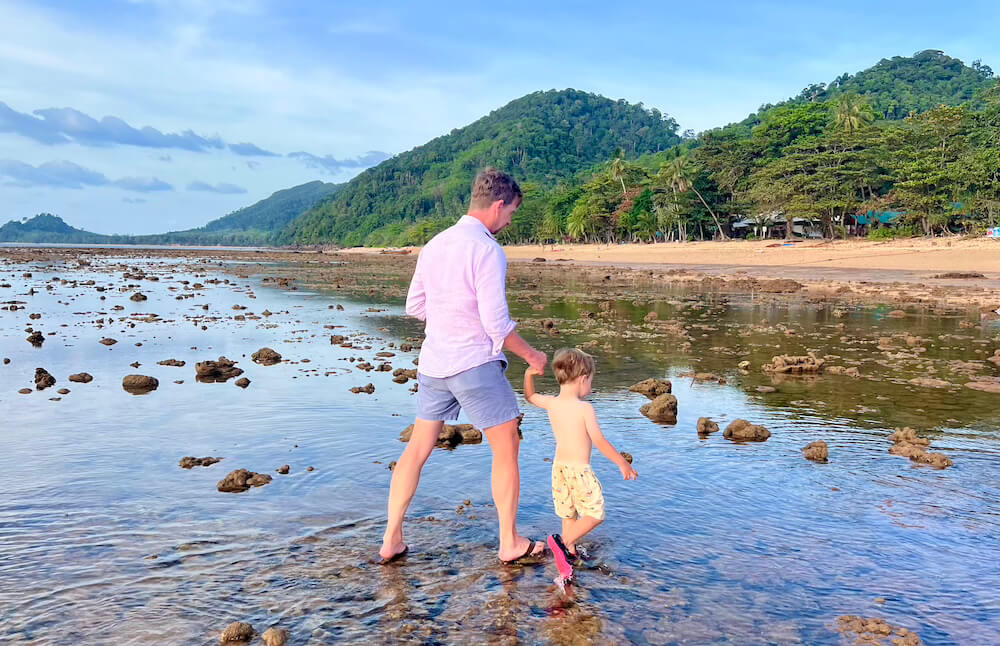
From the surrounding mudflats came a constant snapping sound. It reminded us of the pistol shrimp we’d heard in the mangrove forests of Mu Ko Chumphon National Park.
The island itself doesn’t invite much exploration. The jungle is dense and the rocks are sharp.
There also appeared to be someone staying there.
We saw him sleeping under a mangrove tree on the pebble beach. That night as we ate dinner back at the hotel, we could see the light of a campfire flickering across the sea that now covered the path to the island.
Kayaking from Lang Khao to Tung Yaka Beach
Looking to the south from Andalay Resort, we could see in the distance a beach between sea and jungle. Between Lang Khao and this shore—Tung Yaka Beach, as we later learned—was an impassible stone promontory that jutted out into the sea. We’d have to go by sea.
To mount this nautical expedition, we borrowed a pair of kayaks from the hotel, picked up a few snacks, and set off. Tung Yaka didn’t look that far away. The kids had, in any event, promised to help paddle, which only threatened to make the trip about 10-15 percent harder.
The tide and wind were against us, but this just gave us more time to enjoy the virgin jungle clinging to the inaccessible cliffs lining the coast. After 45 minutes of hard paddling from two parents unused to using these particular muscles, we pulled the kayaks up onto the sand of Tung Yaka Beach.
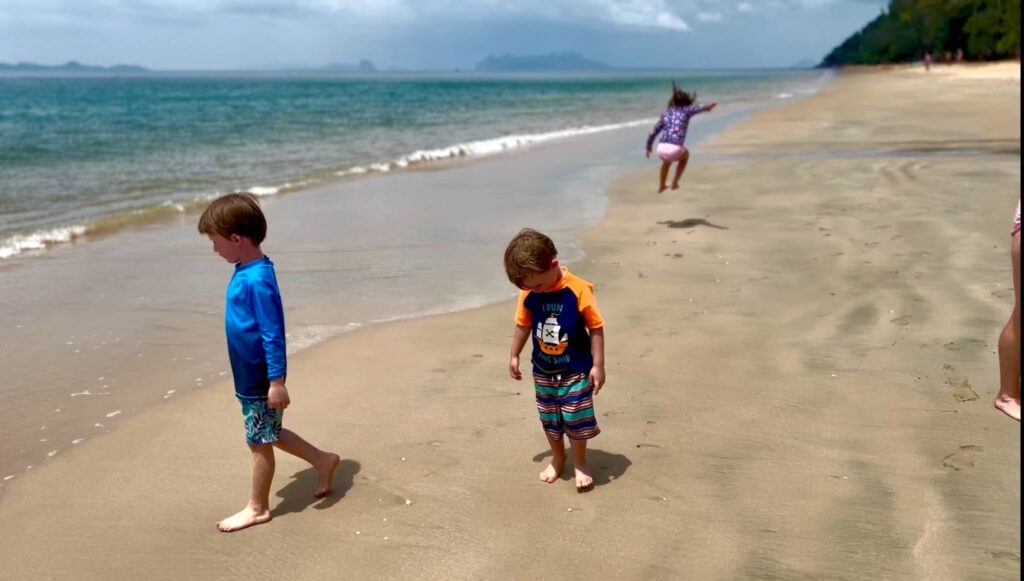
This uninhabited stretch of coast is the most pleasant beach on the island. Caramel colored sand gathers into banks much steeper than the flats characteristic of the rest of the island. Still wearing their life jackets, the kids took full advantage of the surf, riding waves that can’t form on much of the island.
Tung Yaka beach runs for more than a kilometer. At the north end, red laterite cliffs topped with pandan trees back the beach. An eventual break in these cliffs reveals the Dan Sontaya, an incongruous collection of tents, bungalows, and ship-themed platforms. We were worried these were abandoned, but we soon met the staff who prepared a good lunch and introduced the kids to a large tortoise to play with while they did it.
A change in wind and current meant the paddle back home was far smoother. Charlie lay back in the front of Kat’s kayak and somehow slept the entire way, not even waking when we pulled the boat onto the sand.
As we returned the boats, I looked at the other guests lounging under their beach umbrellas. What have you done to deserve this, my expression says with the same smugness that comes over me any time I attempt even the mildest exercise. Thank goodness it happens so rarely.
Koh Libong’s Dugongs: Searching for Sea Cows
There is no better place in Thailand to spot dugongs than in the shallow seas around Koh Libong. As many as 200 of them once grazed the seagrass beds between Koh Libong and Koh Mook, but they’re under intense pressure and sightings have grown increasingly rare.
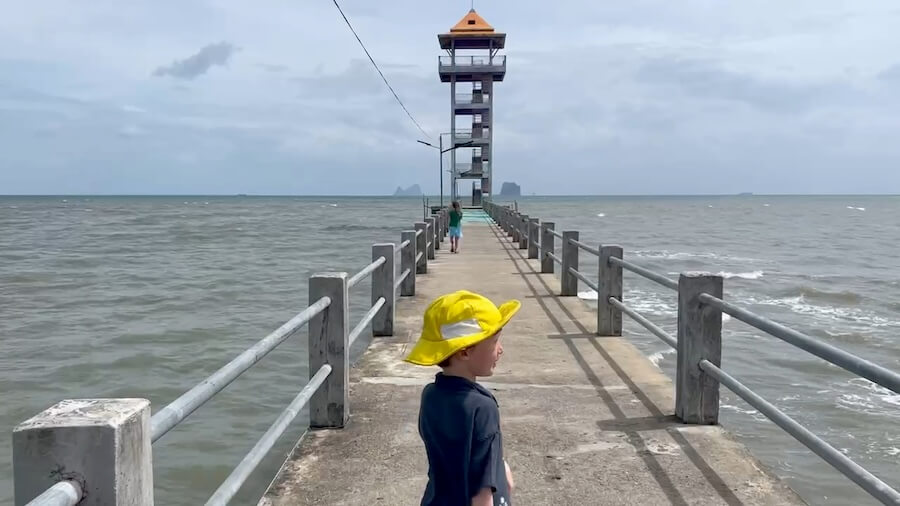
The best place to try your luck is the “Marine Animal Observation Tower” at the end of the long pier in the fishing village of Baan Batu Pute. You can’t miss it: the pier stretches nearly a kilometer and ends in a four-story tower.
We went on a windy afternoon during high tide; far from ideal conditions for seeing anything in the water. We’d also heard the last sighting had been more than two weeks ago, so our expectations were low.
And… we weren’t disappointed.
No dugongs, just a choppy, slate-colored sea and the wind in our hair. The tower does offer good views back toward the village, most of which, like the pier, stands on stilts above the water.

We consoled ourselves with lunch at perhaps the best restaurant on the island: Bang Ji Libong. It’s a very simple setup, but don’t be fooled, they know exactly what they’re doing.
My favorite dish: som tam goong, a papaya salad topped with raw shrimp that, like ceviche, cures in the lime juice. Come back for dinner when, with a bit of advance notice, they can barbecue the catch of the day. You won’t find a better meal on Koh Libong.
Koh Libong Island Life: Thai Beer, Tidal Pools, and Shrimp Donuts
After a few days on the island, a pattern began to emerge. When the tide was high and the sun was low, we swam off Lang Khao Beach. When the sun was low and the tide was out, the kids returned to the tidal flats.

Most nights, Kat and I enjoyed an evening drink at Libong Sunset Bar, which isn’t on the maps, but is just north of Andalay Beach Resort. Happy hour runs until 5:00, but the owner might just extend it if he opened late.
Our usual spot, a table fashioned from a driftwood plank, the names and rough direction of nearby islands indicated in blue paint, was ideal for monitoring the kids’ explorations.
We had dinner there the first night. The shrimp donuts—essentially minced prawns fashioned into a thick ring, breaded, and deep-fried—were a great success.
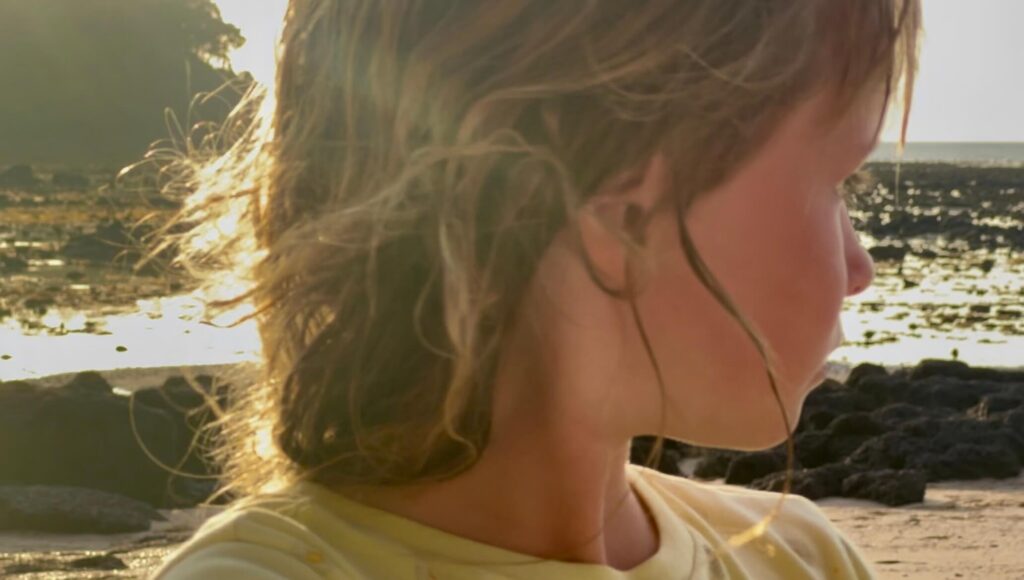
The next evening, while the boys lay in a tidal pool and mum and dad enjoyed a G&T, Isobel asked for them again. It was only late afternoon, and the kitchen was still prepping for the evening.
“Will frozen be okay?” our host asked, holding up a bag of store-bought shrimp cakes. “My mother hasn’t started making them yet.”
From a hammock nearby, a tiny grey-haired Thai woman lifted her head. Looking with disdain at the icy bag her daughter held, she asked Kat, “so your daughter really likes them, does she?”
Kat confirmed that she certainly did.
“If that’s true, I’ll make them right now,” she said with an enormous smile.
Thirty minutes later, a plate of enormous shrimp donuts arrived. They were magnificent.
On Koh Libong, the question may arise of how often you can watch the sunset from the same place, or how much time children can spend chasing wildlife through acres of tidal pools. We don’t know the answer, but it’s a number far larger than seven.
Offshore Excursions from Koh Libong
Staying on Koh Libong doesn’t mean you’re limited to it. Hiring a longtail for a half or full-day trip to neighboring islands is easy. Hotels will happily arrange it, restaurants and shops in town will do it, and you can talk to boat captains directly for the best prices.
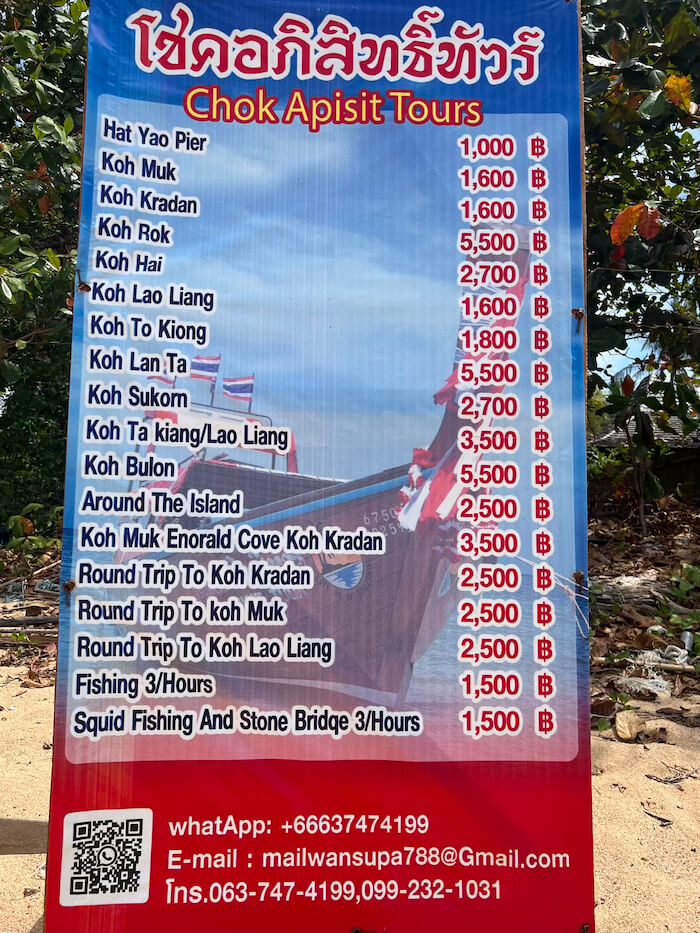
We worked with Chok Apsit Tours to arrange two different trips, simply because they had a sign on the beach with their prices clearly indicated. Don’t expect much handholding, though you will get a lovely watermelon. That was enough for us.
The Koh Lao Liang Islands: Tropical Paradise in an Aquamarine Sea
South of Koh Libong are a series of isolated karst islands. Often as tall as they are wide, they’re an impressive sight even before you reach their lovely beaches. The Koh Lao Liang islands are the nearest of these, only forty-five minutes by boat.
That is, if your boat makes the trip at all. We’d booked a 10:00 departure, but when we arrived, the operator said the wind was up and the trip was off.
Looking out over the glassy water, I had my doubts. We rescheduled for the same time the next day. No harm done, but a reminder to always be flexible, especially with anything involving the sea.
By 9:30 the next morning, we were heading south through calm seas towards the islands.
Koh Lao Liang South: White Sand Perfection
We arrived first on Koh Lao Liang South, anchoring near the base of a soaring limestone cliff. Deep caves pockmark the cliff-face and provide the perfect habitat for swifts, supporting a lucrative nest-collection industry.
But we weren’t here to collect nests. This island boasts one of the finest beaches I’ve seen in Thailand. A blindingly white strip of sand between a green fringe of palm and pandan and the incredible aquamarine of the sea.
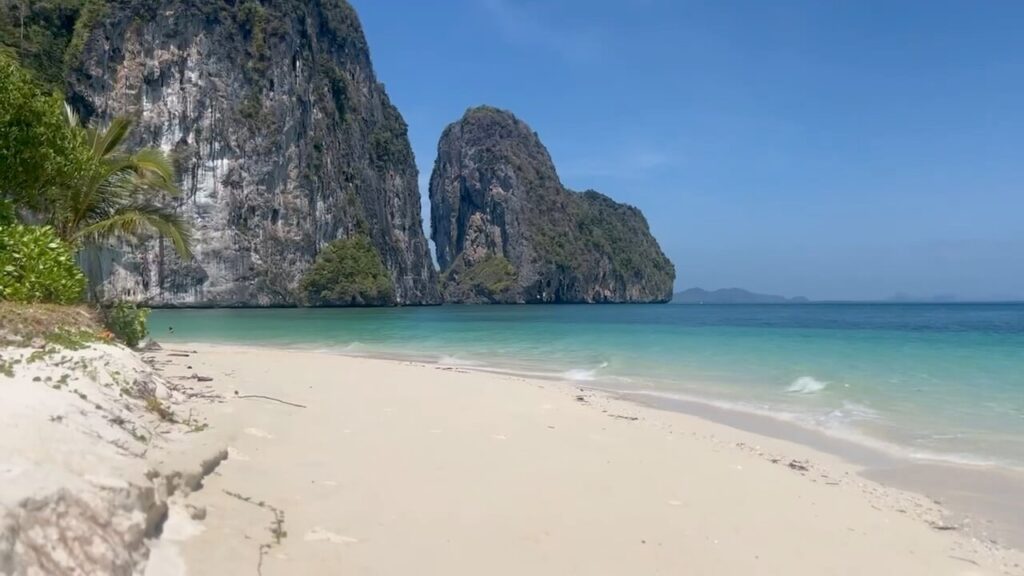
The beach runs a few hundred meters away from the cliffs, curves around a shallow spit, and then continues another hundred meters or so until the shore again meets the cliff face.
For a time, we shared it with a French family, who’d stationed themselves around 150 meters away, but they soon surrendered paradise. After that, it was entirely ours.
Koh Lao Liang North: Comparison Is the Thief of Joy
Though we could have stayed all day, our guide signaled it was time to move on. We motored five minutes away to Koh Lao Liang North, which has similar topography, but also hosts a ranger station, a picnic pavilion, and a lot more people.
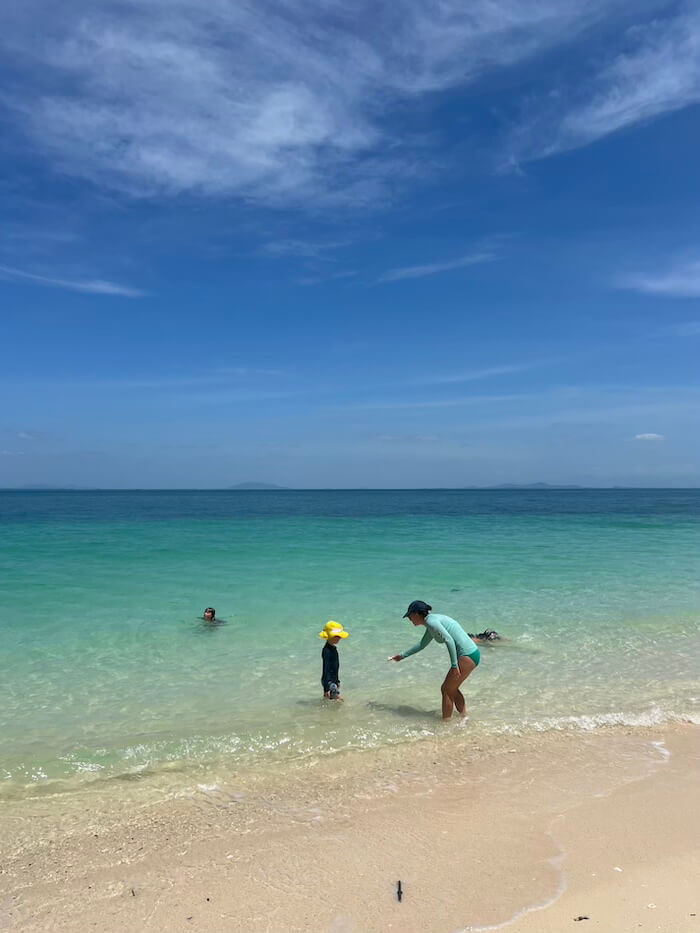
At any other time, this too would be paradise, and it suffered only by comparison: a beautiful sister cast into shade by a truly stunning sibling.
Regret can’t survive long in such a beautiful setting, so we were soon back in the water. The snorkeling was better here, with bannerfish, puffer fish, and a trio of the most perfectly formed clownfish I’ve ever seen.
I wonder if there wasn’t some strategy in the order of the visit. Only the possibility of even more beauty tempted us away from Koh Lao Liang South. Had they told us we were just going home, we’d never have budged.
Is Koh Libong Worth a Week?
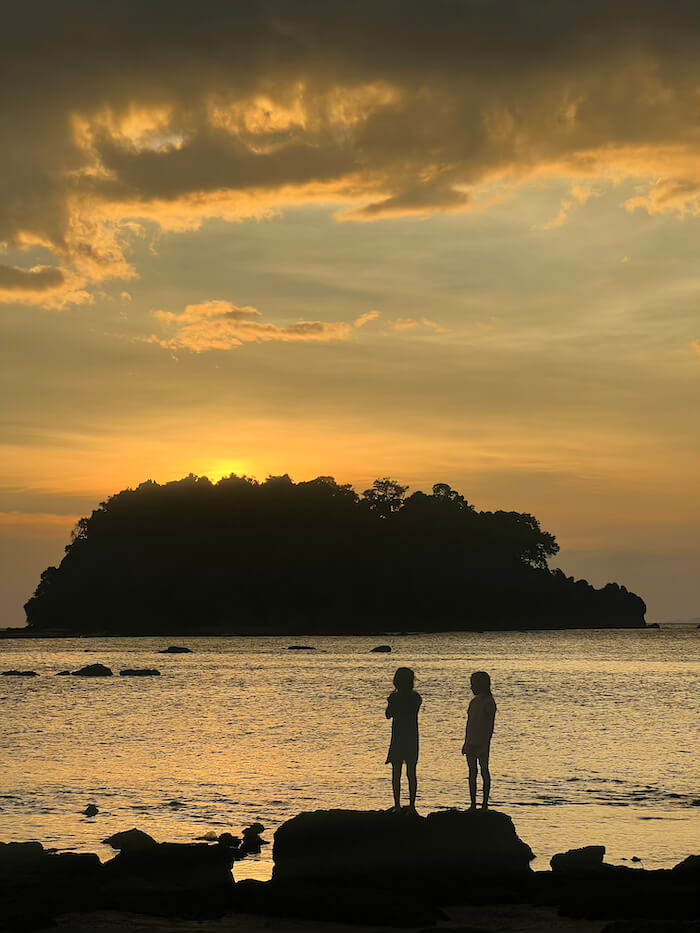
We filled our days on Koh Libong swimming in pristine seas, poking around for wildlife, and traveling across the waves whenever we needed a change of scene. We ate and drank well and watched the sun set every night. You could spend less time here, combine Koh Libong with other islands, and you’d have an excellent time.
On our final night on the island, the sun cast long shadows over the golden sand of Lang Khao Beach. The still sea perfectly mirrored our children as they stepped into the water, until their reflections dissolved into the ripples of their steps. The only sounds were a distant longtail, Thai reggae, and occasional shrieks of discovery from the kids.
Yes, it was worth a week.
Plan Your Trip to Koh Libong
Some links below are affiliate links. At no extra cost to you, we earn a small commission if you make a booking, which helps us keep our family on the road. Thank you for your support!
Getting There
By Air: Fly to Trang (TST) or Hat Yai (HDY) from Bangkok. Trang is significantly closer to Koh Libong and is the easiest option if schedules work, though Hat Yai sometimes offers cheaper or more frequent flights.
The Pier: From Trang Airport, it’s about an hour’s drive to Hat Yao Pier, the main gateway to Koh Libong. Private transfers, shared vans, and taxis are readily available. For convenience and reliability, we typically book these transfers through 12go.asia.
The Boat: From Hat Yao Pier, longtail boats shuttle passengers across the channel to Koh Libong. The ride takes only 15–20 minutes. Your hotel can usually arrange the transfer, or you can organize it in advance through 12go.asia if you prefer to have everything lined up before arrival.
Island Arrival: Most visitors land at Banphrao Pier and continue by songthaew (shared pickup truck taxi) or tuktuk for a short ride to Lang Khao Beach, where the majority of resorts are located.
Where to Stay
Accommodation on Koh Libong is simple but comfortable, with most options clustered along Lang Khao Beach on the island’s western coast.
Andalay Beach Resort is the island’s most polished property and where we chose to stay. Its beachfront bungalows, swimming pool, and well-run restaurant make it an easy choice for families or anyone wanting a bit more comfort while still enjoying Koh Libong’s laid-back atmosphere.
Libong Beach Resort offers beachfront villas and one of the best sunset viewpoints on the island. It’s a solid mid-range option with good facilities and a relaxed vibe.
Le Dugong Libong Resort is a smaller, quieter property with simple bungalows and direct beach access. It’s a good pick if you’re looking for something peaceful and a bit more affordable than Andalay.
Homestays and small guesthouses can also be found around the fishing villages, offering a more local experience for travelers comfortable with very basic amenities.
Where to Eat
Most visitors eat at their hotels, which generally serve reliable Thai and Western dishes.
Bang Ji Libong was our favorite meal on the island. It’s a simple restaurant in the fishing village near the dugong observation tower, but the seafood is exceptional. If you have time for just one meal outside your resort, make it here. The som tam goong—papaya salad with shrimp cured in lime juice—was very good.
Restaurants like the Fisherman’s Kitchen and the Roti Restaurant, located at the end of the same road that leads to Andalay Beach Resort, are a good break from the hotel fare (and cheaper too). We tried to never eat three meals from the restaurant.
Libong Sunset Bar sits just north of Andalay Beach Resort and quickly became our regular evening stop. Cold beers, happy-hour cocktails, and a perfect view across the tidal flats make it one of the best places on the island to watch the sun go down. We loved the Thai Reggae playlist.
When to Go
High Season (November–April): The best weather arrives during the dry season when seas are calm and sunshine is nearly guaranteed.
The Sweet Spot: January through March usually brings the calmest water and the most reliable weather for kayaking, snorkeling, and island hopping.
Monsoon Season (May–October): Koh Libong remains inhabited year-round, but some smaller resorts close or reduce operations during the rainy months. Boat crossings may also become less predictable depending on sea conditions.
What It Costs
Koh Libong is noticeably cheaper than many nearby Andaman islands.
Accommodation: Expect to pay roughly 1,200–3,500 THB per night for most beachfront bungalows or family rooms.
Meals: Local restaurants typically charge 120–300 THB per dish, with seafood dinners running slightly higher.
Boat Trips: Hiring a private longtail boat for island hopping generally costs 1,500–3,500 THB depending on duration and destination.
Cash is King: There are limited banking services on the island, and many small businesses accept only cash. Bring enough Thai baht to cover your stay. Andalay will let you settle your bill with a card for a 3-4% fee.
Booking/Tours
Koh Libong is not the kind of destination that requires structured tours. Most of the island’s best experiences—exploring tidal pools, kayaking along the coast, or watching for dugongs—are easily arranged independently.
Hotels can organize longtail boat trips to nearby islands such as Koh Lao Liang, Koh Kradan, or Koh Mook. These excursions are flexible and typically arranged the day before.
4-Island Tour from Koh Lanta to Koh Kradan with Beach Lunch
- Duration: 8 hours
- Includes: Lunch, drinks, and snacks. Snorkeling equipment provided.
- Vibe: You will be part of a group. Note, this trip departs from Koh Lanta, not Koh Libong.
- Flexibility: Reserve now and pay later. Free cancellation up to 24 hours before.
- Cost: From THB 1,400 per person.