Ratchaburi is too often just a place Bangkokers drive through on their way to the beach towns of the Thai Riviera. Guilty of doing exactly that a dozen times, we decided to extend a weekend visit to the Tha Chin River and venture deeper into this less-traveled province.
We were right to suspect we’d been missing something. Away from the main highway, gilded temples ornament limestone peaks that rise above green plains. In mountain ravines sit cool lakes where migrating shorebirds can rest. Cultural traditions like shadow puppetry coexist with the café culture now taking root along the Mae Klong River.
How Far Do You Have to Go to Leave Bangkok?
We love living and working in the city, but sometimes you need a break. This leads to a perennial Bangkoker question: how far do you have to drive to escape the sprawl? Two hours gets you outside the city, but often not far enough to feel like you’ve truly left it.
Not far beyond one of our favorite escapes, the Tha Chin River, is another river running parallel to it, the lower Mae Klong River. Get this far, and you’ll find that you haven’t just left the concrete behind, you’ve stepped back in time.
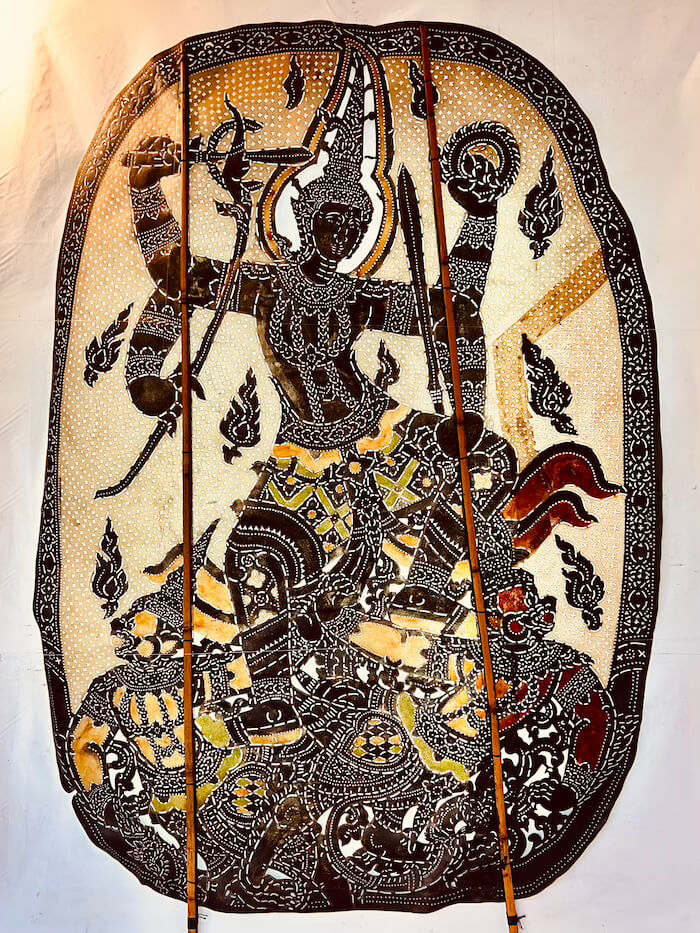
Shadow Puppets of Wat Khanon Nang Yai
Our first step back in time was Wat Khanon Nang Yai Museum, just across the Mae Klong. Set in a traditional Thai house, the museum showcases dozens of nang yai shadow puppets, much grander than the nang talung puppets we had previously seen in Nakhon Si Thammarat.
Like their southern cousins, these are carved from cowhide, but on a different scale. The carving is extraordinary: one especially expressive face is formed by leaving only a few threads in place—a remarkable use of negative space.
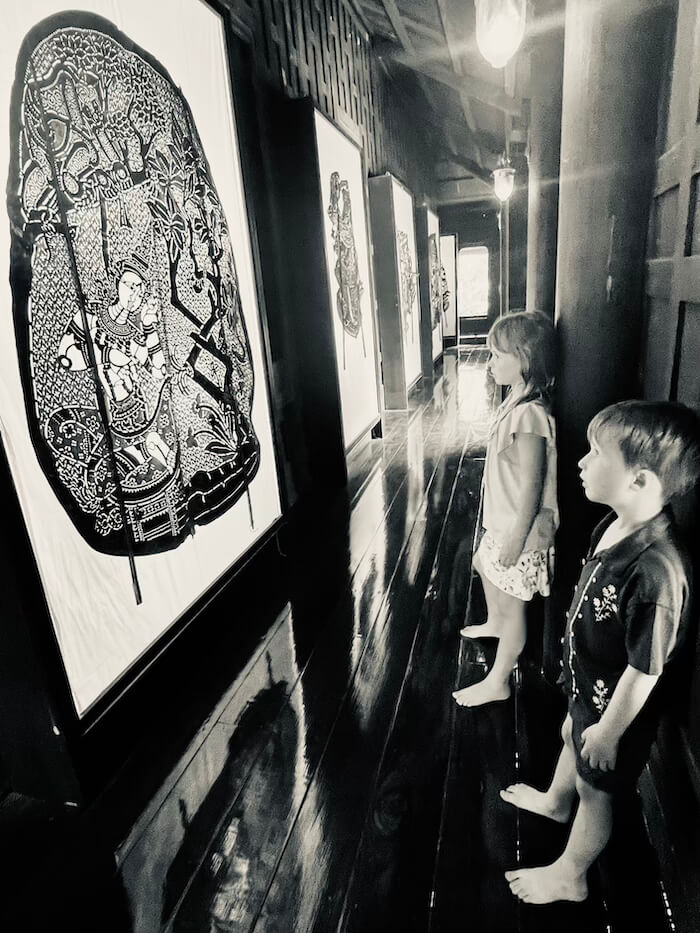
The collection has grown to over 300 puppets, mostly characters from the Ramayana. Only a couple of dozen are on display at any given time, which made them easier to appreciate. The descriptive information is in Thai only, so some phone translation might be necessary. Even that won’t help much if you, like me, don’t have a deep familiarity with the Ramayana. The puppets are incredible, though, and worth seeing even without the complete cultural context.
Students from the local school perform with the puppets every Saturday at 10:00 a.m. and then sporadically throughout the week. We were too late for the performance, but the kids very much enjoyed the coin-operated animatronic show located right outside the museum. Make sure you have a few ten-baht coins handy.
The buildings surrounding the museum house workshops with puppets in various states of construction or repair. I love these ground-floor workspaces, which somehow improve on the near-perfect concept of the garage workshop. Open on all sides, but with a solid roof and substantial beams, I can’t imagine a better place to tinker. As we returned to the car across wide lawns that extended to the forest, I felt like we’d come a very long way from Bangkok indeed.
Khao Ngu Stone Park: A Quarry Transformed
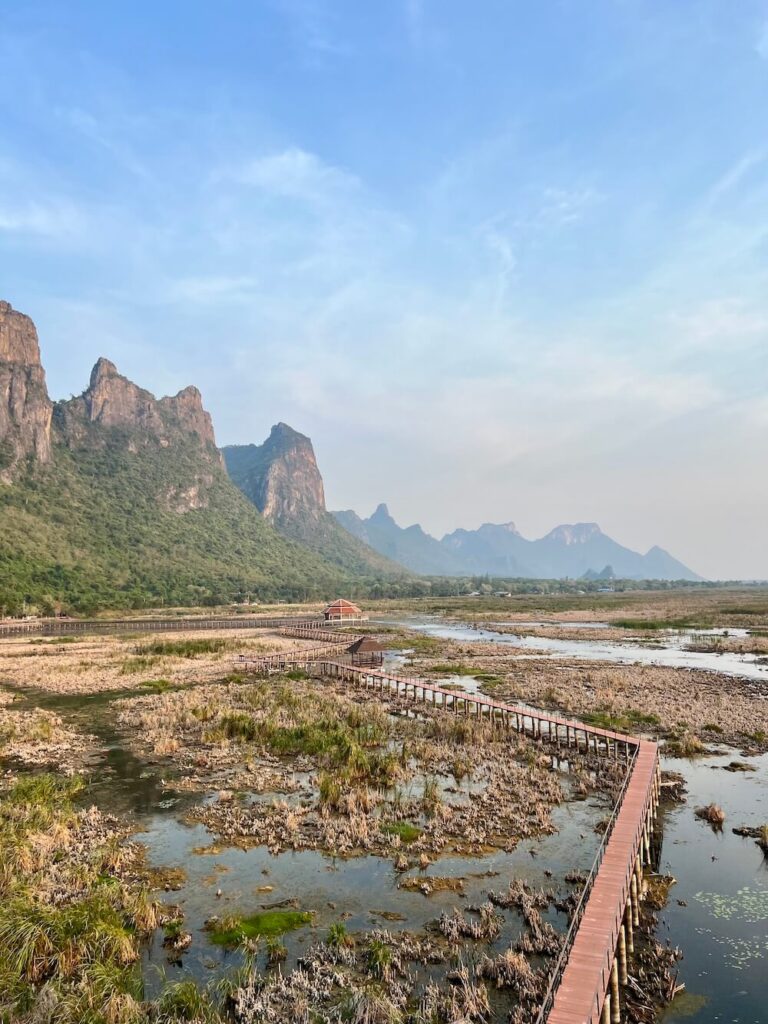
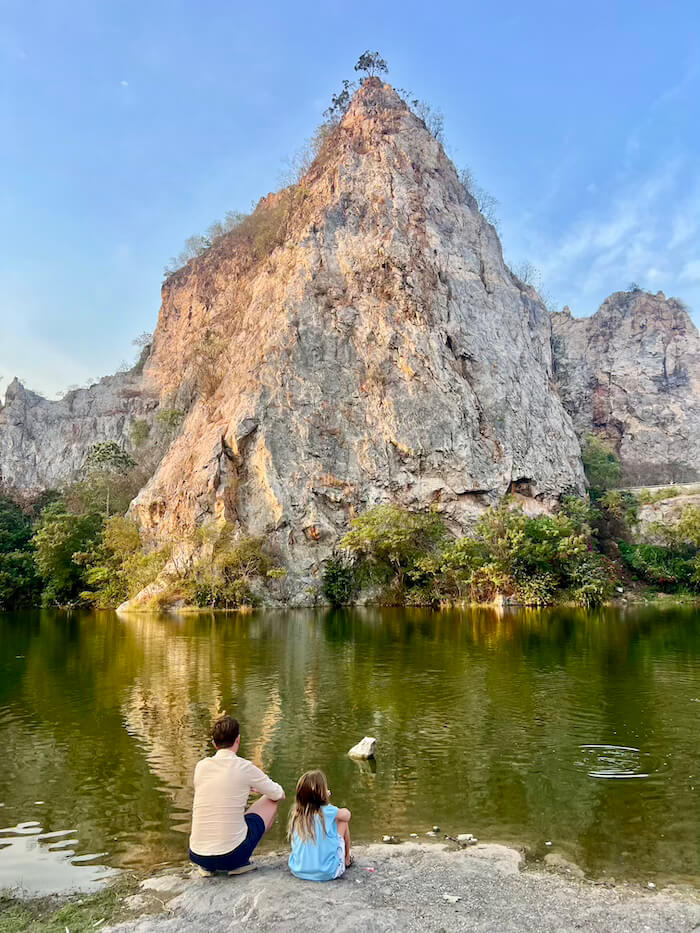
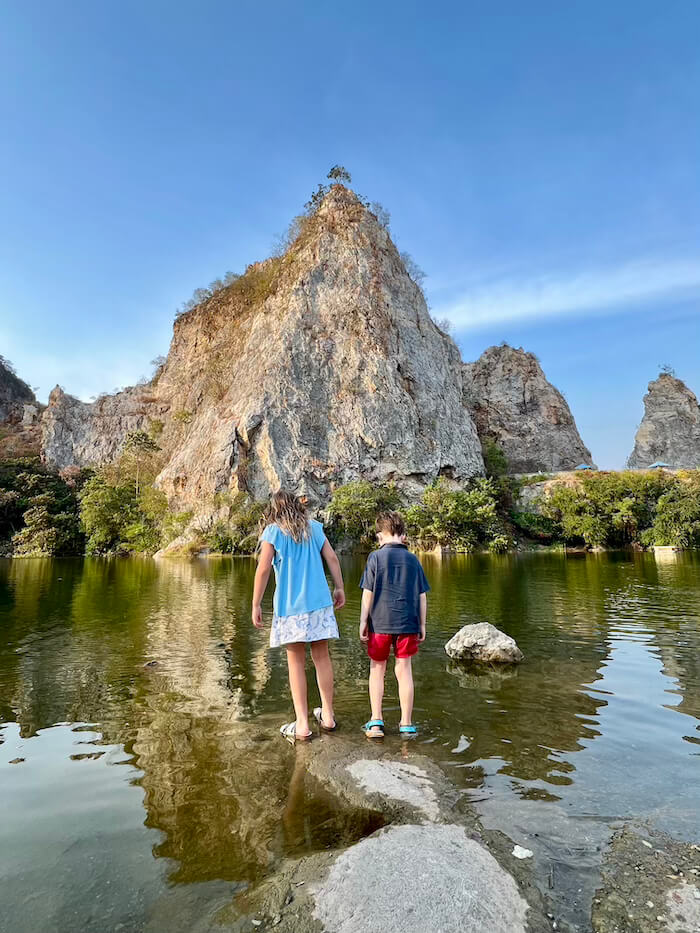
The sharp limestone peaks framing the lake at this abandoned quarry make Khao Ngu Stone Park feel much bigger than it is. The addition of an almost certainly superfluous suspension bridge only reinforces this distortion of scale. In reality, Khao Ngu’s mountains and lake-filled ravines are no bigger than a large city park, but what a dramatic park it is for that.
The park’s popularity is evidenced by the large parking area outside its main gate. On a late Sunday evening, however, it had largely emptied out, and the market stalls were already packing up for the day.
The first glimpse of Khao Ngu reveals a small lakeshore, with a few paddleboats still on the water. The bridge leads over a sliver of water to a railed wooden boardwalk that curves along the cliffside. The path is fringed with giant, narrow-leaved cattails that in Thailand are known as toop ruesi, “hermit’s incense,” named for their resemblance to the incense sticks of temples and shrines.
Nature has fully reclaimed the quarry. From the boardwalk, the kids’ sharp eyes caught Black Marsh Turtles gliding among the reeds. Easier to spot, shorebirds perched on stones set in the lake while dragonflies flitted above the water’s mirrored surface.
An Unlikely Encounter
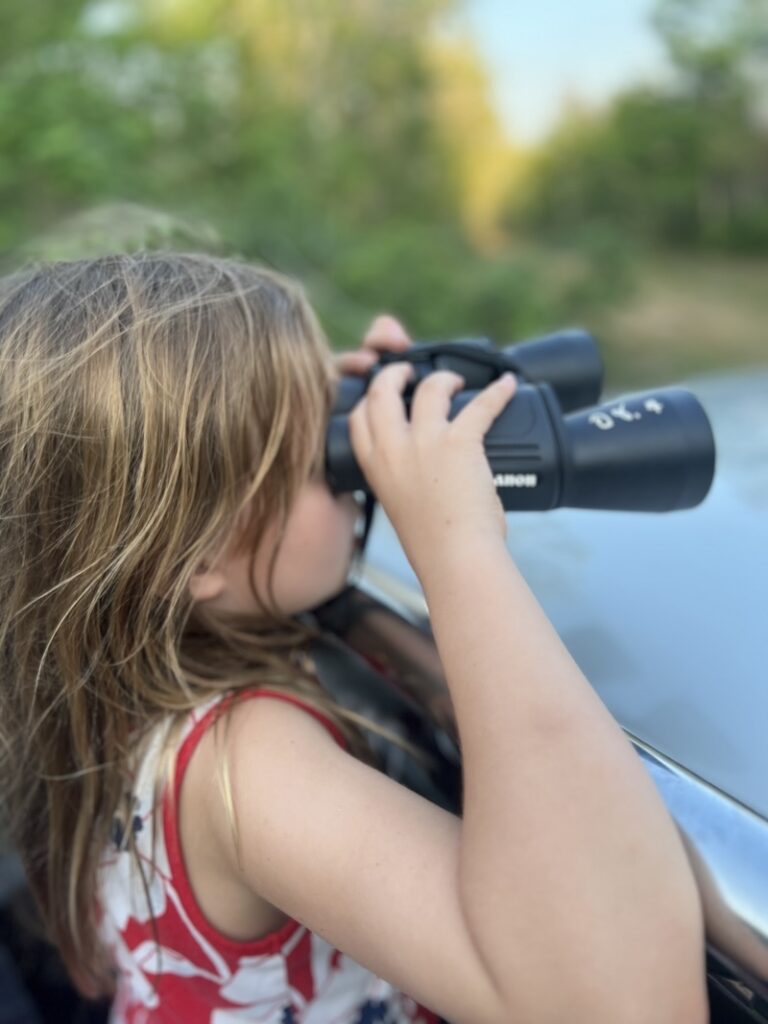
Isobel pointed out a few specks gliding above the lake, some 300 meters in the distance. “Look at those birds, they’re covered in golden feathers!”
While I am coming to accept that the kids see farther and more clearly than I do, I still had the wisdom of years on my side. “Egrets,” I say, citing one of the few birds whose names I know, “catching the sunset light.”
Isobel replied that these birds were loud and sounded like parrots. This also seemed unlikely, but now Kat was watching too. My wife loves birds, the brighter and noisier the better. She too was now staring out over the water at these mysterious shapes. A moment later, a swoop across a shaft of setting sun revealed not just bright golden feathers, but shocking blues as well.
With their long tail feathers and vivid colors, there was no doubt these were macaws. We eventually linked the birds to a man who periodically blew a brass whistle in short bursts. They were his birds and he was training them, though for what purpose we never learned.
We hiked to where he had four of them on a perch. Isobel approached and stared longingly at nearly a meter of bright feather and black beak. The man made no attempt to engage her or sell anything at all. Before she left, she picked up a single blue feather from the gravel, evidence of this unlikely encounter.
Huppha Sawan: The Heavenly Valley
Hoping to beat the heat, we were driving south before our hosts could even prepare breakfast. The plan was to climb Huppha Sawan, a limestone massif that rises vertically from the valley floor. It’s only a 45-minute drive, but for the first half-hour, there was nothing but miles of flat fields and still canals.
Then a series of sheer karst ridges rises from the valley. Their appearance is so abrupt that it’s no wonder the cliffs play host to so many temples. The most bizarre of these is our destination today: Huppha Sawan, or the Valley of Heaven, a collection of multi-faith statuary, sculpture, and temples that occupy the high points of the ridge.
The Bizarre Origins of Huppha Sawan
In the late 1960s, a Thai shaman named Suchart Kosolkitiwong founded a religious movement drawing on the then very-much-in-vogue ideas of anti-communism, millenarianism, and a variety of religious traditions. Among the aims seemed to be to prepare for—or perhaps postpone—the outbreak of World War III.
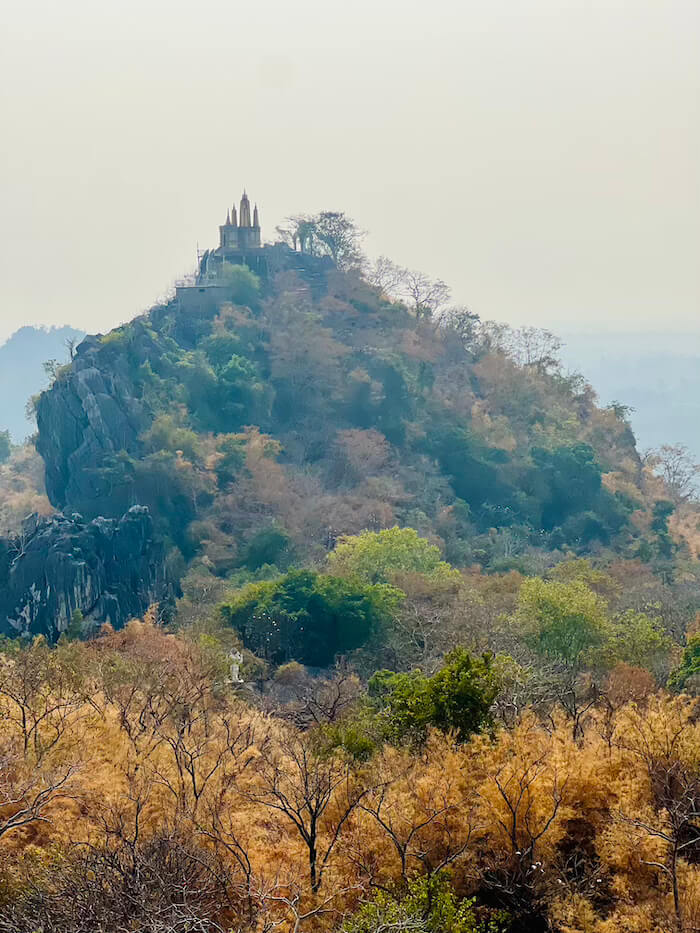
Throughout the 1970s, the movement attracted followers, and Suchart eventually created the International Federation of Religions, a sort of UN for world faiths. At the base of the mountain, empty dormitories and silent conference halls attest to this ambition.
By the late 1970s, Suchart led what authorities had begun to refer to as Thailand’s largest Buddhist cult. He grew increasingly paranoid, confrontational and, in the eyes of some, dangerously arrogant.
Thai authorities eventually dissolved the movement and charged its leaders with unlawfully occupying state land, illegal possession of arms, and insulting the king, among other crimes.
As I said, bizarre.
Hiking the 599 Stairs of Huppha Sawan
Ignorant of the history of this place (I had to read a Dutch academic paper on 20th Century Thai Religious Movements to learn about it), we stood at the bottom of a very tall, very steep set of stairs.
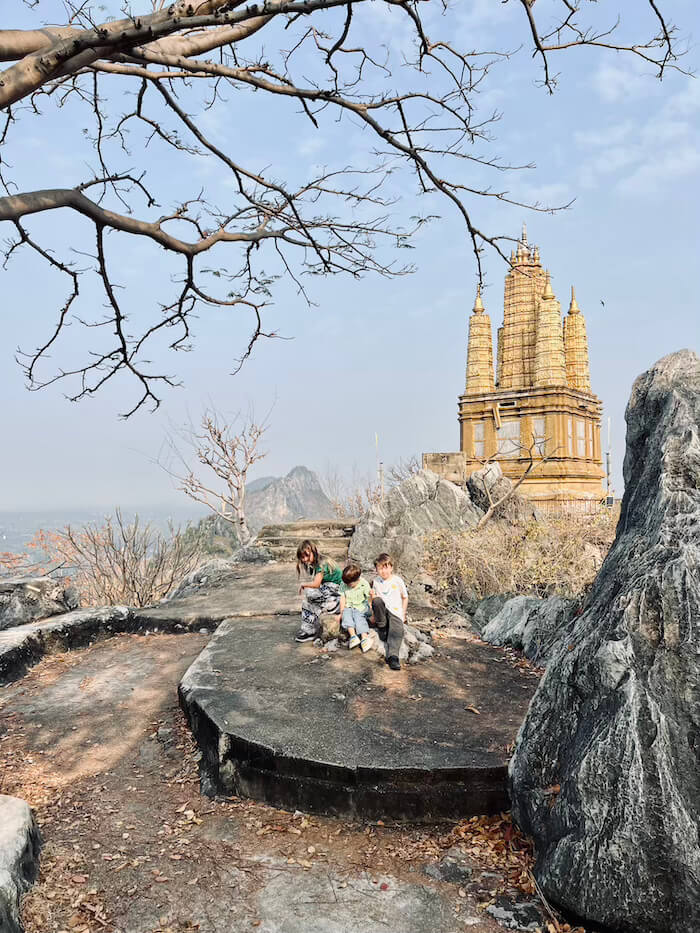
I had read reviews suggesting that Huppha Sawan had fallen into disrepair, but during our visit in 2026, that was not the case. A path of well-maintained concrete steps leads straight up the mountain. Too straight for my taste. Kat and I walked directly behind the kids to ensure we could stop them before they tumbled straight down the mountain. Switchbacks are good things.
Steep, short, and direct means a quick hike, however, and within ten minutes, we had arrived at the first landing. Signs directed us to the different sites: the golden pagoda, a statue of Christ the Redeemer, a grotto, and a Buddha figure, among others.
We first climbed to a golden pagoda, which offered fine views of over Ratchaburi and the rest of the ridge, even on a hazy morning. While the paths were in good shape, rubbish and graffiti contributed to a lonely, abandoned feel. Coming back from the temple, a lone macaque made an unsuccessful grab for Kat’s backpack, glowering at us as we retreated down the cliff.
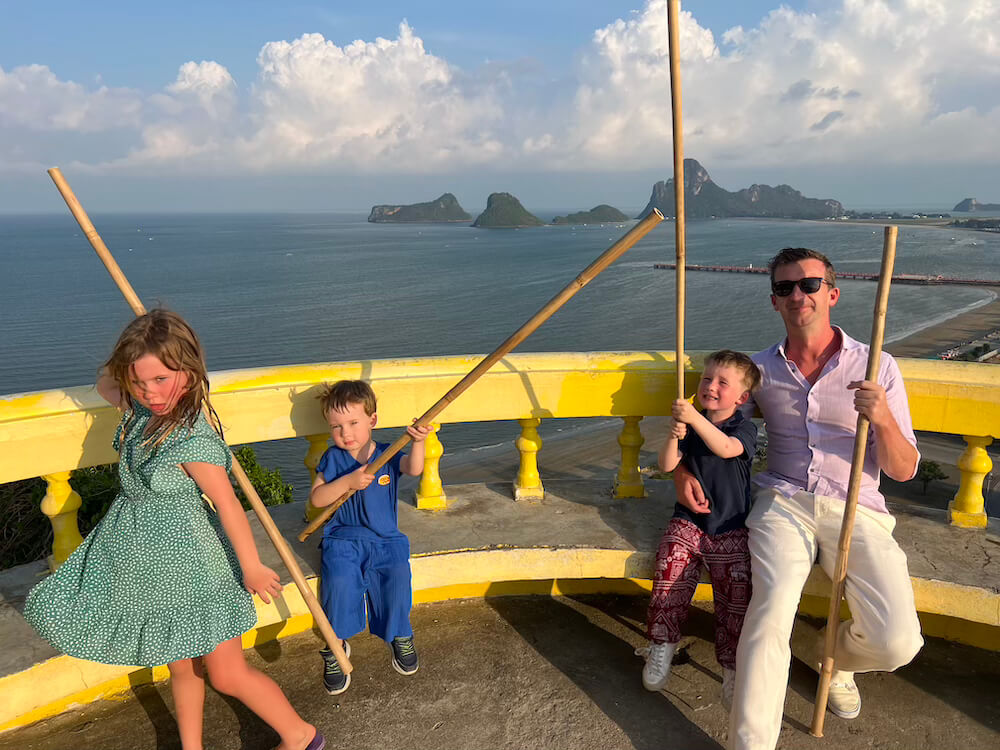
Through stands of bone-dry bamboo, we climbed to Huppha Sawan’s highest point. Here, standing atop a circular pediment, a statue of the Buddha watches over the whole site. We stood for a time, watching alongside him, before deciding to climb the stairs back down. Discarded water bottles lay beside the path and tissues tangled in the bare trees, but not a soul was to be seen.
This is one of the 50+ provinces we’ve visited over our three years in Thailand. For more tips, tricks, and itineraries, check out our dedicated Thailand page.
Plan Your Trip to Ratchaburi
Some links below are affiliate links. At no extra cost to you, we earn a small commission if you make a booking, which helps us keep our family on the road. Thank you for your support!
Getting There
By Car: This is an excellent “weekend escape” drive. From central Bangkok, it takes approximately 1 hour and 45 minutes to reach the heart of Ratchaburi via Highway 4 (Phetkasem Road) or the more scenic Highway 338. Most major sites, like Khao Ngu and Wat Khanon, are within a 20-minute drive of each other once you arrive.
By Private Taxi or Van: For those not keen on driving, you can hire a private van for the day from Bangkok (approx. THB 2,500–3,500 including fuel).
Alternatively, take a public van from the Southern Bus Terminal (Sai Tai Mai) to the Ratchaburi city center for around THB 120, then use local “Songthaews” or Grab to reach the specific sights. Good luck.
Where to Stay
We chose to stay on the Mae Klong to enhance the “escape from the city” vibe. Our top recommendation:
Located on the banks of the Mae Klong with its own pier, River Flow House Bangtanod is set in lovely gardens with some of the most lush bougainvillea we’ve seen. Family bungalow with a kitchen and a pool at the main house. Perfect.
Where to Eat
Whether it’s the weekenders from Bangkok or something else, Ratchaburi punches above its weight. We enjoyed every meal here, but these two stood out:
For lunch or dinner when you’re close to River Flow House Bangtanod, just on the other side of the river, Baan Yai Khun is excellent. They specialize in rice bowls, but I did very well with a pork-neck pad khra paow.
For a post-Huppha Sawan meal, Plumgoland is a short drive away but would be worth a long one. An organic farm that incorporates their produce into every meal. Try to get something with mango or passion fruit.
When to Go
The Cool Season (November to February): By far the best time for hiking the 599 stairs of Huppha Sawan. The skies are clear, and the humidity is low enough that the “Heavenly Valley” actually feels heavenly rather than like a sauna.
The Rainy Season (June to October): While you might get a late-afternoon shower, the “green plains” are at their most vibrant, and the lakes at Khao Ngu are full and reflective.
The Saturday Performance: If you want to see the Wat Khanon shadow puppets in action, you must be there on a Saturday morning at 10:00 a.m. for the student performance. Otherwise, contact the abbot to see if any other performances are on.
What It Costs
Wat Khanon Nang Yai Museum: Entry is free, though donations for the upkeep of the puppets and the local school program are highly encouraged. THB 10 to activate the animatronic shadow puppets!
Khao Ngu Stone Park: Entry and parking are free. If you want to take a paddle boat out on the lake, expect to pay around THB 40–60 for 20 minutes.
Huppha Sawan: Free to enter, not clear you could spend money here if you wanted to, though a vendor had just begun setting up as we left the site.
Booking/Tours
Ratchaburi is still blissfully under-indexed for major tour operators. While you can find “Floating Market” tours from Bangkok, they rarely venture to the places we’ve described here. Your best bet is to rent a car at BKK or DMK airport or arrange a private driver through your hotel to ensure you can reach the deeper karst valleys and hidden museums.
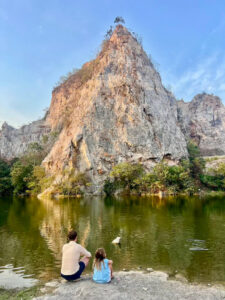
Private Luxury Car Hire with Professional Driver
- Duration: 5-12 hours.
- Prices depend on how long you’re going for, but this is an excellent option for those not interested in driving.
- Vibe: Private driver and your group only, but don’t expect any guide services.
- Flexibility: Reserve now, pay later. Free cancellation up to 24 hours before the trip starts.
- Cost: From THB 4,000 for 5 hours to THB 7,500 for 12 hours.