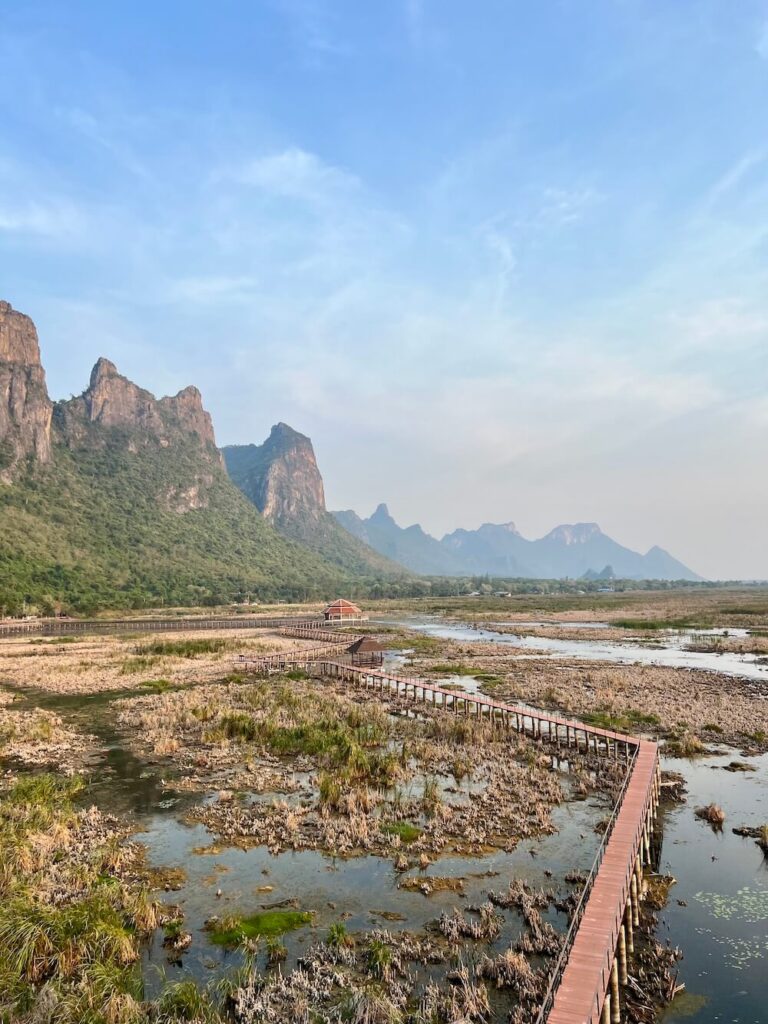
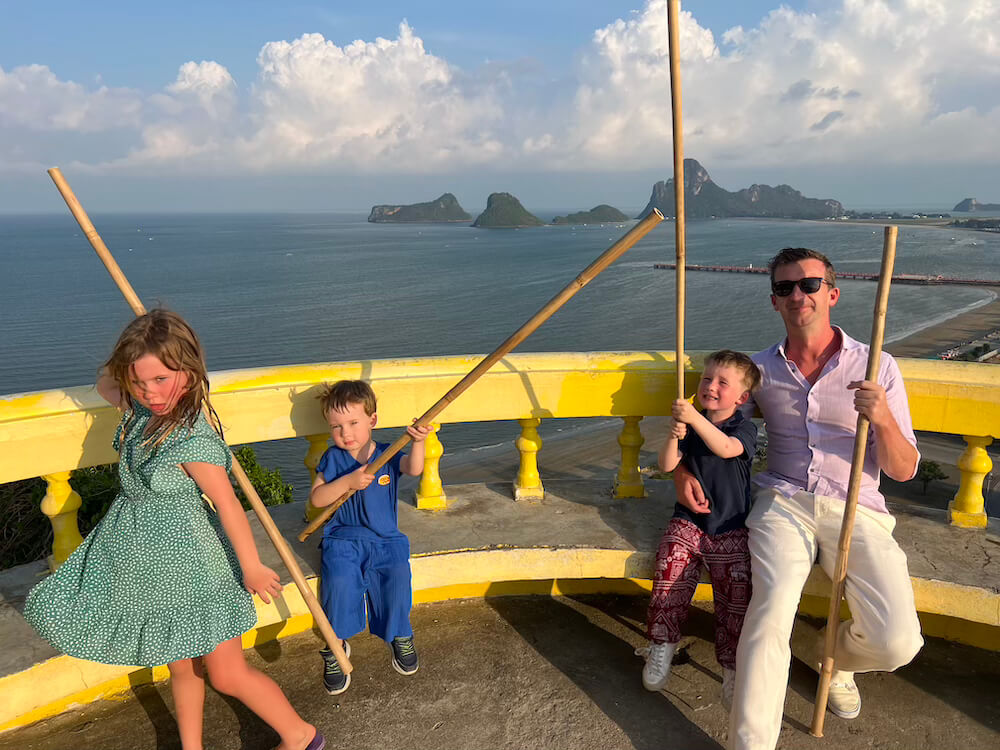
As lovely as Phuket and Krabi are, the true magic of Thailand’s Andaman coast lies offshore. The Trang Islands — Ngai, Kradan, and Mook — along with nearby Koh Libong, offer better beaches and smaller crowds. Even if we were looking for a livelier scene, I’d take Koh Lipe over the coast any day.
The island I’m going to tell you about today is even more off the radar. I worry that even mentioning it might land me on the kill list of some elderly Dutchman who’s quietly been bringing his family here for 30 years. When I checked in, they were genuinely baffled that I’d even found the place, so many of their guests are ‘legacy’ regulars.
That island is Koh Bulon Lae, and I only found it while fantasizing about where to go for our next escape from Bangkok. Zooming in on a tiny speck of land a couple of dozen kilometers off the coast, I saw a small village. Centered around a narrow spit of sand were a couple of small hotels ready to take guests. We had to visit.
How to Get to Koh Bulon
Despite being well off the tourist radar, getting to Koh Bulon is not at all difficult. The island is off the coast of Satun, the next province down from Trang, but the routine is the same. If coming from outside the region, fly to either Hat Yai (HDY) or Trang (TST) airport, from where you can arrange transport to Pak Bara Pier. From the pier, it takes around 45 minutes to travel the 23 kilometers to the island.
Koh Bulon is also well-served by the network of speedboats that links up Thailand’s Andaman Islands. Boats come from as far north as Phuket and travel as far south as Langkawi, across the Malaysian border. Five or six hours on a speedboat over choppy water is a punishing way to travel; we’d recommend traveling overland where possible.
We arranged everything directly through the Bulone Resort, where we’d be spending four nights. Still properly employed at the time, we didn’t mind paying a bit extra for seamless transitions. As we transition to full-time travel, when we’ll have a lot more time than money, we’d absolutely book ourselves through a service like 12go.asia.
Where to Stay on Koh Bulon and What to Eat
Zoom in on a map of the island and you’d imagine a bustling little tourist hotspot: nine or ten hotels and at least as many restaurants. The reality is much more modest – besides Bulone Resort, only a handful of other places, including Pansand Resort, Marina Resort, and Panka Bay, appeared to be operating.
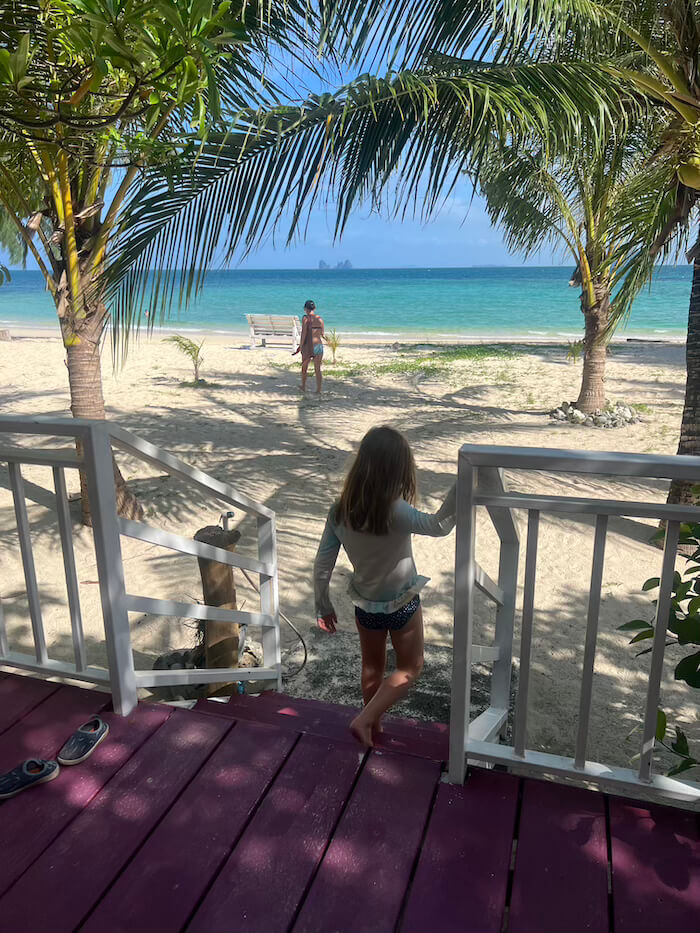
On the hill above the beaches, the jungle has reclaimed the resorts that didn’t survive the pandemic-era crash in tourism. The same is true of many of the home-based restaurants that had sprung up to support the increase in guests. That is largely gone now, leaving just scattered collections of bungalows in a few of the island’s bays.
Fortunately, these are all quite good. Bulone Resort was a clear winner for our family, with lovely cottages set under trees at the edge of a white sand beach. Power is cut during the afternoons, but we were happy to spend that time at the beach or simply open the windows and let the breeze do the work.
Bulone Resort has a good restaurant on site, which we visited frequently. For the sake of variety, and to save a few baht, we had half of our meals at “The Sense,” a beachside restaurant on the other side of the peninsula. The lovely staff serve fresh seafood directly on School Beach, named for the village school that backs onto the sand. We wanted for nothing else over our four days on the island.
And What to Do on Koh Bulon?
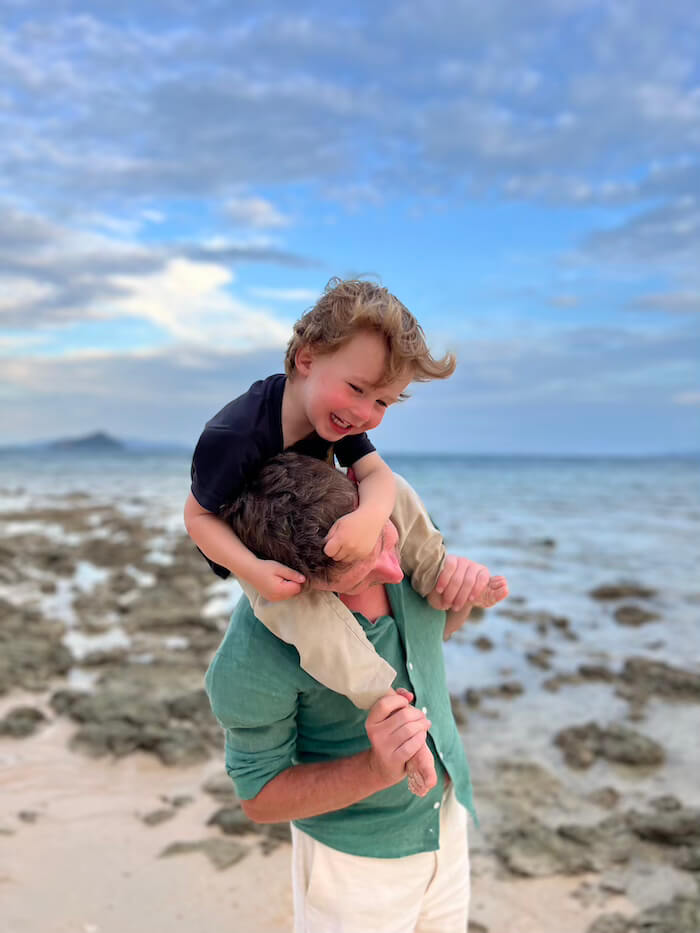
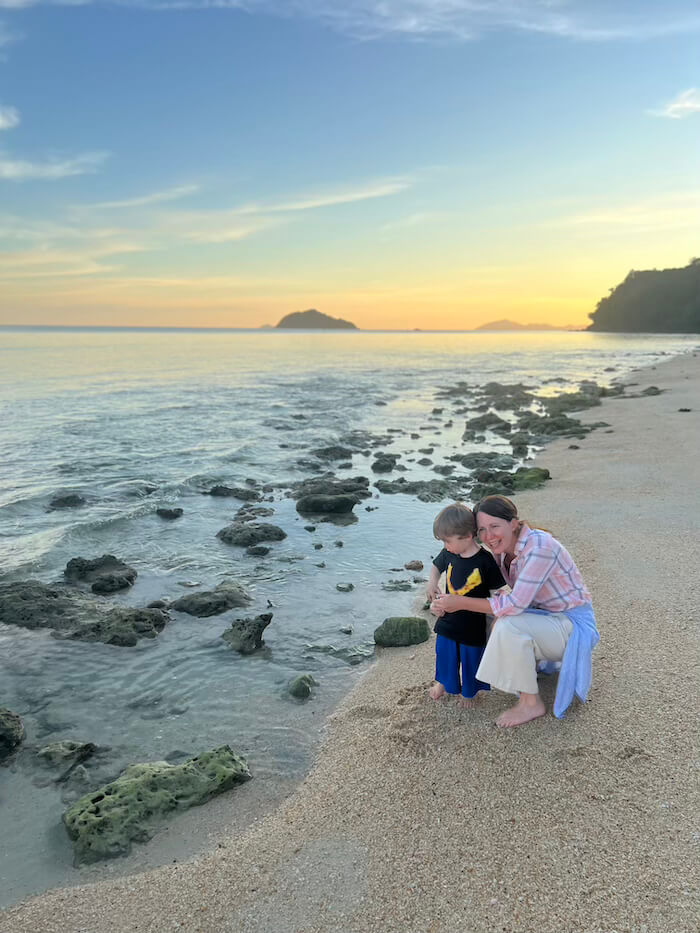
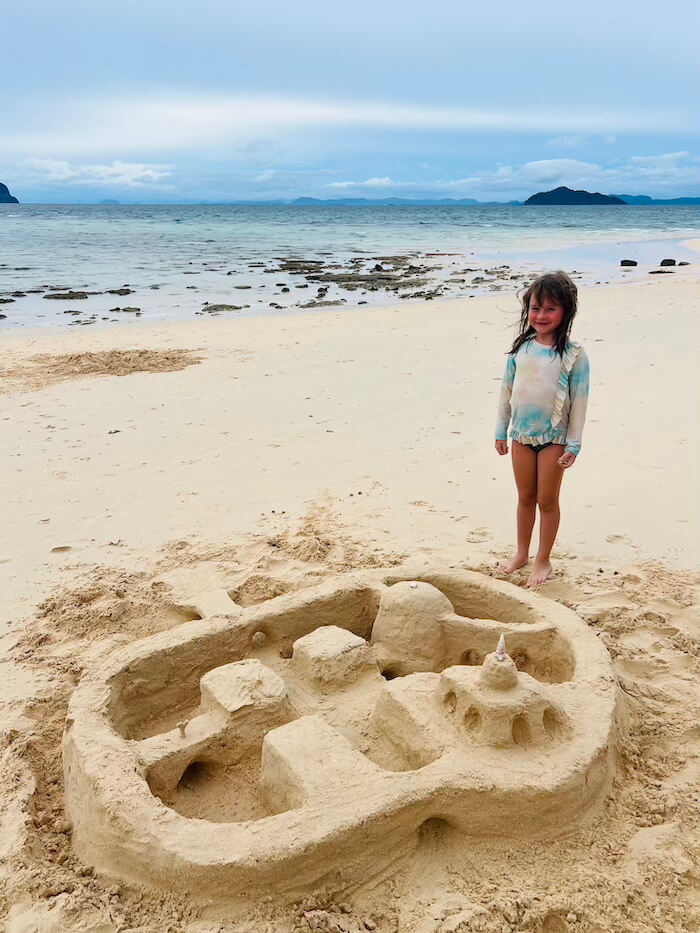
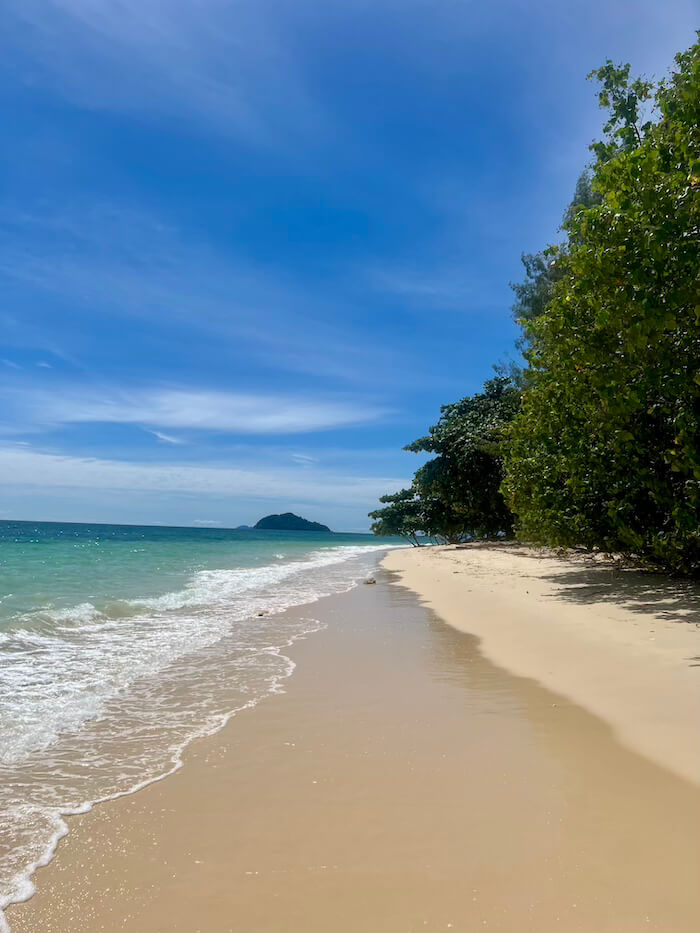
Absolutely nothing, for as long and with as much dedication as possible. We let the tides dictate our swims, spending at least four hours per day in the water and even more time playing in the sand. The kids built some of their most monumental sandcastles using Bulon’s fine sand. At low tide, we read books or took the resort’s kayaks out for a paddle around the island.
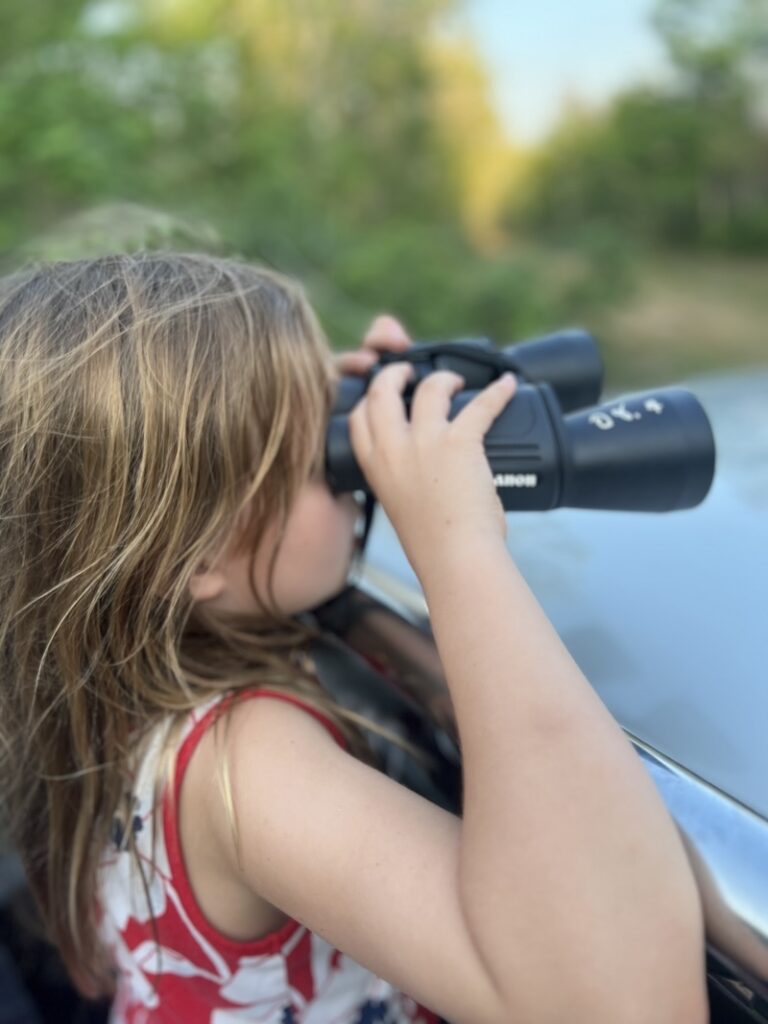
Hornbills, hermit crabs, and monitor lizards, firm family favorites, are common sightings on the island, though there’s little else living on so small a patch of land. The snorkeling to the north of Bulone Resort is reasonably good – scattered patches of coral extend in broad fields rather than a concentrated reef. It’s a long swim at high tide, so fins are quite useful.
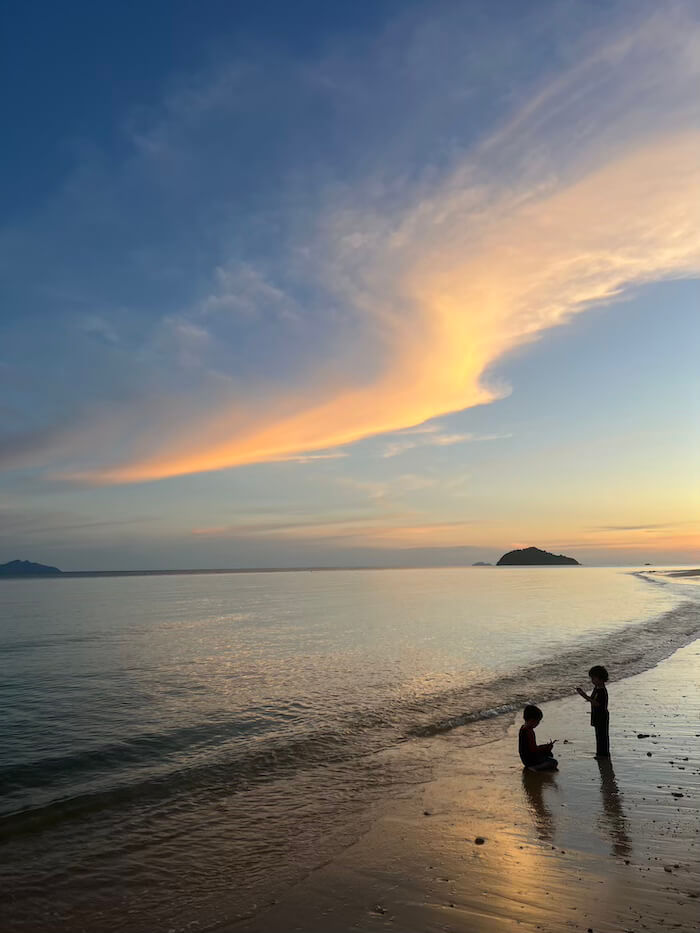
Lunches were long and slow, breakfasts and dinners too. Each evening, we took long walks around the length of the island’s eastern peninsula, aiming to finish on School Beach for the best views of the setting sun. It’s just a lovely, quiet way to spend a few days.
Andaman Extremes: Combining Koh Bulone and Koh Lipe
I have a weakness for thematic travel, so from Koh Bulon we continued on to Koh Lipe for no better reason than to stage a study in contrast. And so, one early afternoon, we sat bobbing in a longtail waiting for the Bundhaya Speed Boat to carry us the 46 kilometers south to Lipe.
Even boarding the boat felt like entering a different world. Filled with a far younger crowd, some of whom apparently had strong enough backs to endure the five-hour journey from Phuket to Lipe, they looked as surprised to see our kids as we were to find ourselves surrounded by someone else’s. An hour later, we arrived at Lipe’s main beach and saw more ferries than we’d seen people all week.
We’ve written about Lipe in more detail elsewhere, but for now it’s enough to say it has almost nothing in common with Bulon. Which did we prefer? Both. As we’ve traveled more, we’ve gotten better at understanding what different places offer us — and when we need each one. Bulon is quiet, isolated, solitary—not for everyone. Lipe is loud, busy, and boisterous—also not for everyone. At the right moment, they’re both exactly what we’re looking for.
Plan Your Trip to Koh Bulon Lae
Some links below are affiliate links. At no extra cost to you, we earn a small commission if you make a booking, which helps us keep our family on the road. Thank you for your support!
Getting There
By Air: Fly to Hat Yai (HDY) or Trang (TST). Hat Yai often has more frequent connections from Bangkok, but Trang is the slightly shorter drive.
The Pier: Arrange a minivan to Pak Bara Pier (approx. 1–2 hours from either airport). There is simply no better service for this kind of thing then 12go.asia.
The Boat: Speedboats depart Pak Bara daily. The crossing takes ~45 minutes. Tip: If coming from other islands, the Satun Pakbara Speedboat and Budhaya Speedboat lines connect Bulon to Lipe, Kradan, and Lanta during high season.
Where to Stay
While the tourism industry on Koh Bulon suffered during the pandemic, the hotels that survived are generally very good. Neither resort is bookable on any of the major platforms, you’ll need to arrange accommodation directly with them. Didn’t we say off-the-map?
Bulone Resort offers the island’s best beachfront, with simple, shaded cottages perfect for families. While power cuts out in the afternoons, the white sand and turquoise water are just steps away. The resort’s restaurant is solid, with Thai and Western options (and also keeps power all day). Why stay in your room?
Pansand Resort provides a manicured garden setting on the island’s southern sands. Known for its spacious bungalows and excellent on-site bakery, it’s a comfortable, long-standing favorite for a peaceful retreat.https://www.pansandresort.com/
If you’re looking for something you can arrange through a traditional platform, Pankabay would be our top choice.
Panka Bay offers a more secluded, budget-friendly alternative on the island’s western side. Tucked away from the main resort stretch, its simple bungalows provide a rugged, authentic escape for travelers seeking total quiet and a front-row seat to the local fishing village’s rhythmic daily life.
Where to Eat
Most guests take their meals at the hotel restaurants, which is certainly the most convenient approach.
The Sense serves fresh, locally caught seafood directly on the sands of School Beach. With friendly service and a relaxed, toes-in-the-sand vibe, it’s the island’s premier spot for a sunset dinner. As an added bonus, it’s also less expensive than the resort restaurants.
Koh Bulon is a living community too. A few small shops provide conveniences and local entrepreneurs operate restaurants on what seemed to be a slightly irregular schedule. Worth exploring for sure.
When to Go
High Season (November–April): The only time the island is truly “open.” The Bulone Resort shuts down entirely from June to September.
The Sweet Spot: February to March offers the calmest seas and best visibility for snorkeling.
Note: Many resorts close or run on skeleton crews during the monsoon (May–October) due to exposed crossings. Even finding a boat willing to take you can be challenging at this time of year.
What It Costs
National Park Fees: Koh Bulon is technically part of Mu Ko Phetra National Park. Keep ~200 THB per adult ready for the entry fee if a ranger is present or you are otherwise charged.
Daily Budget: Expect to spend 1,500–3,500 THB per night for a decent family bungalow. Meals are affordable (150–300 THB per person).
Cash is King: There are no ATMs on Koh Bulon. Bring more Thai Baht than you think you’ll need. Some hotels, including Bulone Resort, will accept credit cards, but there’s often a transaction fee attached if you’re not using cash.
Booking/Tours
Koh Bulon Lae doesn’t require a tour operator, you need only get to the island to experience its tranquil charms. Arrange your transfers well in advance for best results.
Island Hopping with Satun Pakbara Speed Boat
- Duration: 45 minutes, but depends on destination.
- Includes: Transfer only, no other perks.
- Vibe: Just moving your body, but we found it to be quick, comfortable, and safe.
- Flexibility: Boat tickets are generally non-refundable.
- Cost: From THB 1,200 per person.