Finding Thailand’s best diving and snorkeling requires traveling a bit. Near the maritime border with Myanmar, the Surin Islands offer some of the country’s most beautiful reefs, excellent visibility, and smaller crowds than better-known spots like the Similan Islands or the southern Andaman Sea.
But to experience the Surin Islands at their best, staying at least one night—more if possible—is essential. A crowded day-trip speedboat with 50 people is a very different experience than a longtail shared with only a few others.
Just discovering the Southern Roadtrip Tour? Check out our review of our trip on Koh Phra Thong, a lovely but lonely island accessible from the same pier that takes travelers to the Surin Islands.
Getting to the Surin Islands
The Surin Islands feel remote and quiet once you arrive, but the journey begins in a far less peaceful place. Whether joining for the day or staying several nights, everyone passes through the same departure point—and the first leg of the journey is rarely relaxing.
Just as with Koh Phra Thong, trips to the Surin Islands begin at Khura Buri pier. We hopped off our longtail, walked across the parking lot to the neighboring pier, and joined a multitude of travelers as names were checked off and boats assigned.
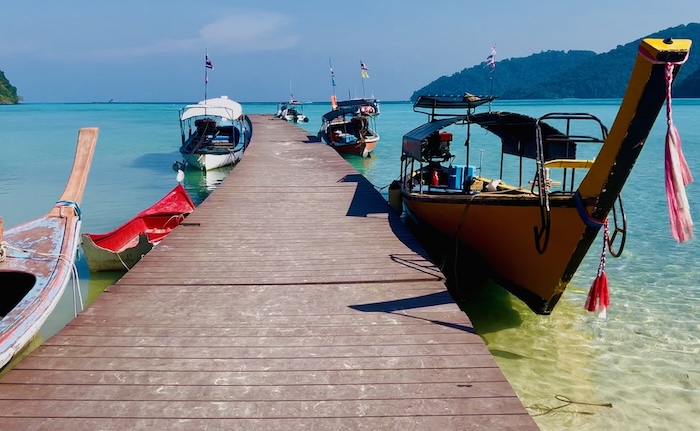
It’s a chaotic introduction to these peaceful islands, but an efficient one. A guide ushered us onto the correct boat, and within half an hour we were speeding 60 kilometers out to sea.
These are the standard speedboats used all along Thailand’s Andaman coast: high-sided and windowless, built for speed and safety rather than the view. If you don’t mind the sun, the open seats at the bow make the journey feel like something you’d choose rather than endure.
Straight to Ao Bon Bay for the First Swim
The boats carry both day-trippers and overnighters, meaning the action starts immediately upon arrival. Itineraries shift with the weather, tides, and operator, but the first stop is usually a snorkel site. It’s worth remembering while packing that orderly passengers quickly become dripping, fin-footed sea people. Everything gets wet.
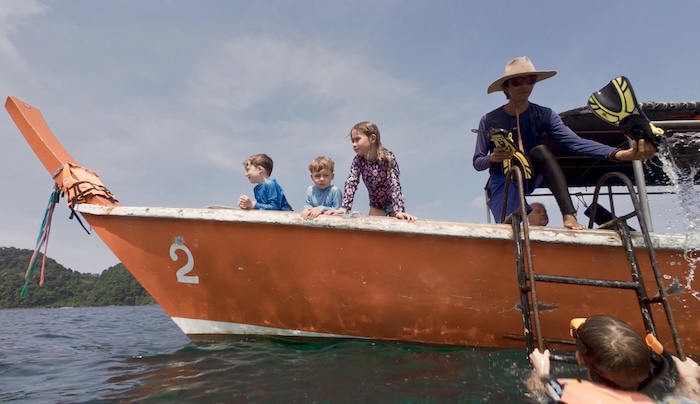
And it’s hard to mind. As the boat slowed, anticipation built. Passengers who had spent the last hour sheltering inside stood and peered over the sides for the first time. The deep green water of the Khura Buri tidal flats transformed into brilliant aquamarine, while mangroves gave way to steep, jungle-covered island peaks.
The trance breaks with the first splash of a diver jumping overboard, triggering a scramble to be next. Newbies stomp the length of the boat already wearing their fins, or stare in disgust as other people spit into their masks.
The kids know the routine well. Isobel is usually the first in the water. I’m not far behind and wait with the boys until Kat joins us. The challenge is keeping everyone together when there are magnificent things to see right beneath us.
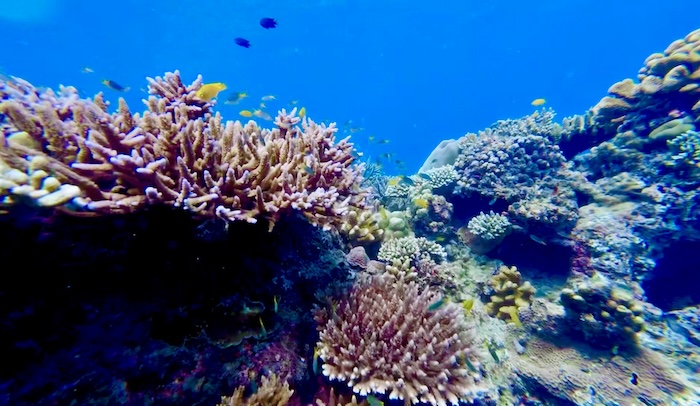
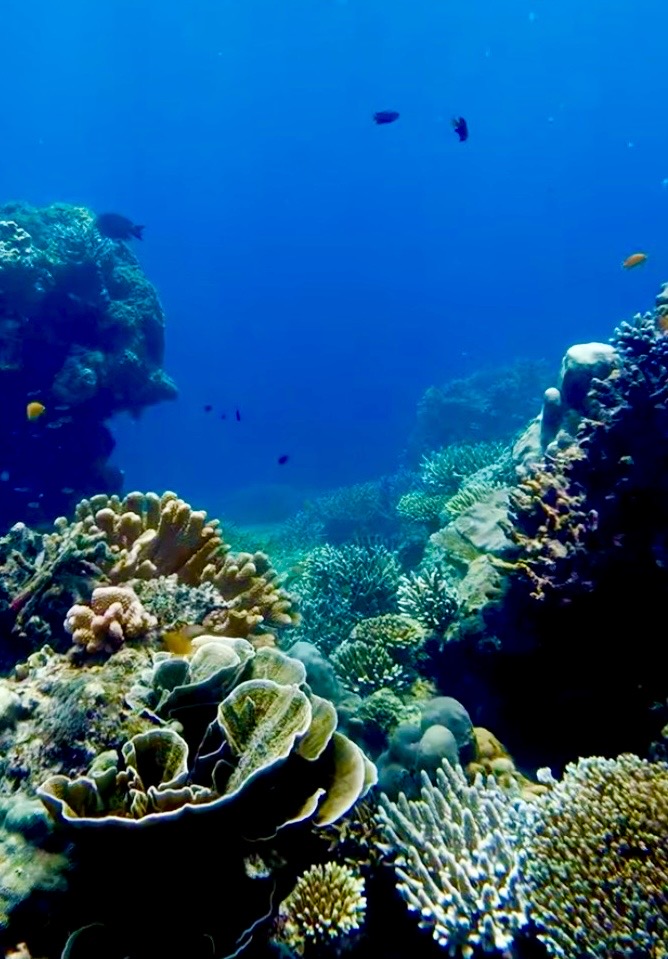
When we finally peer below the surface, memories of the long boat ride evaporate. Ao Bon is known for its porites: massive hard corals that glow a striking blue. It’s a shallow reef, and the calm bay makes for a perfect introduction to the islands. More unusual reef-dwellers, like crown-of-thorns starfish, stand out sharply against the smooth coral mounds—perfect for the kids, who always claim to have spotted them first.
The Moken Village: Testament to a Disappearing Way of Life
Most trips to the Surin Islands include a stop at the “Moken Village.” Around 70 households have settled here, living in rows of stilted bamboo huts at the edge of Ao Bon Bay. The Moken are traditionally nomadic sea-dwellers who have lived throughout the Mergui Archipelago for hundreds of years.
The village is as neatly organized as an American suburb, with rows of uniformly sized houses. This feels striking for a community that traditionally spent much of the year living on boats. The Moken only began building large numbers of permanent structures on the island in the 1990s, but two disasters—the 2004 tsunami and a 2019 fire— destroyed those settlements. The village we walked through is a more recent reconstruction, with a layout designed to reduce the risk of future disasters.
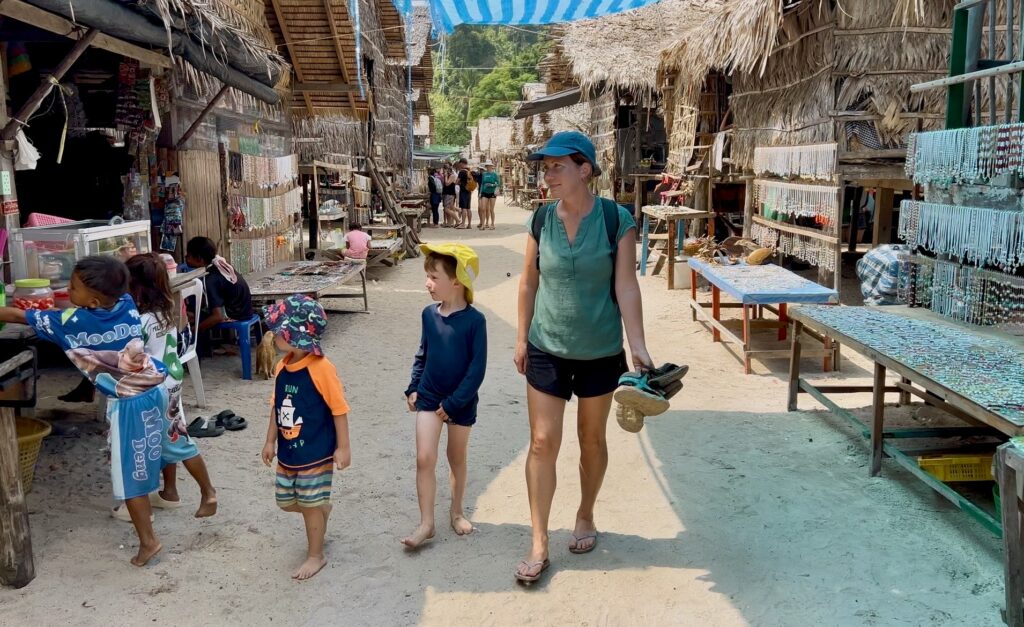
There’s a single path through the village, running parallel to the beach. Every house has a table out front selling beaded bracelets, fridge magnets, carvings of whale sharks, and other trinkets. Dozens of small children, and an alarming number of cats, hide from the sun beneath the houses.
As the Moken move onto land and leave behind their traditional way of life, a turn towards tourism is understandable. When hundreds of visitors pass through a small village every day, some degree of commercialization is inevitable.
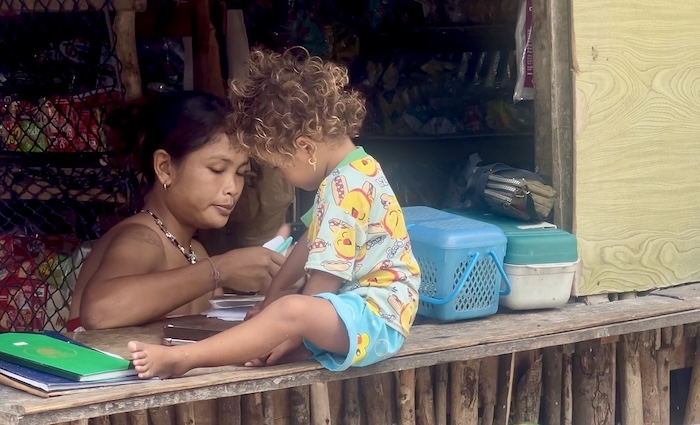
It may not feel like the most “authentic” excursion in Thailand, but authenticity doesn’t feed anyone’s family. While you may not get a sense of what Moken life was once like, you see what it’s like now. To us, it did not seem especially different from village life elsewhere in rural Thailand—or in many other parts of the world. That may be a loss for anthropologists and dreamers, but I’m not sure I could say the same for the Moken.
Bungalows, Beach Tents, and Buffets at Park Headquarters
After the morning activities, the boat takes everyone, day-trippers and overnighters alike, to park headquarters for a buffet lunch. They seem to serve the same seafood curry and spaghetti bolognese every day, and it’s below typical Thai standards, but there is at least plenty of it. The review I read noting that nobody comes here for the food told no lies. Plates are zealously controlled; you receive one and you’d best not lose it if you want to eat.
We had upgraded to a bungalow and checked in after lunch. This felt like a good use of 1,000 baht. I understand that the tents, which are on a different beach, are not bad either. A shower and clean sheets after a day of diving felt like a luxury worth splurging on, however. The view alone justifies the price.
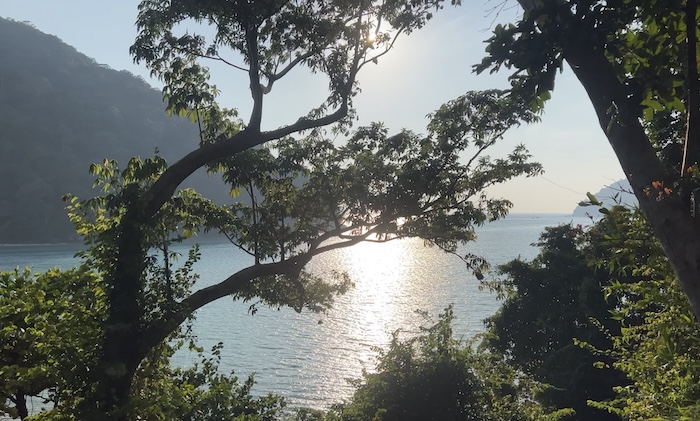
After a bit more swimming in the beautiful, but crowded bay, we returned to the boat for the afternoon sessions. We had adjusted too quickly to island life and thought we could remain shoeless. The wooden pier was blistering at midday, and we dashed between patches of shade to avoid burning our soles.
Ao Dao (Turtle Bay) and Ao Mai Ngam
The same sun that had made the pier untraversable was now illuminating our first snorkel spot beautifully. Ao Dao is a slow drift over a shallow reef. Normally, currents are a nightmare with the kids—a quick dive down for a close-up look at the reef, and they’ve floated 20 meters away.
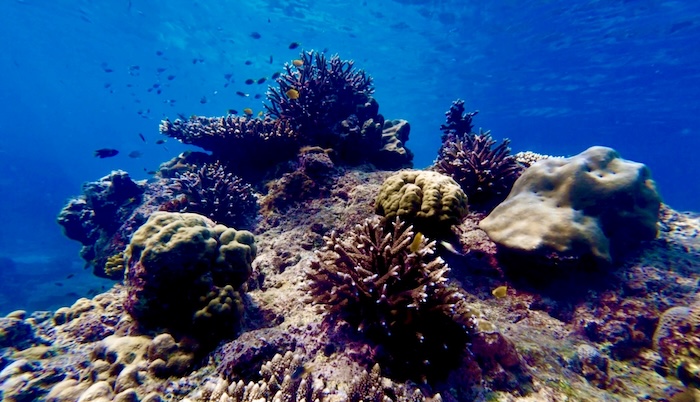
While this was the strongest current of any of our swims, it was still completely manageable. We comfortably drifted above brilliantly colored reefs that looked far healthier than I’d been led to believe. With no need to swim, the boys floated face down in their life jackets, taking sips of air just often enough not to terrify their parents.
The second snorkel started in deep water. Boats moor well off the reef at Ao Mai Ngam and we had to swim 30-40 meters to reach the coral. Henry had never seen anything like this: a blue expanse stretching endlessly in all directions. I was worried he’d panic, so I kicked hard to tow him to the reef more quickly. I needn’t have bothered. As we moved through the blue void, he raised his head and told me very calmly that “this one didn’t have very much to see.”
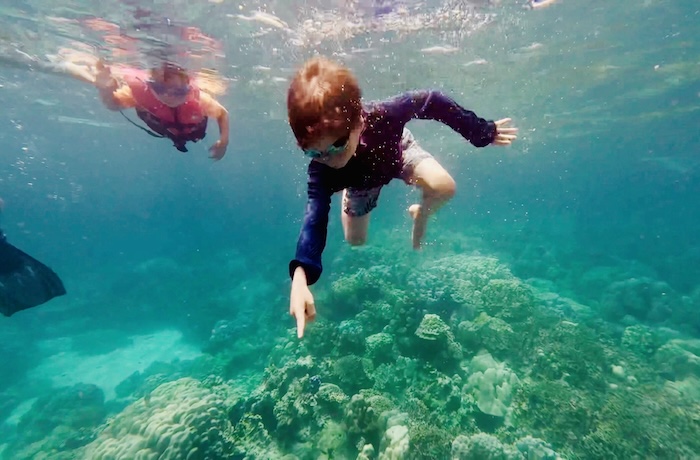
Fortunately, the reef that was our destination did. Ao Mai Ngam has splendid columns of striking blue coral that rise from deeper waters. It’s impossible not to dive to their bases and spiral slowly around them up to the surface.
The vertical structure of these columns allows easy access to different habitats. In the deeper waters are fan corals, while sea anemones and their resident clownfish occupy the middle reaches, and the tops are crowned with branching corals sheltering the smallest fish.
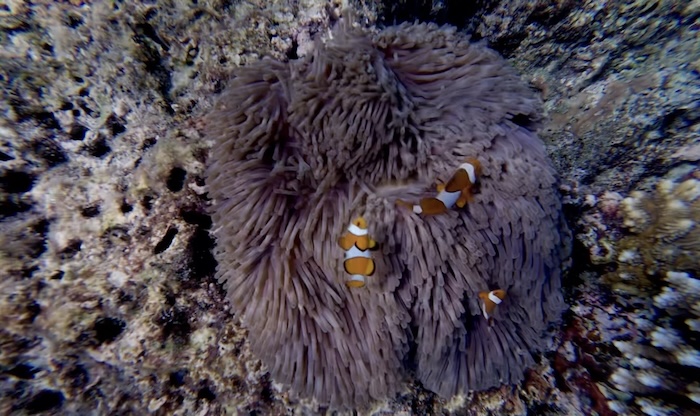
It’s wonderful snorkeling, but the time in the deeper water was beginning to take its toll on the boys. Charlie was NOT getting cold, he protested, but his blue lips and shivers indicated otherwise. He spent the last of his reserves showing me a crown-of-thorns starfish, but he seemed almost grateful when we forced him back onto the boat.
Ao Chong Kaad: Empty Beaches and Flying Lemurs
It was late afternoon before the speedboat dropped us off at Ao Chong Kaad pier. Most passengers were bound for the tents or, their day over, back to the mainland. Only a handful of us walked up the pier, no longer scorching in the fading light, onto the now quiet beaches around park headquarters.
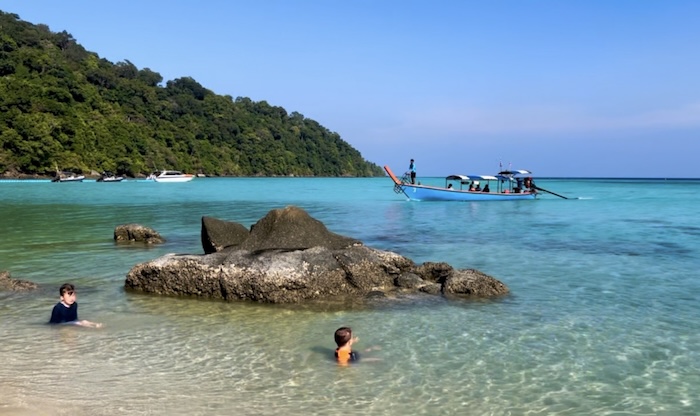
The vibe had completely changed in the intervening hours. The buzz of tourists had given way to the almost soothing rhythm of a distant diesel generator. Longtails passed every five or ten minutes, racing to take divers to their final sessions in the dying light. The kids lay at the edge of the beach in water up to their necks, watching park staff swat a shuttlecock back and forth in the shade of a giant tree.
We swam until the light began to fail and dinner approached. The food hadn’t improved, but there was less competition for it. As we ate, Sunda flying lemurs sailed between the trees above our heads. One landed low on a nearby tree, affording the kids a proper inspection. Its mottled brown and black fur was meant to provide camouflage, but it gave itself away as it turned its squirrel-like head to us, meeting our gaze with a pair of goggling eyes.
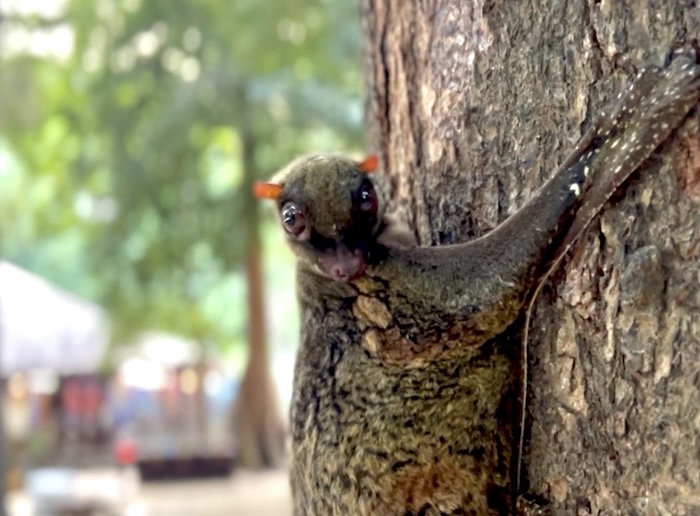
Of the many dozens of creatures we saw that day, this one was perhaps the oddest.
Our Favorite Reefs: Ao Suthep Noi and Ao Suthep Yai
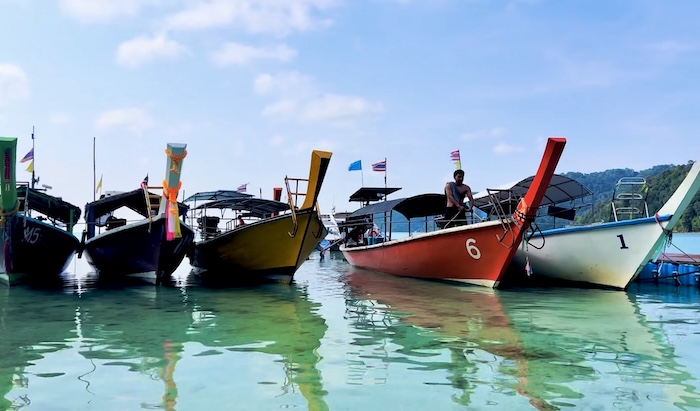
The quiet of early morning on the Surin Islands provides immediate reassurance that staying overnight is the right move. The speedboats are still tied up at piers hours away. Only local longtails, whose pastel oranges, pinks, and blues look like something from the Amalfi Coast in the 1960s, sit in the still waters of Ao Chong Kaad.
We shared the boat with only an Italian family and two elderly Peruvian sisters as we motor the ten minutes to Ao Suthep Noi, our first snorkeling site of the day. It’s so much more pleasant a way to experience the islands that I wish we were staying a week.
Ao Suthep Noi (Little Suthep Bay) has wonderfully clear water, especially when the sun finds a break in the morning cloud still lingering overhead. The bay has colossal coral-covered blocks that rise from fields of staghorn coral. It’s another excellent stop for children, with calm water and incredible color.
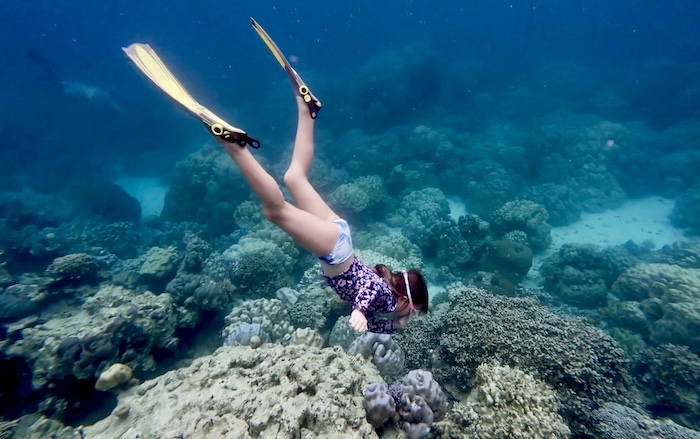
A milkfish, whose dorsal and tailfins convinced everyone they’d just seen a shark, provided much of the excitement. Each snorkeler came up in turn gasping about the shark they’d just seen, only to be disappointed by our guide. I’d say that if seeing a milkfish moved you in the same way as seeing a shark, there’s no reason not to embrace it.
The final stop, Ao Suthep Yai, was my favorite of the five sites we’d snorkeled during our two days in the islands. The underwater formations are larger, denser, and more complicated, forming caves and overhangs that provide cover for the most beautiful fish.
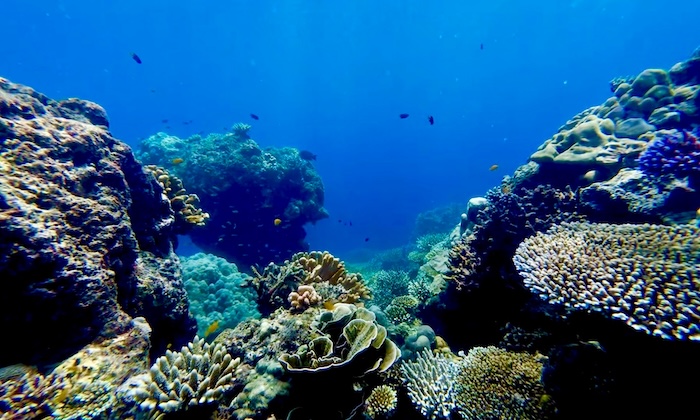
The boys were entirely spent by this point, which freed us to explore farther, faster, and deeper. Larger fish congregate where the reef ends and the open sea begins. Schools of chevron barracuda, trevally, and other predators lurk just off the edge of the reef. While not corroborated by any other source, Kat claims to have seen a sunfish, nearly a meter high, attended by pilot fish. Huge, if true.
Continue south with us as we visit Khao Lak. In true Touch Grass Tour style, though, we skip the resorts and discover some of the region’s most remote and untouched beaches.
Plan Your Trip to Bor Dan & Khao Na Yak
Some links below are affiliate links. At no extra cost to you, we earn a small commission if you make a booking, which helps us keep our family on the road. Thank you for your support!
Getting There
The Surin Islands are located in the Andaman Sea, approximately 60 kilometers offshore near the maritime border with Myanmar. Despite their remote feel, the logistics are efficient, if a bit hectic at the start.
Most travelers arrive via Khura Buri Pier, located about 2.5 to 3 hours north of Phuket. From the pier, standard high-speed boats make the 60km crossing in about an hour. These boats are built for speed and safety, and while the interior is windowless, the open seats at the bow offer the best views for those who don’t mind the sun.
Where to Stay
Accommodation is managed by the Mu Ko Surin National Park. While simple, staying overnight is the only way to experience the islands’ true tranquility once the day-trip crowds depart.
Beach Tents: A more budget-friendly and immersive option located on a different beach. These are popular for those wanting a true “off-the-grid” experience.
Bungalows: Located near Park Headquarters at Ao Chong Kaad, these are a much more comfortable way to pass the nights. A one bed bungalow cost us an extra 1,000 baht, but there are also family bungalows available for just a bit more. These offer the luxury of a private shower, A/C, clean sheets, plus a view that justifies the price.
When to Visit
The Surin Islands are seasonal, and the National Park is typically closed during the monsoon months for safety and reef recovery.
Dry Season (November – April): This is the prime window. Expect the best underwater visibility, calmest seas for boat transfers, and the most reliable weather for snorkeling.
Shoulder Season (Late October & May): The park usually opens in mid-October and closes in mid-May. Visiting during these weeks can mean even smaller crowds, but boat schedules are more dependent on weather and sea conditions.
Booking/Tours
As far as I’m aware, there isn’t really another way to visit the Surin Islands other than through an organized tour of some description. The need for transport to the island limits your options.
There are any number of vendors out there selling Surin Island experiences, but there seem to be far fewer operators. Practically, that means that who you book through may not be who takes you to the islands.
To the extent that’s true, looking for the lowest price is probably the best move. We booked through surinislands.com, but Greenview operated the trip.
Chris, our contact at surinislands.com, was excellent. I made a major planning mistake, and we were a day late to the pier. He remotely reorganized the entire excursion and we were only out the small upgrade fee we’d paid for the bungalow. It was service beyond what we had any right to expect.