Just joining us? Check out our visit to Thailand’s other great Khmer ruins at Phanom Rung and Prasat Muang Tam.
At the end of the ancient royal road that ran north from the imperial capital near Angkor Wat are the stunning ruins of Prasat Phimai. Few places in Thailand so clearly showcase the interplay between Buddhist and Hindu traditions. Buddha and Brahma vie for supremacy on stone towers conceived in a Hindu cosmological tradition.
The abandoned ruins are tucked into a bend on the Mun River, surrounded by the modern town of Phimai which is very much alive. Unlike the theatrical climb up Phanom Rung’s volcano, you simply drive past shops and cafés, cross an ordinary street, and suddenly arrive at the outer enclosure of one of the great cities of the Angkor Empire.
Though not more than a couple of hours from the heavily touristed Khao Yai National Park, Phimai Historical Park rarely sees large numbers of visitors. It feels a world away from the mobs at Angkor Wat, magnificent though that complex remains.
How and When to Visit Phimai
After visiting Phanom Rung and Prasat Muang Tam in Buriram the day before, we allowed ourselves a relaxed morning at our hotel in Prakhon Chai. We swam the morning away, leaving only to eat stewed pork at the self-recommending Hainanese Pork Leg (ขาหมูไหหลำ), perhaps Isobel’s favorite Thai dish.
It wasn’t only laziness that pushed back our departure time. We’ve learned through long experience that there’s no better time to visit archaeological sites than the late afternoon or the very early morning. The crowds are thinner, the air cooler, and the warm light deepens every carving and shadow.
The forecast promised it would absolutely bucket rain. Sure enough, the skies opened at lunch and rain fell continuously during the two-hour drive to Nakhon Ratchasima. An important clarification: Phimai is in Nakhon Ratchasima. In a TikTok upload, I mistakenly located it in Buriram. Two months later, we’re still getting a comment or two every day asking us to correct the record.
Phimai: Thailand’s Largest and Best-Preserved Khmer Temple
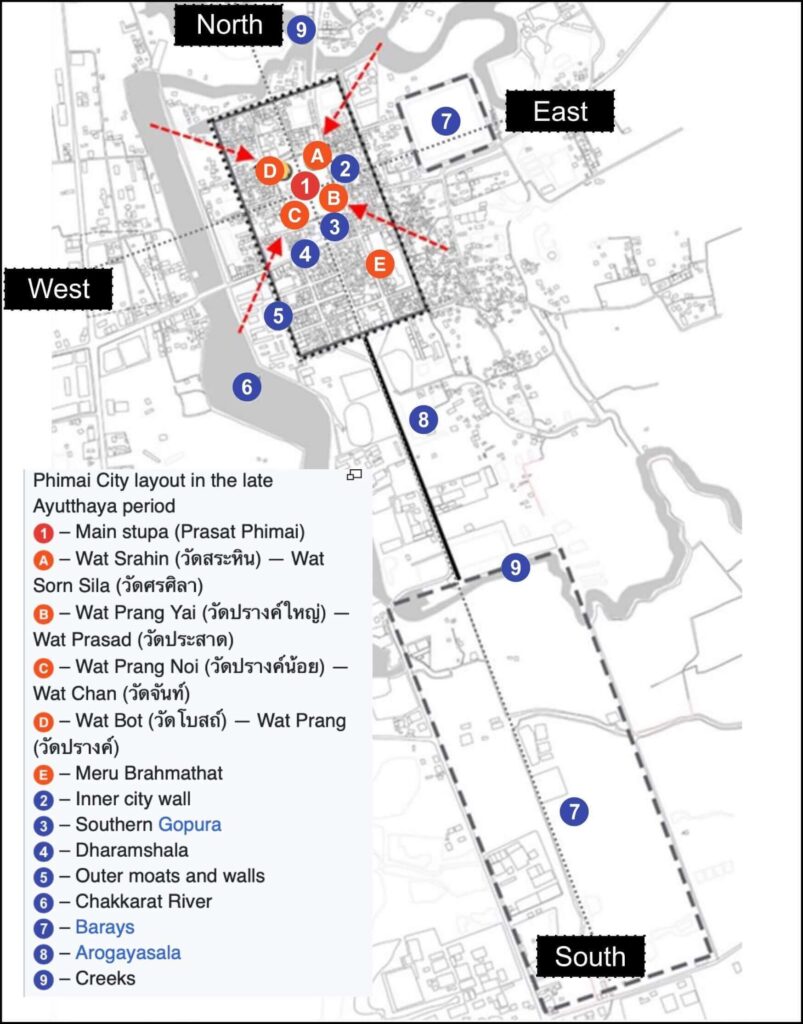
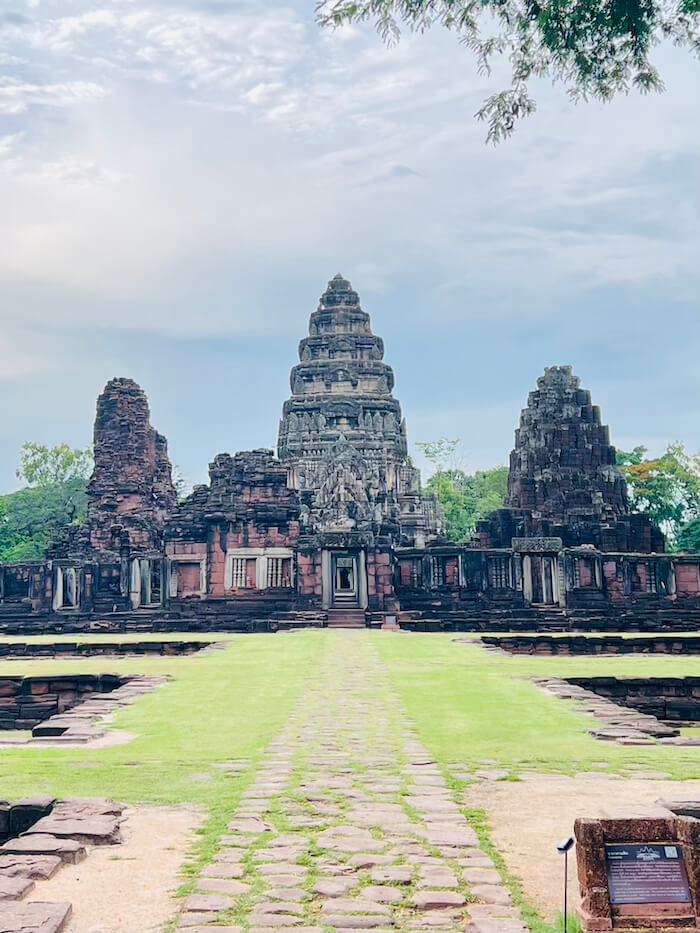
Phimai is one of the largest Khmer temple complexes in Thailand and is certainly the best preserved. Long passageways around the central sanctuary still have intact most of their balusters, the delicately shaped, turned stone pillars distinctive of Khmer design.
The temple boasts several excellent lintel carvings, still crisp after 800 years. I’d identified one in advance, a scene of Krishna holding his wicked uncle Kamsa by the hair, poised to deliver the killing blow. Tasking the kids with finding the scene made the eventual discovery even more rewarding. The highly stylized forms are tense with action, and the decorative work behind and around them shows remarkable skill. It’s well worth discovering for yourself.
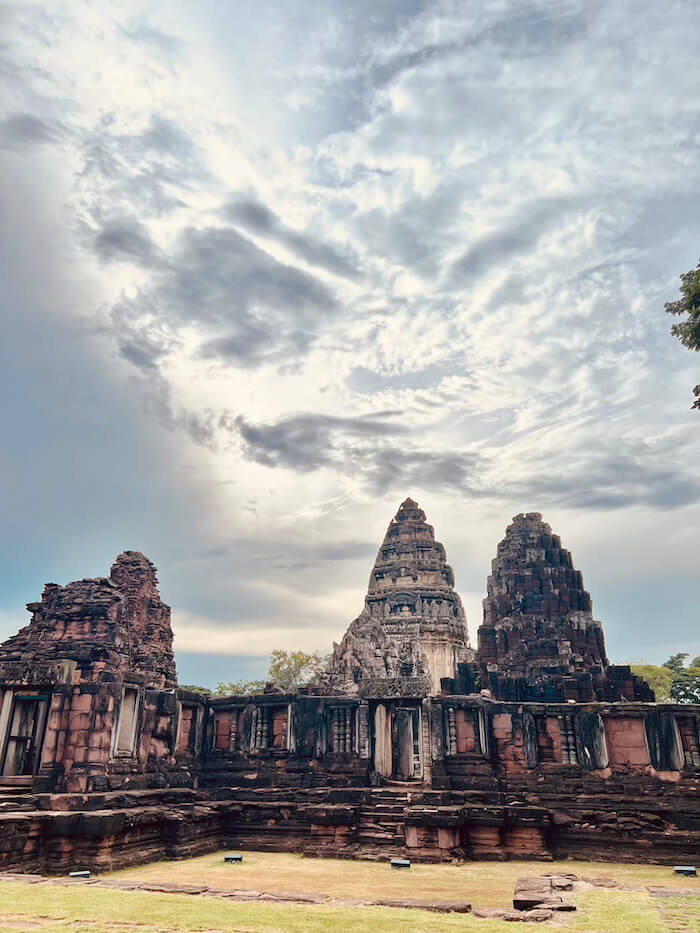
Such scenes from the Hindu epics survive comfortably within a sanctuary that later served Mahayana devotion. The stones do not record a clean break between Hinduism and Buddhism, but a gradual accumulation of belief, each layer leaving its mark without erasing what came before.
Centered on the main sanctuary, the rest of the complex invites exploration even without a mission. Long, vaulted pathways open onto hidden corridors. Ornate prangs stand in varying states of disrepair among clipped lawns. In the blackness of the temple’s innermost vaults, unseen bats chitter and chirp. If only the kids had seen Indiana Jones.
The Town Around the Temple
The rain returned before we could finish exploring. Weather permitting there was always tomorrow. We’d booked a couple of charming riverside cottages at the inevitably named “Moon River Resort.”
Just large enough for a bed but air-conditioned, with lovely views over the water from a series of riverside platforms, Moon River illustrated exactly why travel in Thailand feels so easy. Simple but tasteful rooms, thoughtful hosts, extraordinary locations, at prices that remain astonishingly low. What else do you need?
The streets west of the historical park are filled with coffeehouses and small restaurants, but for this night we chose familiar comfort. We picked up a few beers from 7-Eleven, ordered pizza through Grab, and had a relaxed dinner on the decking, listening to frogs singing from the reeds.
Prasat Hin Phanom Wan: A Thousand Years of Devotion
The next morning, we attempted to wait out the weather at a coffee shop just outside Phimai’s ancient walls. The barista hand-expressed Chiang Mai coffee beans into a cup so good that ordering a second one softened the disappointment when we finally accepted the rain was not going to stop.
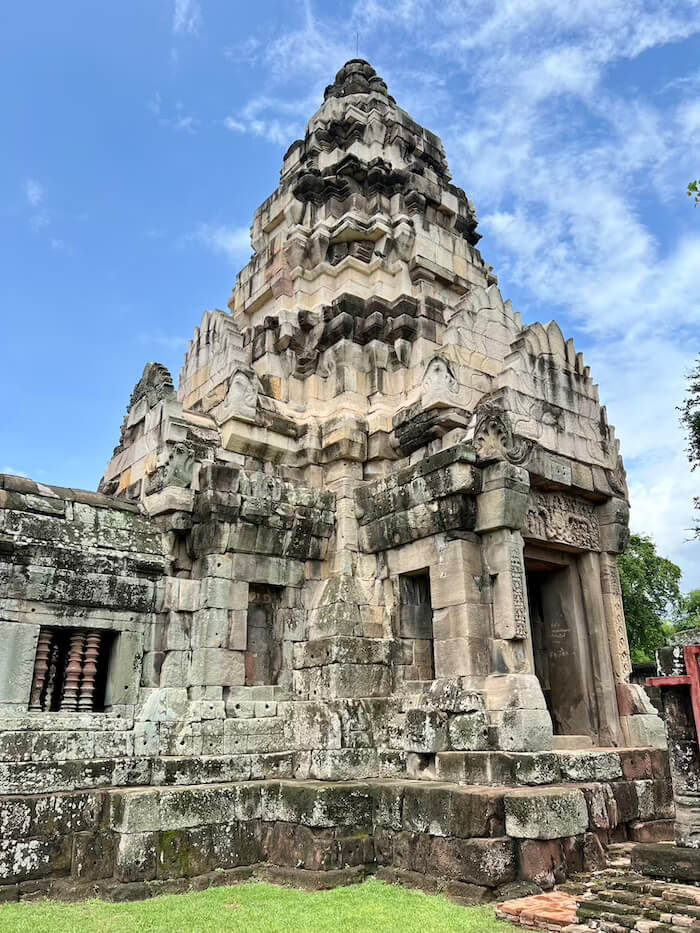
Our destination was Khao Yai, some two hours away, but not long after we left Phimai the sun, of course, came out. Rather than turn back, we decided to visit Prasat Hin Phanom Wan, deep in the countryside an hour west of Korat.
Prasat Hin Phanom Wan is the oldest of the temples we visited, perhaps a thousand years old. It was unambiguously constructed as a Hindu temple and likely designed to appeal to local devotees as much as the imperial center.
Though impressive, the temple has not undergone the same extensive restoration as Phimai or Phanom Rung. Foundation blocks and carved stones lie in rows, each with an identifying number, like debris at the scene of an accident.
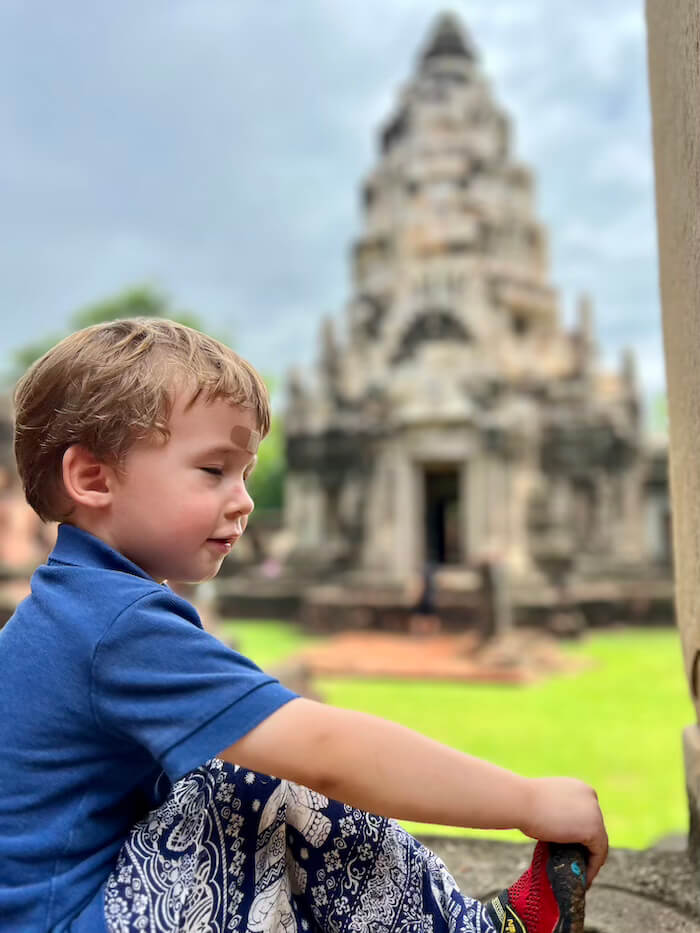
Despite the more forlorn atmosphere, the sun was out for the first time and gave Phanom Wan a cheerier feel than we’d yet experienced. Perhaps because of the midday timing or the sudden fine weather, it was also bizarrely the busiest site we visited.
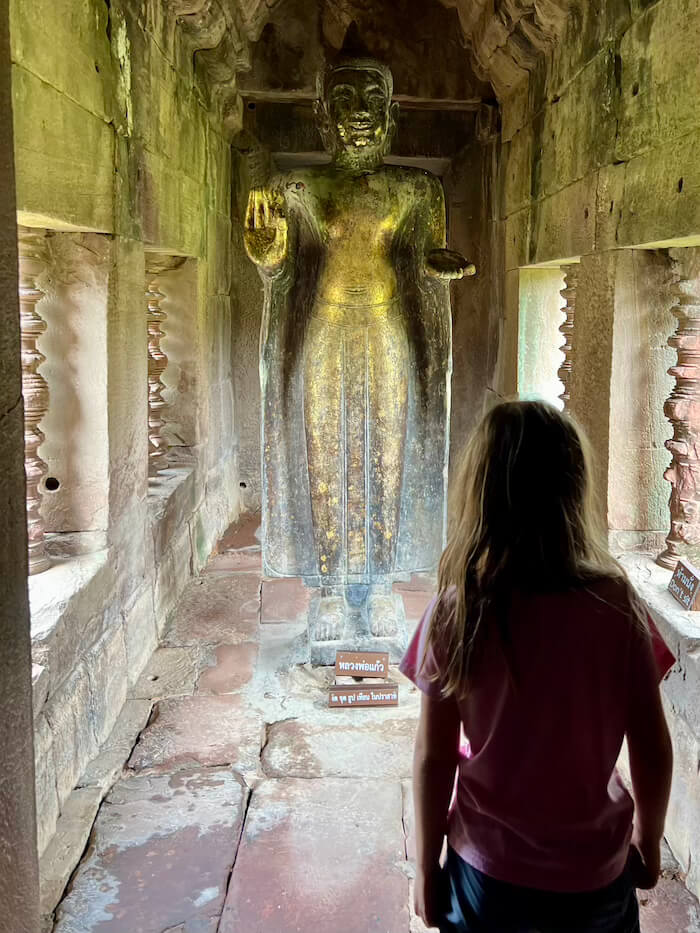
Near the reconstructed prang tower was a long, covered gallery. Sunlight streamed through the intact balusters and fell on a Buddha image more than two meters tall. Covered in squares of gold leaf, the statue scattered light throughout the chamber, illuminating it.
At other points on the site, garlands of flowers and sticks of incense placed in alcoves or before carved figures hinted at the spiritual role the temple still served. For a thousand years, through its complete collapse and partial rebuilding, pilgrims have continued to visit and worship at this holy place.
Plan Your Trip to Phimai and Phanom Wan
Some links below are affiliate links. At no extra cost to you, we earn a small commission if you make a booking, which helps us keep our family on the road. Thank you for your support!
Getting There
Nakhon Ratchasima (Korat) is the gateway to Isan, and while it’s a major hub, Phimai itself sits about an hour further northeast.
By Car (Recommended): The drive from Bangkok takes about 4–5 hours, but having your own car is essential if you want to pair Phimai with a side trip to Prasat Hin Phanom Wan or the pottery villages of Dan Kwian.
By Bus: Frequent buses and minivans run from Korat’s New Bus Terminal (Terminal 2) to Phimai. The drop-off point is within walking distance of the Historical Park and most central guesthouses.
By Train: You can take the scenic rail route from Bangkok to Nakhon Ratchasima. From the Korat station, you’ll need to grab a tuk-tuk to the bus terminal or arrange a private driver for the final leg to Phimai.
Where to Stay
Phimai is small enough that you can stay right in the heart of the ancient city.
Moon River Resort was our choice for a reason. Simple, air-conditioned riverside cottages with a series of wooden platforms over the Mun River. It’s quiet, charming, and places you right in the “living” part of town.
Where to Eat
Hainanese Pork Leg (ขาหมูไหหลำ): Located in Prakhon Chai (if you are coming from the south), this is a mandatory stop. The stewed pork is legendary—just look for the steam pots and the crowd of locals.
Phimai Night Market: Located just outside the Meru Brahmadat, this is the place for Pad Mee Korat (the local take on Pad Thai) and easy street eats.
The Coffee Shops: Don’t miss the small cafes west of the park for a “hand-expressed” caffeine fix to wait out the tropical afternoon downpours.
When to Go
The Golden Hour: As mentioned, aim for 3:30 PM – 5:30 PM. The light hitting the red sandstone and laterite of Phimai is vastly superior to the flat midday sun—and much cooler for walking.
Phimai Festival (November): Usually held in the second week of November, this festival features light and sound shows at the ruins and traditional long-boat races on the Mun River. It is spectacular but very busy.
The “Green” Season: Traveling in the monsoon means moody skies and vibrant moss on the ancient stones, but keep a flexible schedule for when the “buckets of rain” inevitably arrive.
The Cool Season (November–February): The best time for exploring the large complexes in comfort, though this is also peak tourist season.
What It Costs
Entrance Fees: Admission to Phimai Historical Park is THB 100 for foreigners. Prasat Hin Phanom Wan is typically THB 50.
Parking: Most parking around Phimai is street parking or small lots near the entrance; generally free or a nominal THB 20 fee.
Booking/Tours
Phimai is very much a “DIY” destination. While you can find day tours from Korat, the best experience is found by staying overnight in the town, allowing you to see the ruins at dawn or dusk when the day-trippers have departed.