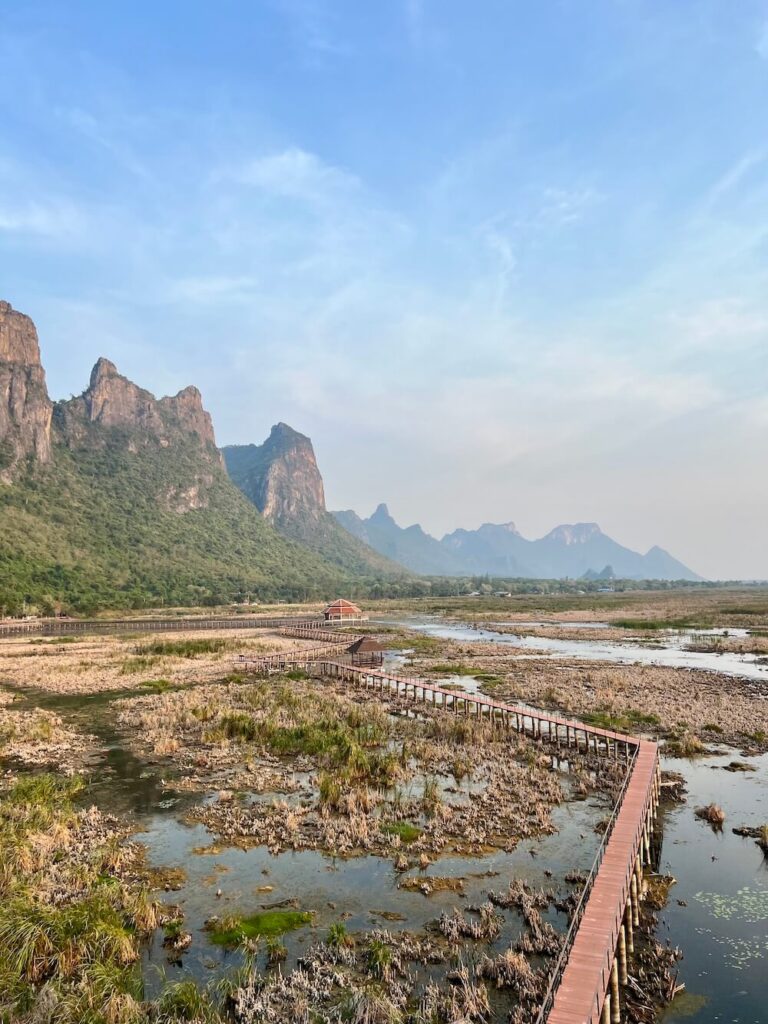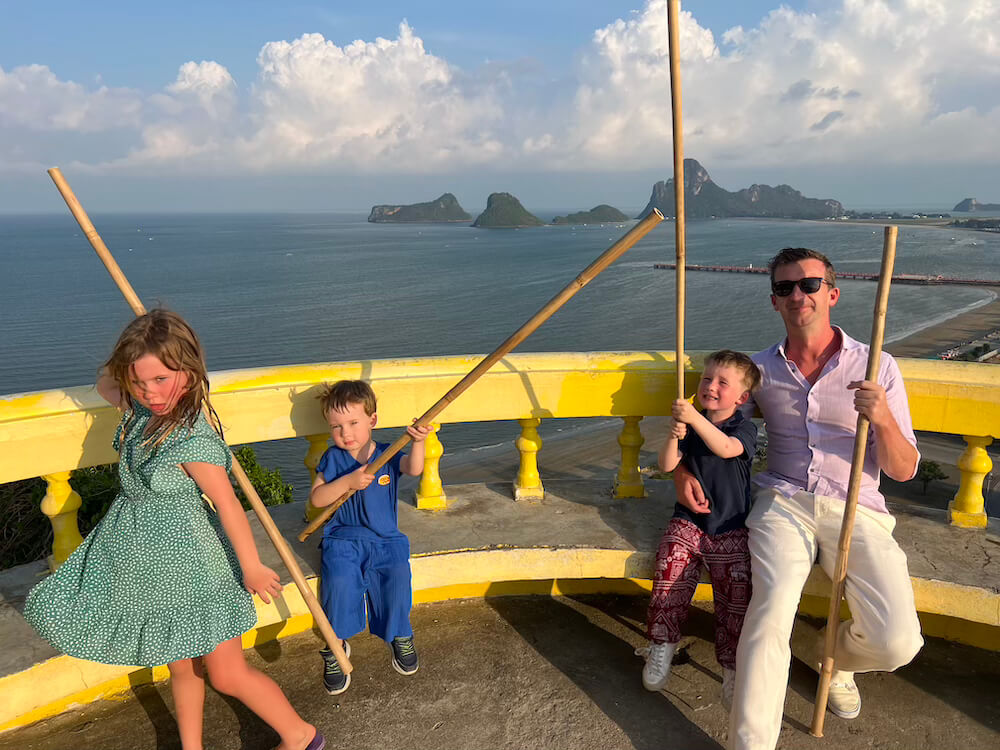
Staying even a single night in Chiang Rai is the only sure strategy for enjoying this cultural capital properly. Visiting the temples early in the morning (before the first bus from Chiang Mai has arrived) and late in the afternoon (after the last one has left) allows a far more intimate experience than non-residents could ever hope for.
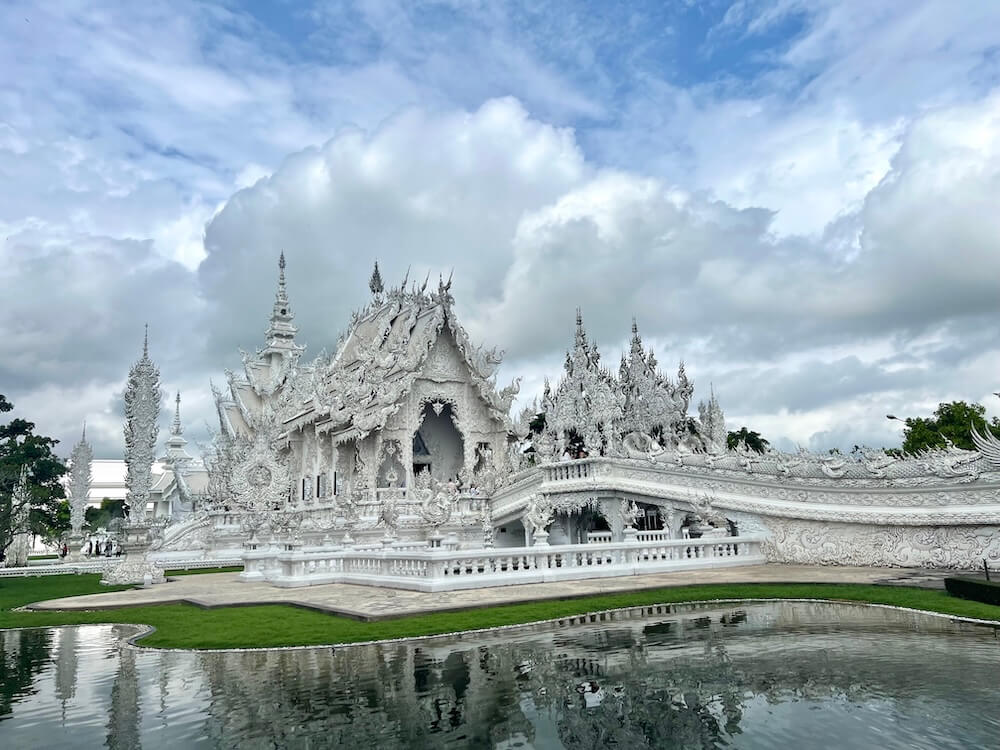
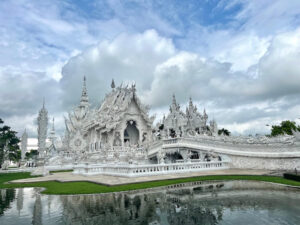
Our departure from Phu Chi Fa just after sunrise ensured our arrival at Wat Rong Khun (Chiang Rai’s famous White Temple) well before the first bus from Chiang Mai spilled out its complement of day trippers. The opportunity to linger over the layered details of Chiang Rai’s temples is what truly enhances a visit to this remarkably creative city.
Just joining the journey? This is just one stop on our 10-Day Journey across Northern Thailand from Laos to Myanmar. See how we got to Chiang Rai in the first place at Chasing Phu Chi Fa’s Epic Sunrise on the Thai-Laos Border.
The Lacework Lines of the White Temple
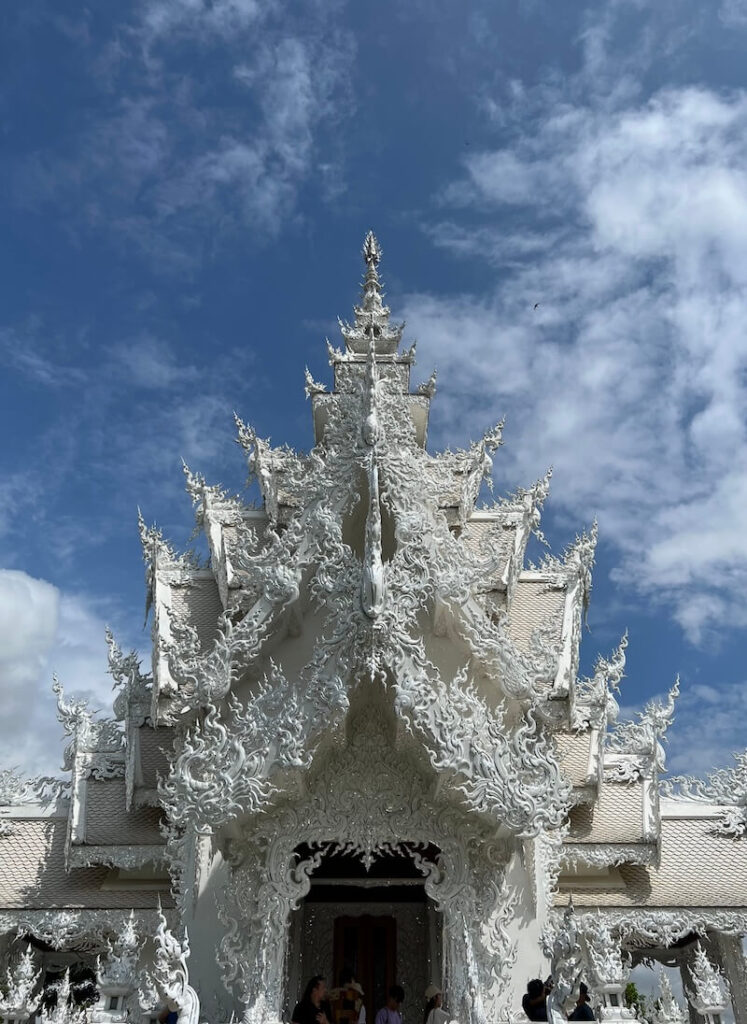
This most famous of Chiang Rai’s trinity of temples is also its most dazzling. A living chandelier of mirror and plaster, it flashes and sparkles with the slightest change in perspective. This isn’t an ancient wat, however, but the ongoing, evolving work of Chiang Rai artist Chalermchai Kositpipat, who began the project only in 1997.
The themes expressed by Wat Rong Khun are instantly recognizable as Buddhist, but they are executed with a refreshing directness. The concept of human desire, for example, is viscerally represented as a thicket of hundreds of human hands straining for something forever out of reach.
Escaping this cycle is represented by an elegant bridge that spans this lake of unrequited desire. I was grateful that the wedding-cake walls of this bridge were taller than my children. While I appreciate very much the powerful symbolism represented this sea of disembodied hands represents, for children it is distilled nightmare fuel.
The Weirdness of the White Grotto
But perhaps I underestimate the ability of children to appreciate the bizarre. Sharing the site with the White Temple is another installation by the same artist: the White Grotto. A sparkling labyrinth leads through the writhing forms of angels and animals, gargoyles and grotesques.
It is like the joint passion project of Tim Burton, Jim Henson, and Santa Claus. The eerie music that pours out of hidden speakers only adds to the effect. If the shimmering whiteness of Wat Rong Khun symbolizes the purity of the Buddha, the grotto is, literally and figuratively, something deeper and wonderfully darker.
Nobody should miss the White Grotto, but to deny children the opportunity to wander the narrow paths of this subterranean fantasyland would be inexcusable.
The Blue Temple: Wat of the Dancing Tigers
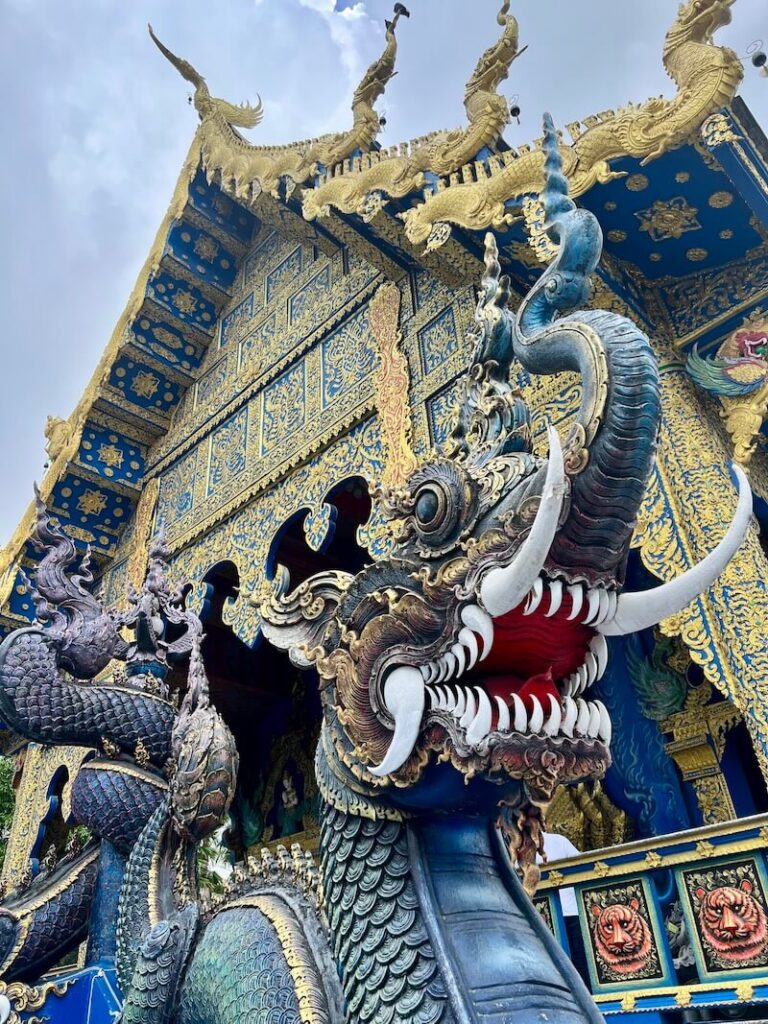
While the White Temple is necessarily surrounded by tourist infrastructure matching the volume of visitors it receives, the Blue Temple, Wat Rong Suea Ten, feels far more like a working temple. No busloads of tourists, no lines, and no tickets, just Buddhist practitioners carrying out their private devotions.
Like the White Temple, the Blue Temple is a modern creation. A former student of Chalermchai, the artist responsible for the White Temple, completed the wat in 2016. The most strikingly modern element of its design is, as you might guess, its vibrant sapphire blue color that covers every surface not accented with gold trim.
The interior, however, is far from monochromatic. The color scheme, the cosmic themes, and the porcelain-white Buddha all lend the Blue Temple an almost psychedelic, otherworldly vibe rarely seen in more traditional wats. Outside, two nagas, with every metallic scale depicted in remarkable detail, stand guard over another of Chiang Rai’s artistic triumphs.
Pausing to Recoup from the Midday Sun
A distinct advantage of staying in town overnight is not needing to squeeze in one last stop before rushing back to Chiang Mai. Instead, new options present themselves: a leisurely lunch at the charming riverside Chivit Thamma Da Coffee House and Bistro, or an early afternoon swim to cool off during the worst heat of the day.
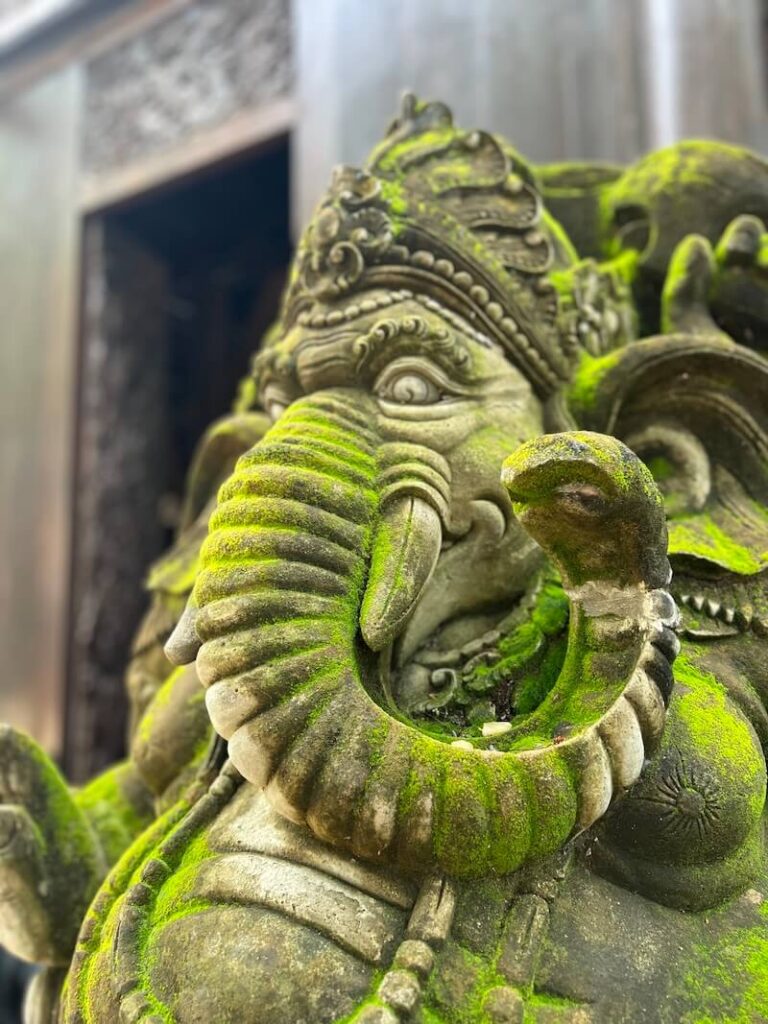
Then, when the sun has dropped a bit, you’re free to wander the campus-like Ban Daam complex. With no pressure to move quickly past whatever bizarre thing you might encounter, you can spend the cooler late afternoon exploring at your leisure.
Visiting the Darker Side at the Black House
And at Ban Daam, you will almost certainly encounter something bizarre. The “Black Temple” is only a temple in the sense that calling it one allows the tourism industry to group it with the White and Blue temples in an easily promotable package. Ban Daam, a complex of more than 40 buildings, is something else entirely.
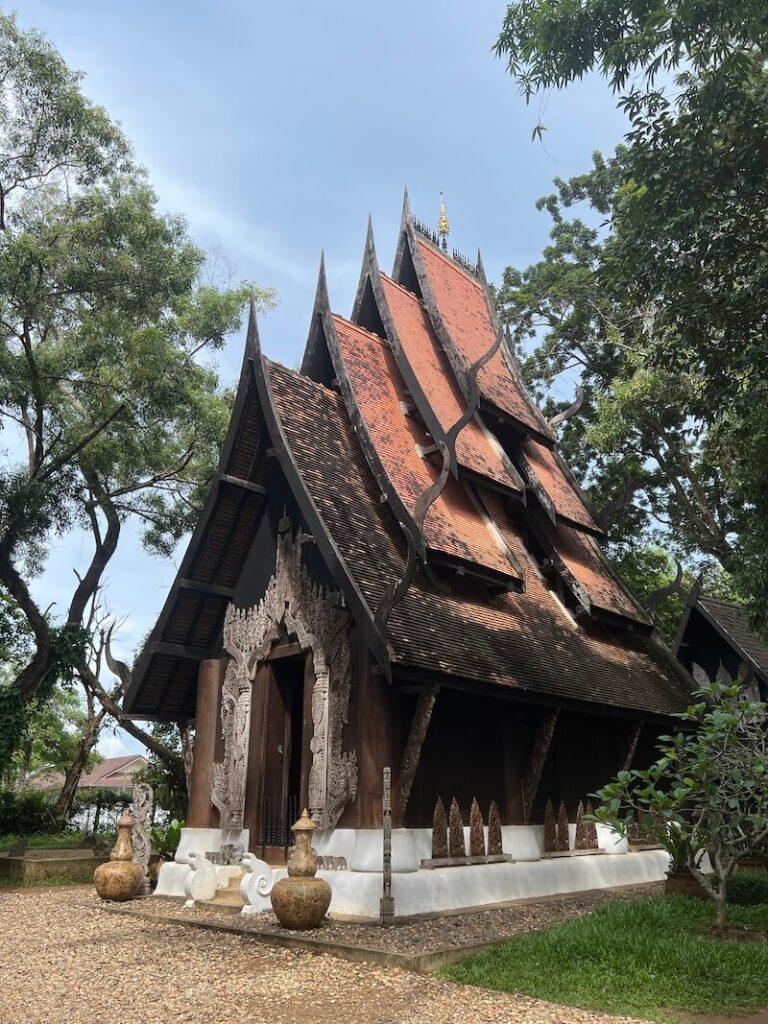
This sprawling complex celebrates the eccentric genius of the late Thawan Duchanee, a name familiar to even casual followers of the Thai modern art scene. Signature elements of his style are everywhere: enormous horns of water buffalo and gaur, hides of various animals, and skins of reptiles, including one from a snake that must have been an absolute monster.
These he has transformed into macabre furnishings and decorations, but they are not merely ornamental (or ornamental at all); they are direct, primal expressions of death, desire, and the dark side of humanity.
Oh, and penises, lots of those, even at the ice cream shop. The kids sat eating soft serve, blithely unaware of the visibly (and impressively) excited carved figurine sitting atop their table.
In spite of (or maybe because of) things like that, Ban Daam joined the White Grotto as a clear favorite with the kids. The eclectic strangeness of the place demands that you uncover and interpret its sheer weirdness for yourself. You will have no difficulty filling a couple of hours at this darkly compelling diary of one man’s work.
Evening at the Saturday Thanalai Road Night Market
A lack of overnight tourists does risk undermining the restaurant scene, but Chiang Rai is doing just fine. A string of restaurants gathered around the intersection anchored by the Chalermchai clock tower has plenty of good options, but we chose the pleasant chaos of the Thanalai Road Night Market.
You’ll need to be in town on a Saturday night, but if you are, you’re in for a treat. In addition to the usual stalls, more established kitchens cook proper meals to supplement sour northern sausages and other regional treats.
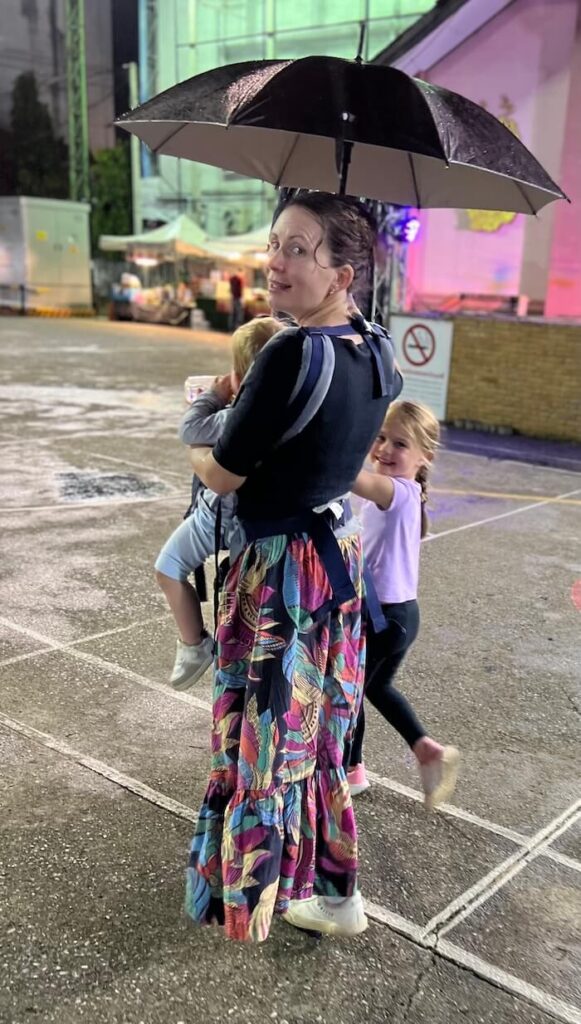
Ordering food guarantees a table and stools, which is useful in this popular night market. Had it not started bucketing rain, we would have happily sat with our beers and snacks well into the night. Even as we walked home in the drenching rain, I knew I’d rather have shared herb-scented coils of sizzling sai ua with the people of Chiang Rai than a minibus back to Chiang Mai with the day trippers.
There’s so much to see outside the city too. For an escape to one of Northern Thailand’s quietest national parks, check out The Wild Solitude of Doi Luang: Hiking Phu Kaeng Waterfall.
Plan Your Trip to Chiang Rai
Some links below are affiliate links. At no extra cost to you, we earn a small commission if you make a booking, which helps us keep our family on the road. Thank you for your support!
Getting There
Chiang Rai City is a major hub in Northern Thailand, easily accessible by air and road.
By Air: Chiang Rai International Airport (CEI) offers direct flights from Bangkok (BKK/DMK) and other major Thai cities. It’s the quickest and most straightforward way to arrive.
From Chiang Mai: The drive is approximately 3 to 4 hours by bus or car. Buses run frequently and are comfortable and affordable. A private taxi or shared minivan is slightly faster and more direct
Local Transport: The city center is compact and walkable. For visiting the three main art sites (White Temple, Blue Temple, Baan Dam), Grab (ride-sharing app) or a day-hired songthaew (local red truck taxi) is the easiest option for families. Negotiate a full-day rate with a songthaew driver for the best value.
Where to Stay
The key to enjoying Chiang Rai is staying in the city center for easy access to the night markets and temples after the crowds leave.
Mora Boutique Hotel This small hotel’s stylish Lanna-inspired design and central location perfectly suited our two-day stay. A deep bathtub and a lovely pool made this a perfect quiet retreat after busy days exploring.
When to Go
The best time to visit Chiang Rai is during the Cool Season (November to February) when the weather is dry and temperatures are pleasant (daytime highs around 25 C).
Visit Wat Rong Khun (White Temple) immediately when it opens (usually 8:00 a.m.) to see the grounds before the large coaches arrive from Chiang Mai.
Wat Rong Suea Ten (Blue Temple) is open from 7:00 a.m. to 8:00 p.m. Any time is great for a visit, but it’s located very near Chivit Thamma Da, so best to link the two.
Visit Baan Dam (Black House) and after 3:00 p.m., when the day-tripper traffic begins to clear out.
If your trip coincides a Saturday night, be sure to visit the Thanalai Road Night Market (Saturday Walking Street).
Booking/Tours
You absolutely do not need to book a guided tour of Chiang Rai’s main city attractions. The key sites (White Temple, Blue Temple, Baan Dam) are all easily accessible on your own, especially if you have arranged an overnight stay.
If, for whatever reason, you can’t or won’t overnight in Chiang Rai, my heart bleeds for you. There are good day-tours out there though. This one is more comfortable than most and has the most positive reviews of any that I can see:
White Temple, Blue Temple and more from Chiang Mai
- Duration: 13 Hours.
- Includes: Round-trip Chiang Mai transfers and lunch included.
- Vibe: Small group travel, children welcome.
- Flexibility: Reserve now, pay later with free cancellation.
- Cost: From THB 4,500 per person, discounts available for children, infants free.