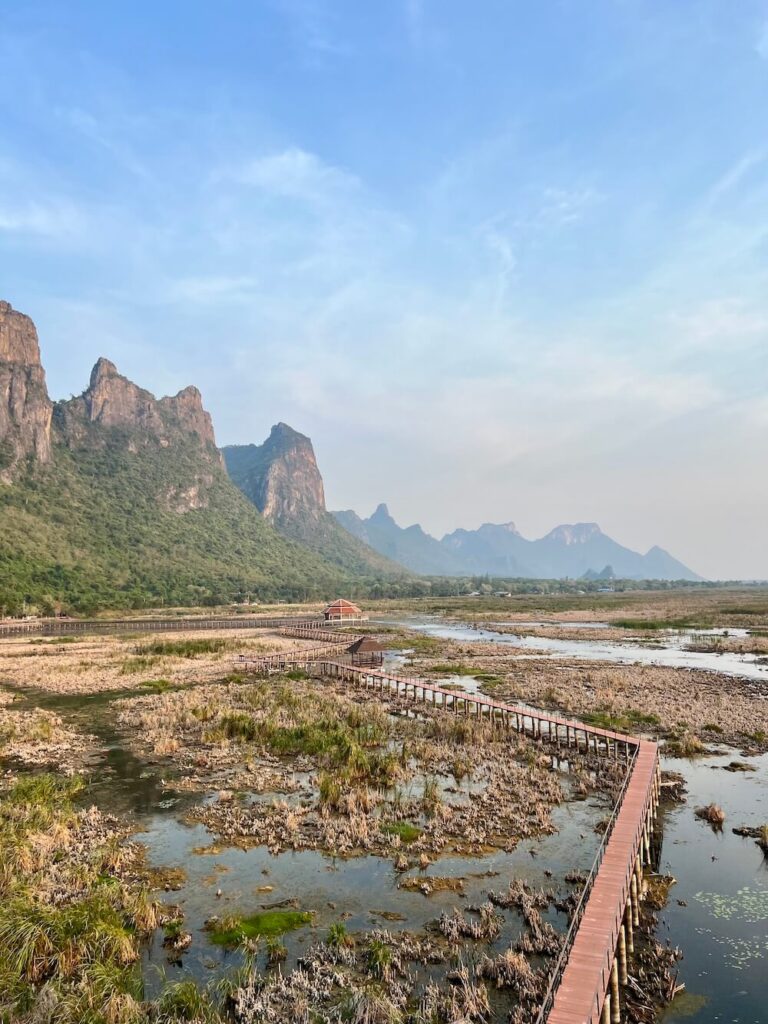
The air gets warmer and the water clearer the further down the coast we travel. By the time we reach Chumphon, universally known as the “Gateway of the South,” we’ve left Central Thailand behind and crossed into a new and distinctly different part of the Kingdom.
The food is spicier, the Southern Thai dialect is (for me, anyway) harder to parse, and the kindness of the people – well, that is so universally high in Thailand that it’s impossible to rank. What I can say is that this is an exceptionally welcoming stretch of the country, and its crystal-clear waters, vast mangrove forests, and idyllic beaches more than reward the effort of coming this far.
Start the Adventure: Where did our Thai Riviera journey begin? Catch up on Part I and Part II!
Chumphon: Finding the Clearest Water in Thailand’s Gateway to the South
A cursory glance around Chumphon provides proof enough that fish matter here. On both sides of the Chumphon River, multi-storied wooden fishing boats sit backed three deep against working quays, each somewhere in the cycle of being restocked or unloaded. Groups of fishermen of all ages squat on mountains of black drag nets, deftly retying the webbing.
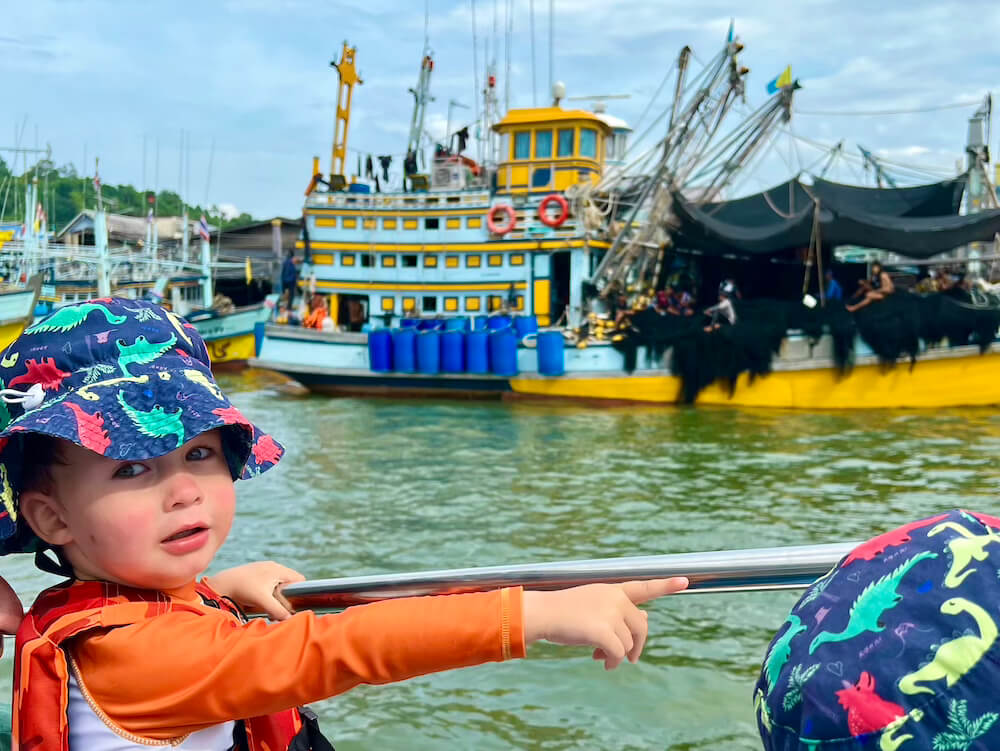
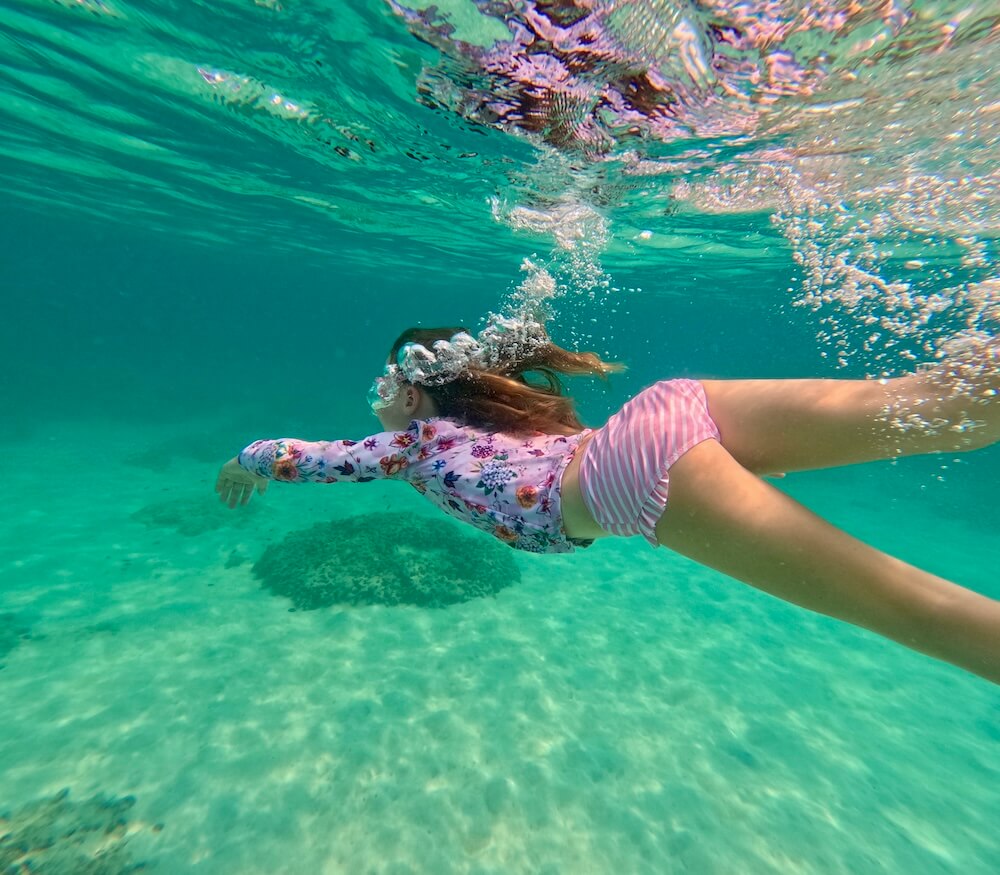
Whether your aim is to catch, trade, or simply eat fish, Chumphon has you covered. It is also, not incidentally, one of the better places in Thailand to just look at fish. With water that is deeper (and therefore clearer) than more northerly stretches of the gulf, and plenty of islands to bring marine life close to the surface, Chumphon offers excellent snorkeling. Add to that a tourism industry still finding its footing, and the quality-to-crowd ratio is about as favorable as you’ll find anywhere in the country.
Snorkeling the Matra Archipelago: Mu Ko Chumphon’s Quieter, Relaxed Gems
Just before 9:00 a.m., we arrived at a riverside compound of neo-classical buildings that had once housed Chumphon’s customs and duty offices. Today, it’s home to Siam Catamaran, our guide to snorkeling Mu Ko Chumphon. They offer two snorkeling itineraries – alternating depending on whether the day is even or odd.
On odd-numbered days, you’ll visit the Koh Ngam Islands, Koh Ga-Loke, and… Koh Talu, which, of course, was where we had just spent a night. Fortunately, our window fell on an even day, which meant the Matra islands. Koh Ngam is your best chance of spotting whale sharks, which I’d have loved, but we were glad to avoid the backtracking and focus instead on the quieter Matra islands.
Koh Matra: Giant Clams, Fusiliers, and Tree-Climbing Chicken Crabs
Our boat docked at Koh Matra’s floating pier, a gentle reintroduction for the boys, who seemed to have entirely forgotten how to enter deep water. They took fins on and off, climbed up and down ladders, readjusted straps, ties, and tubes. Just put on your goggles, boys.
When they finally managed to peer into the water beneath them, they saw yellow-tail fusiliers in a vast, restless school that stretched half the length of the island. Thousands of fish were slowly swimming in broad, interweaving loops.
The fish were not the only spectacle. Koh Matra is also home to the “tree-climbing chicken crabs.” Also called “hairy-leg mountain crabs,” the chicken element comes from the “squawking” noise they allegedly make when disturbed. I say “allegedly,” because we stayed in the water, absorbed by the iridescent mantles of the giant clams. I almost hope the crabs are not as exciting as their name suggests, or I might really regret missing them.
Koh Lak Raet: Horns of Rock around Rhinoceros Island
Sitting in deeper water, Koh Lak Raet and the surrounding islets are really just spikes of rock rising straight up from the sea. The visibility was near-perfect, which heightened the fun of swimming among the spires near the surface while looking down at the forests of sea anemones far below.
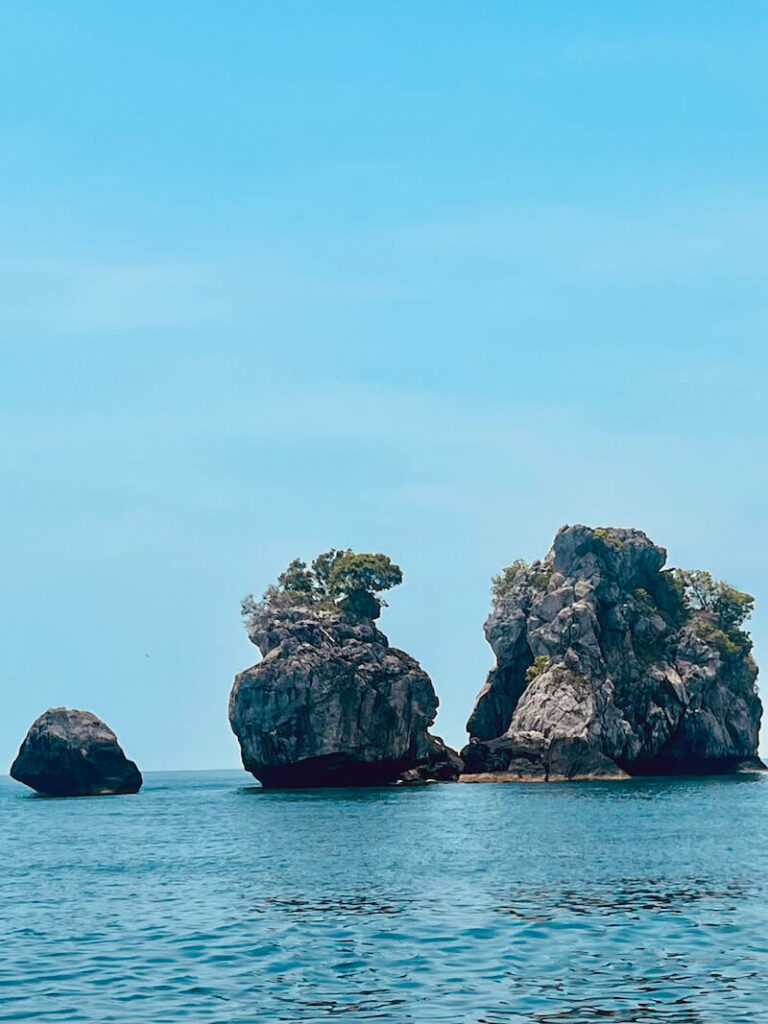
The fish weren’t the most exotic we’d encountered, but the unusual geology, the superb clarity, and the endless anemones made this an enormously fun place to play in the water. Long after the boys had traded snorkeling for watching fish through the boat’s glass-bottom panel, Kat, Izzie, and I kept at it until the call for lunch finally pulled us back aboard.
Above and Below the Water at Koh Lawa and Koh Lang Kha Jiew
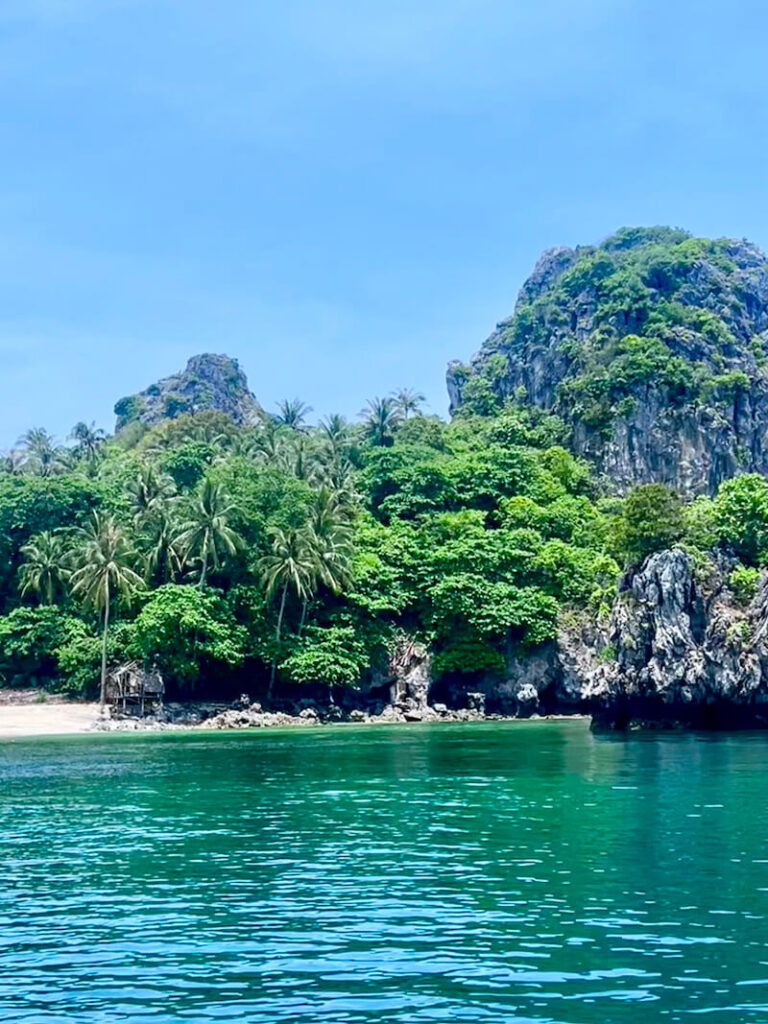
Our post-lunch snorkeling sites are both small limestone islands with white-sand beaches framed in green. Koh Lawa is covered in wooden, hut-like scaffolding used by workers to harvest swifts’ nests. These rickety huts clinging to jungle-clad limestone cliffs evoke Pirates of the Caribbean more than the soup industry, but the nesting sites are enormously valuable to the concessionaires who pay fortunes for the right to harvest them.
At both Lawa and Lang Kha Jiew, further stands of anemone provided the perfect habitat for Indian Clownfish, one of several new clownfish varieties I’d encountered on this trip. Familiar to us but new to the kids, spotting a large pufferfish hiding deep under a sea stack gave the older two a chance to practice diving down a couple of meters at a time.
Siam Catamaran put on a delightful tour and we enjoyed each island stop. As we motored back up the river through mangrove stands, the kids announced every broken hulk we passed with the chorus: “That boat is not in great shape!” It made me wish we had time to do the odd-numbered-day tour, even at the cost of a backtrack.
Mainland Mu Ko Chumphon National Park: The Mangrove Boarwalk
We had plans for a post-snorkel dinner at “To the Moon” restaurant, one of a series of seaside restaurants near Thung Makham Noi Pier, from where ferries to Koh Tao, Koh Phangan, and Koh Samui depart. Too early for dinner, we decided to pass some time and have a wander at the Thung Ka Bay Mangrove Trails, which turned out to be an inspired choice.
The Eerie Estuary of Thung Ka Bay
Nothing makes a short walk flow better than an apprehension of danger held by the kids and not shared by the parents at all. The Thung Ka Bay boardwalks are a kilometer long, but with detours and side-loops that can stretch the walk further. We did, and recommend that you do too.
But for once it wasn’t the length of the walk that frightened the kids. The tide was out over the mudflats, which had become a fresh canvas for mysterious tracks. Spikes of young mangrove pushed through mud pocked with hundreds of holes, and, as any child knows, a hole in the mud can conceal any kind of horror. The canopy of 20-25 meter tall stilt mangroves, which reach the most impressive heights of any species of the mangrove family, cast all into shade.
Chorus of Clicks: Decoding the Mysteries of the Mangrove Mud
It wasn’t what you could see that drove the kids’ anxiety; it was the sounds. A chorus of clicks loud enough to make you jump echoed in an unpredictable staccato across the estuary. No clue to its origin presented itself. Solitary fiddler crabs darted between mangrove root clusters, but they, clearly, were not the culprits.
We have a general rule to not turn to the web to figure out whatever we’re experiencing at that moment. We find that preparation is best done before, processing can be done after, but the experience itself is something best left to unfold on its own terms; addressed with the tools we have.
Also, we didn’t have any reception.
The boardwalk transforms into a pedestrian suspension bridge as it crosses over the brackish waters of the Jorake Canal. The kids and a troop of crab-eating macaques eyed each other warily as the monkeys surrendered their position on the bridge and retreated along its suspension cables.
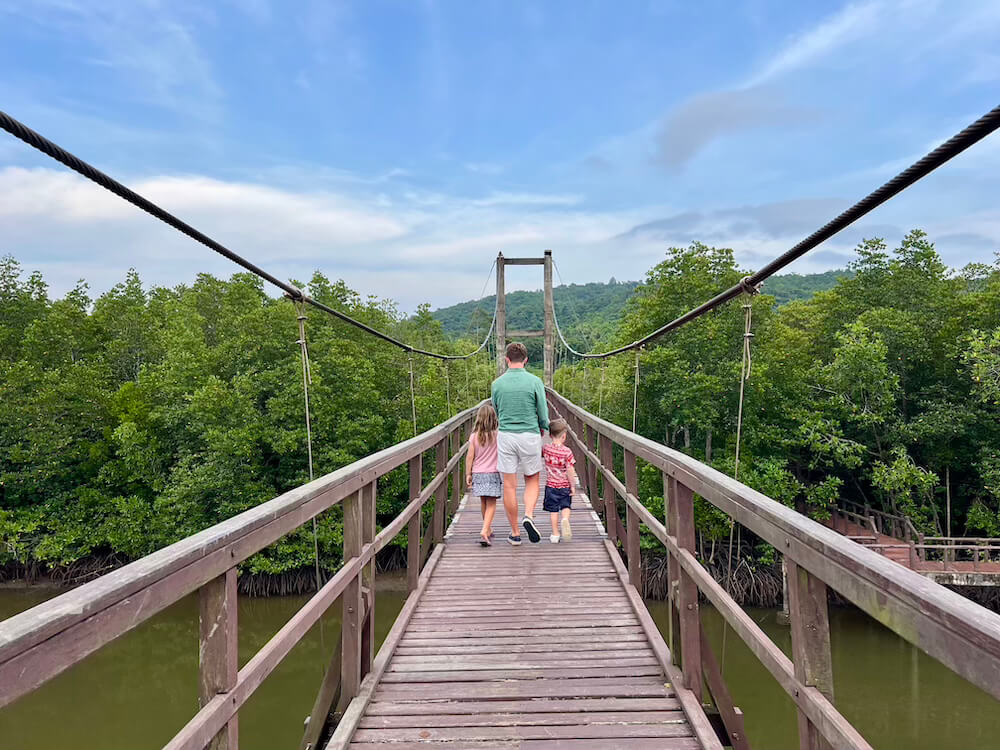
We reached the end of the boardwalk, looking out to sea across some of the same islands we had snorkeled earlier in the day. On the riverbanks, displaced macaques chased crabs across the mudflats before returning to their positions on the bridge.
At dinner, the kids tested their theories against the search results. Was it fiddler crabs after all? The slow disintegration of the boardwalk? Even fire swamp sputters (Isobel and Henry had just seen The Princess Bride for the first time) were ruled out. There hadn’t been any flame!
Pistol Shrimp?
The clicking had been pistol shrimp, which hunt by snapping an oversized claw. This produces a high-speed jet of water that instantly forms a cavitation bubble. When the bubble collapses, it forms a shockwave—and a snap—powerful enough to stun small fish, and loud enough to trigger the imaginations of small kids.
Henry listened enraptured as I read aloud everything we could find on the pistol shrimp. I was sorry to disappoint him that there simply wasn’t any more publicly available information. There are few greater pleasures for a parent when a child wants more information about something you want to share with them. I could also take solace in knowing that I hadn’t come up empty-handed on the crustaceans-making-weird-noises front after all.
Thanks for reading! Join us on the Final Leg of Our Southern Roadtrip where we explore the beaches of Khanom; the shadow puppets of an ancient city that still lives by its timeless traditions; and the most magical sunrise boat trip Thailand has to offer.
If you’d like to skip ahead and start planning your own trip, take a look at our Complete 11-Day Thai Riviera Road Trip Itinerary.
Plan Your Trip to Mu Ko Chumphon
Some links below are affiliate links. At no extra cost to you, we earn a small commission if you make a booking, which helps us keep our family on the road. Thank you for your support!
Getting There
We strongly recommend renting a car to fully experience the Thai Riviera. The best sights, like the remote Thung Ka Bay Mangrove Trails and the quiet beaches, require your own wheels.
From Bangkok: Chumphon is approximately 6–7 hours south of Bangkok via Highway 4 (Phetkasem Road).
If you prefer to rely on buses or trains, Chumphon is a major hub. The main Chumphon train station is central, and the Lomprayah service offers buses that connect directly to Bangkok and their ferry terminal.
Where to Stay
Accommodation options in Chumphon are generally centered in the city or along the beaches south of the river estuary, offering a quiet, local feel. We highly recommend:
Rimsira Tucked away on a quiet riverside tributary, it offers a peaceful retreat close to the action but far from the noise. We appreciated the convenience of the self-catering kitchen, perfect for preparing family meals and maximizing our time on the coast.
When to Go
As elsewhere in Thailand, the best time to visit Mu Ko Chumphon is during the dry and cool season, running from November to February.
The Gulf Exception: Unlike the Andaman coast (west coast of Thailand), the Gulf of Thailand typically sees less severe monsoon weather, making travel possible year-round. The main rainy season runs from June to October, bringing brief, heavy afternoon showers, but tours usually still run. Our last visit was in April and we had no weather complaints at all.
Booking/Tours
Because Chumphon’s charm lies in its untouched, local character, this region is not defined by large package tours. Most activities are done independently, with day trips booked locally.
We used Siam Catamaran for our Mu Ko Chumphon snorkeling trip and I can confidently recommend them. They are an experienced operator running multiple tours off multiple boats. We recommend booking a few days ahead, especially if your travel dates require a specific itinerary (Odd vs. Even days).
This post details our favorite experiences, but if you’re ready to book, we’ve done the rest of the work for you!
For our full daily schedule, detailed accommodation reviews (and affiliate links!), transportation breakdown, and suggested budgets, see our Thai Riviera Road Trip Itinerary & Booking Guide.