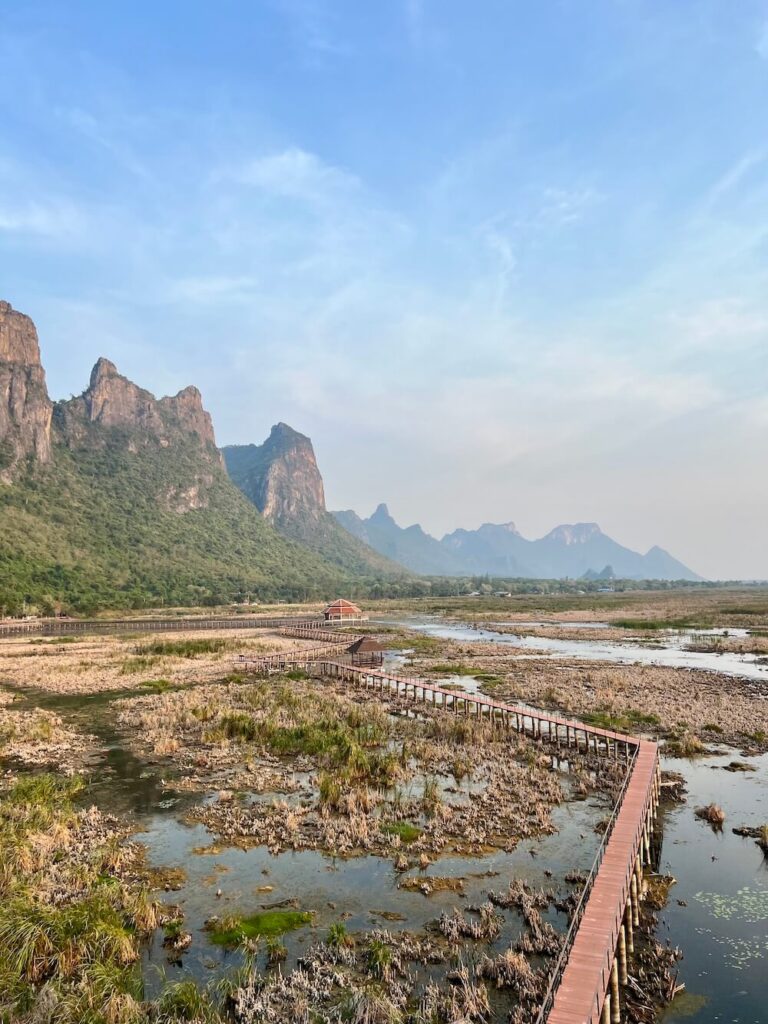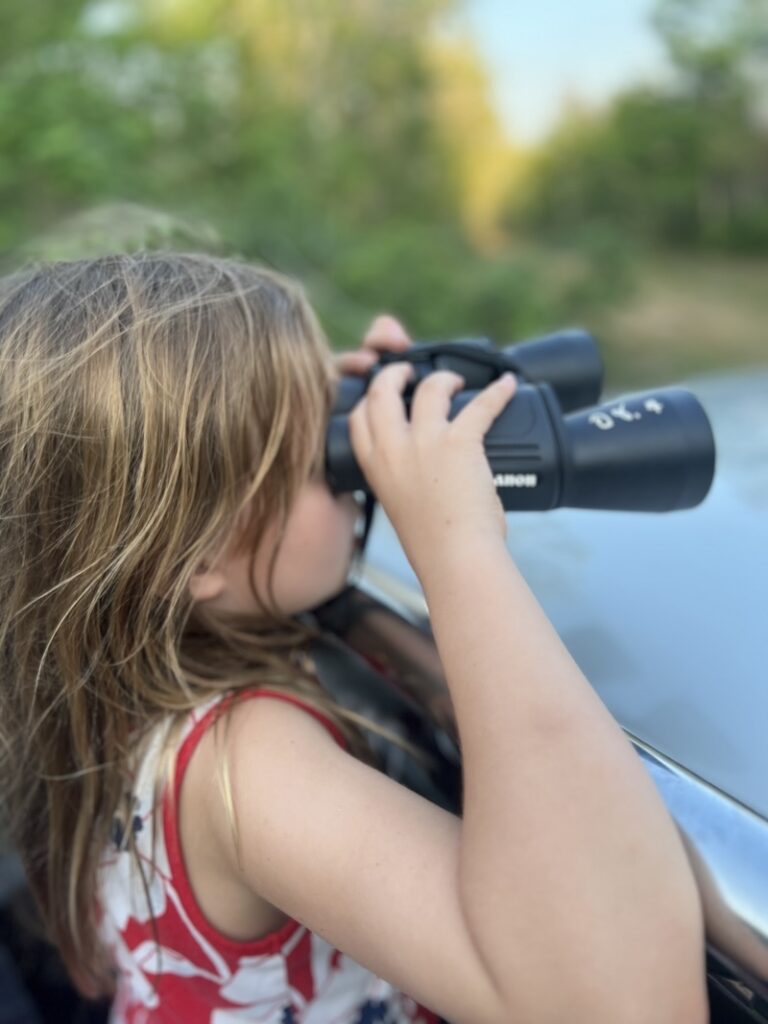
If the Pranburi and Prachuap coast is quiet, the beaches to the south are simply, in the best possible way, deserted. Abandon the main highway and instead drive along the patchwork of asphalt strips that form the Royal Coast Road; it is some of the finest coastal driving in the country.
If you missed the first installment of this Thai Riviera road trip, catch up on the drive from Hua Hin to Pranburi and Prachuap in Part I. To see how the whole 11-day trip fits together, check out the full itinerary from Bangkok to Phatthalhung.
Here, the sand’s color deepens to a rich golden hue and in places forms banks steep enough to offer a steady, rolling surf. Some beaches are accessible directly from the road, while others only by following sandy trails through coconut groves that run a hundred meters inland.
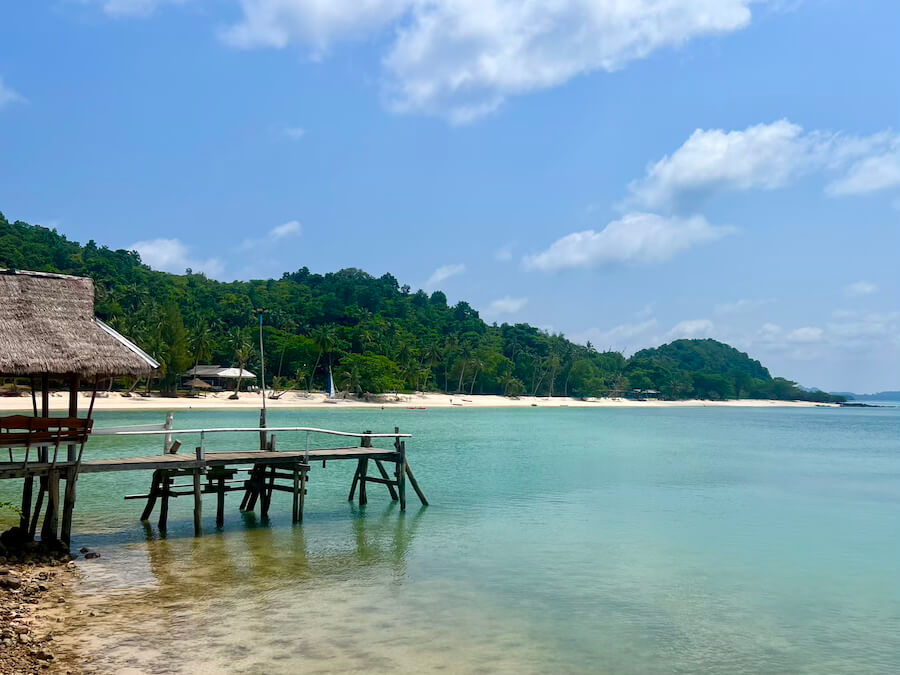
Along the Royal Coast Road, sleepy seaside towns like Ban Krut offer beachside lodging and cafés that are only starting to blink awake around lunchtime. If you are lucky, a Bohemian Bangkoker might be running a pop-up coffee stall from a converted VW bus. Nobody is hurrying. This is bliss.
Bang Saphan’s Hilltop Gem: Phra Mahathat Chedi Phakdee Prakat
We weren’t hurrying either, but we did have a boat to catch. Before that, we wanted to visit the gleaming, multi-spired temple visible from almost anywhere along the Bang Saphan coast. Phra Mahathat Chedi Phakdee Prakat sits on Khao Thong Chai, a limestone outcrop that forms the only natural break in the miles of uninterrupted coastline running in either direction.
A single shopkeeper just opening her stall and a pack of lazy but well-fed mongrel dogs were our only company when we arrived at the base of the temple at 8:00 a.m. Once we left them behind and began up the temple path, we didn’t see another person.
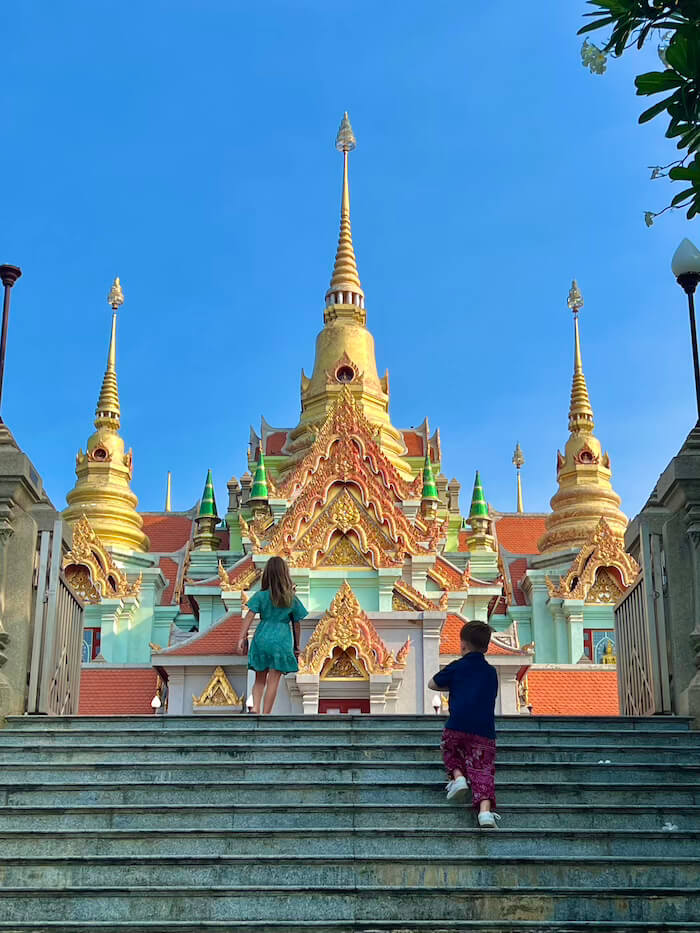
Like a surprising number of Thai temples, this one is relatively new. Built to mark the 50th anniversary of the accession of the beloved King Bhumibol (Rama IX), it was funded entirely through public subscription. Its nine golden pagodas honor the king’s status as the ninth of his name.
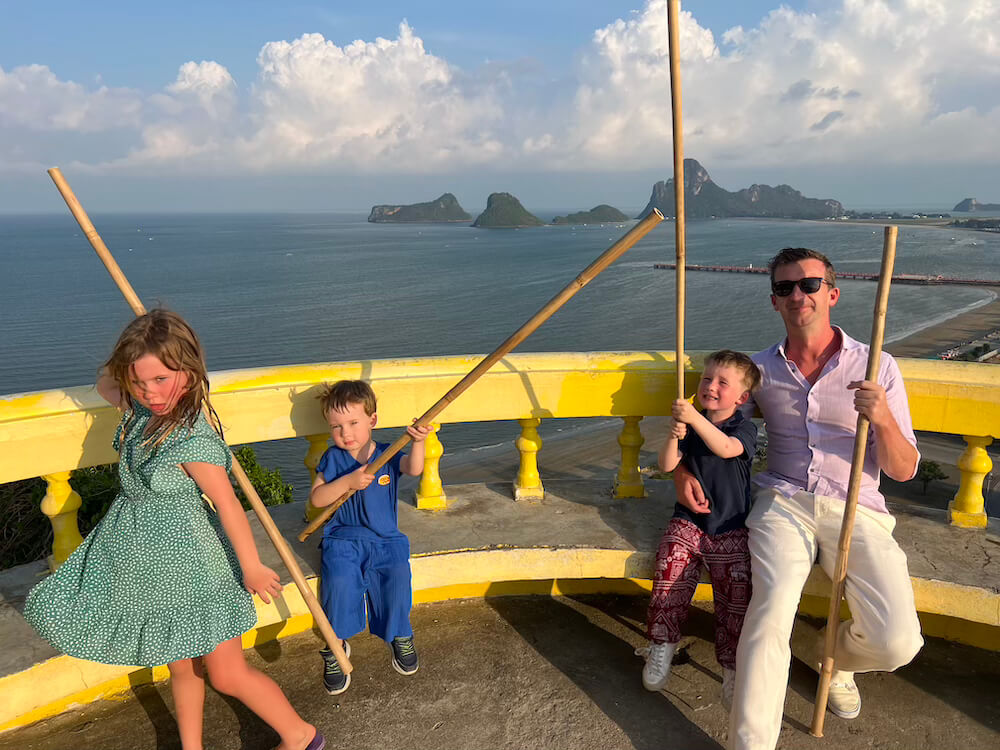
Too early to enter the temple, which was only then opening its doors, we wandered the quiet grounds instead. From our hilltop perch, we could see the village of Ban Krut directly to the south of us and the arc of the beach stretching out of sight beyond it. Beyond the horizon, some 35 kilometers away, lay Koh Talu Pier, our next stop.
Koh Talu: Trading the Road for Island Time
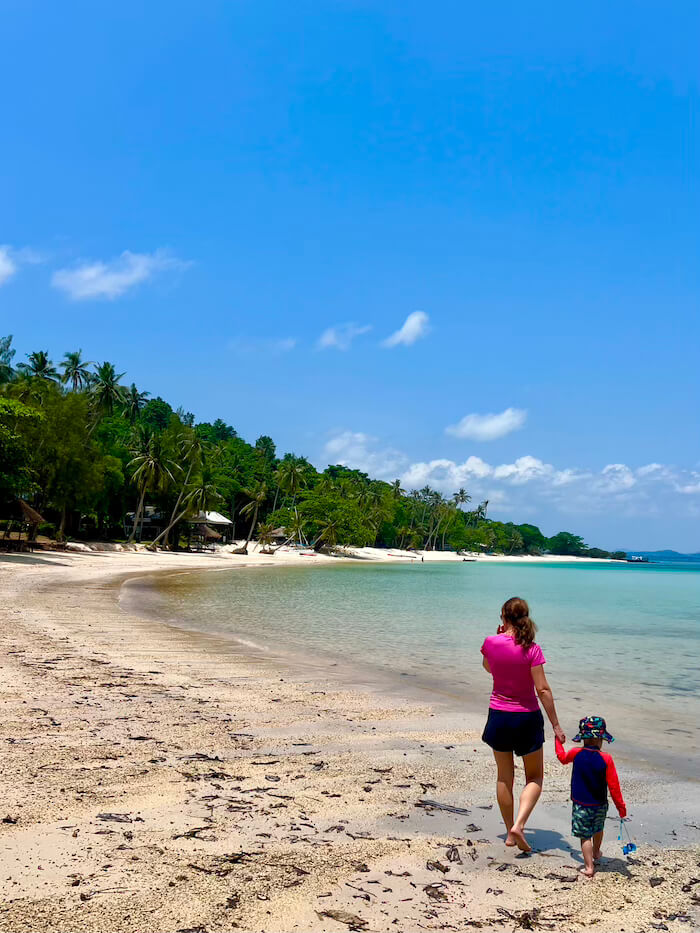
The entire Bang Saphan coast is sprinkled with tiny islands—small fingers of jungle-clad stone jutting out of the sea. Some of these are home to clusters of stilted fishing huts clinging to the narrow space between rock and water. At nearly two kilometers long, however, Koh Talu is the exception. A wide bay with a broken coral bottom leads up to white-sand beaches and sturdy teak-wood houses. Much more than a spot of shelter for itinerant fishermen, the whole island experience is run by the sole operator here: Koh Talu Resort.
Handing Over the Keys
If it wasn’t already clear, we very much like to control how, when, and where we travel. There’s an undeniable pleasure, though, in occasionally handing the keys over to someone else. Once we parked the Kia at Koh Talu Pier and climbed aboard for the 15-minute boat-ride to Koh Talu, that is exactly what we had done.
The boat docks at an open-air dining hall with views over Ao Yai, the larger of the island’s two bays. You’re issued a wristband with a scannable QR code and told not to lose it or risk paying a fine. The wristband, which plays no further role during the visit, serves mostly as a wearable financial liability.
The resort actually does a good job. While the facilities are more worn than the prices might indicate, staff dedication is high and the food is varied and better than the standard fare at places like this. Our room was solid and spacious, though during the scheduled blackout periods, when the generator is shut off to conserve fuel, it can be a little dark even midday.
Cast a Line, Spot a Shell
But who would want to sit in the dark anyway? Both our bay and the smaller one to the north, Ao Mook (Pearl Bay), have reasonably good snorkeling right off the shore. Isobel spotted a few enormous tiger cowries, with their beautiful glossy black-and-brown speckles. They were as large as I’d ever seen and still living; we could see their frilled mantles extending and retracting along the shell. We also saw large numbers of giant top shells, with huge, almost perfectly equilateral, algae-covered spirals.
Beyond the daytime water activities, the kids went squid fishing, which meant dropping a hand line off the side of the resort’s dive platform as it slowly motored across the bay. We had no luck at all, but the staff caught a handful of small fish and fried them up for us on deck while we watched the sun set over the Bang Saphan headlands.
The Unexpected Splendor of the Red Cliffs (Pha Daeng)
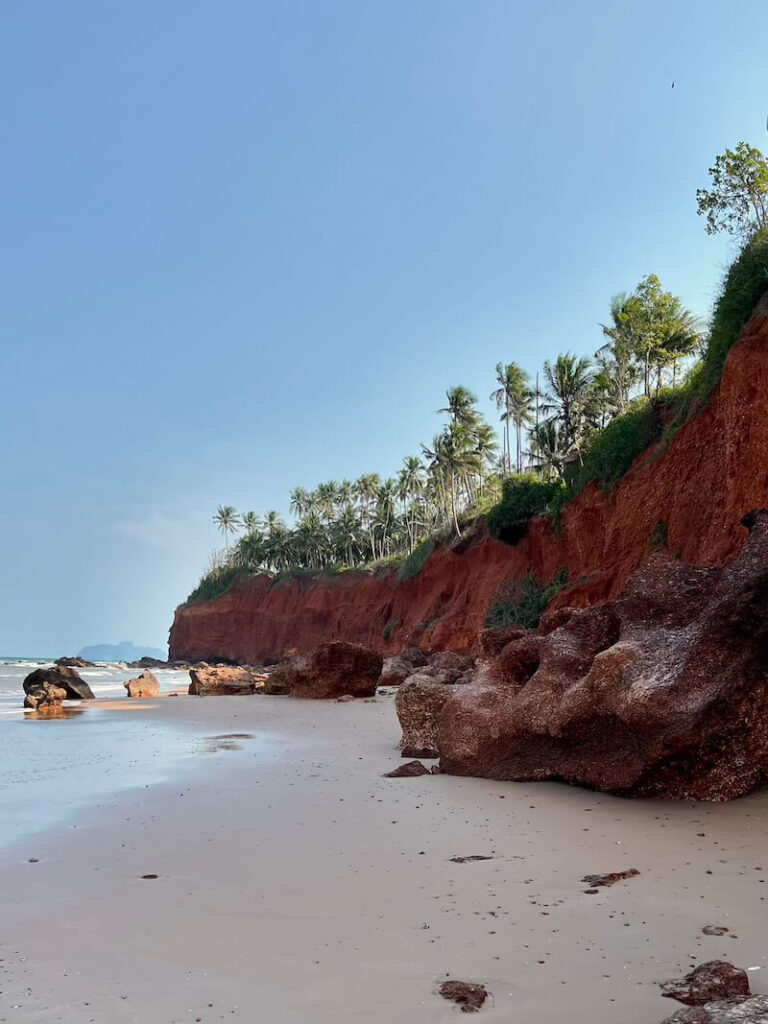
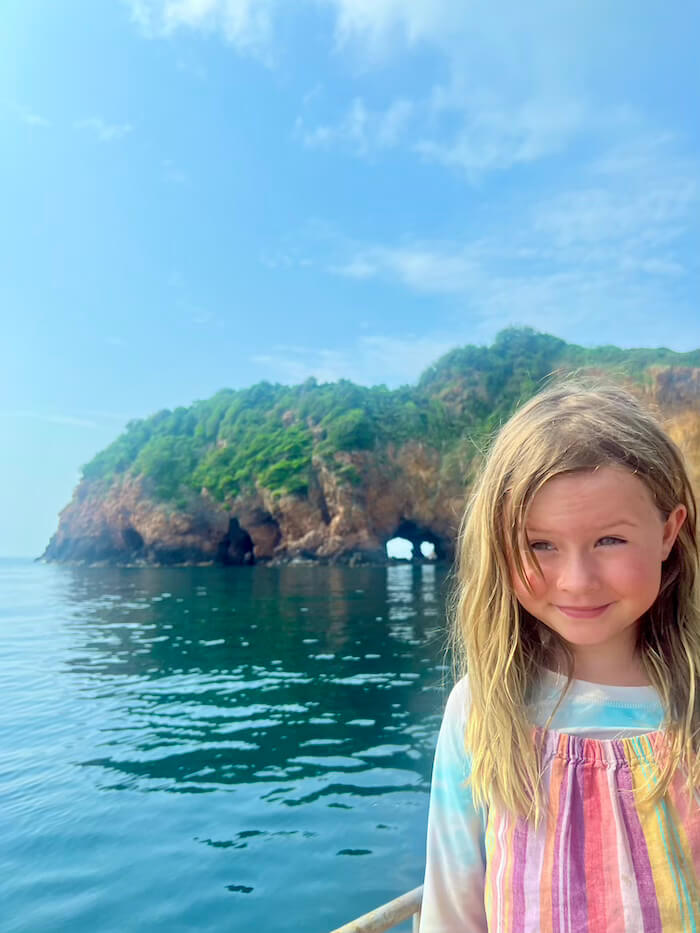
After lunch the next morning, we watched crabs scuttle through mangrove roots while waiting for the boat back to the mainland. From Koh Talu Pier, we planned to drive straight to Chumphon, but I first wanted to make a quick stop at the nearby Red Cliffs (Pha Daeng). For five kilometers, burnt-red-laterite bluffs, some 20-30 meters high, rise directly from red sand beaches.
Honestly, it wasn’t clear to me what the fuss was. I’d only heard of the Red Cliffs because they appeared on some “Unseen Thailand Top 20” list, which wasn’t much to go on. But from the boat we could already see a band of burnt sienna stretching south above turquoise water. Maybe I shouldn’t have been so skeptical.
A fifteen-minute drive brought us over the plateau and down a steep hillside to a small parking area. It was empty, save for a few trucks belonging to fishermen collecting blue crab in the shallows north of the cliffs. We climbed over a low sea wall, rounded a corner, and I was reminded of the simple reward of giving the unexpected a chance.
Bang Saphan’s Red Cliffs are stunning. Soft red sand stretches for miles beneath towering laterite walls. Above the cliffs, coconut palms; beneath them, fallen blocks the size of cars. Waves churned green against the boulder-strewn beach, but where the path was clear, the walk was pleasant, serene, good for the soul.
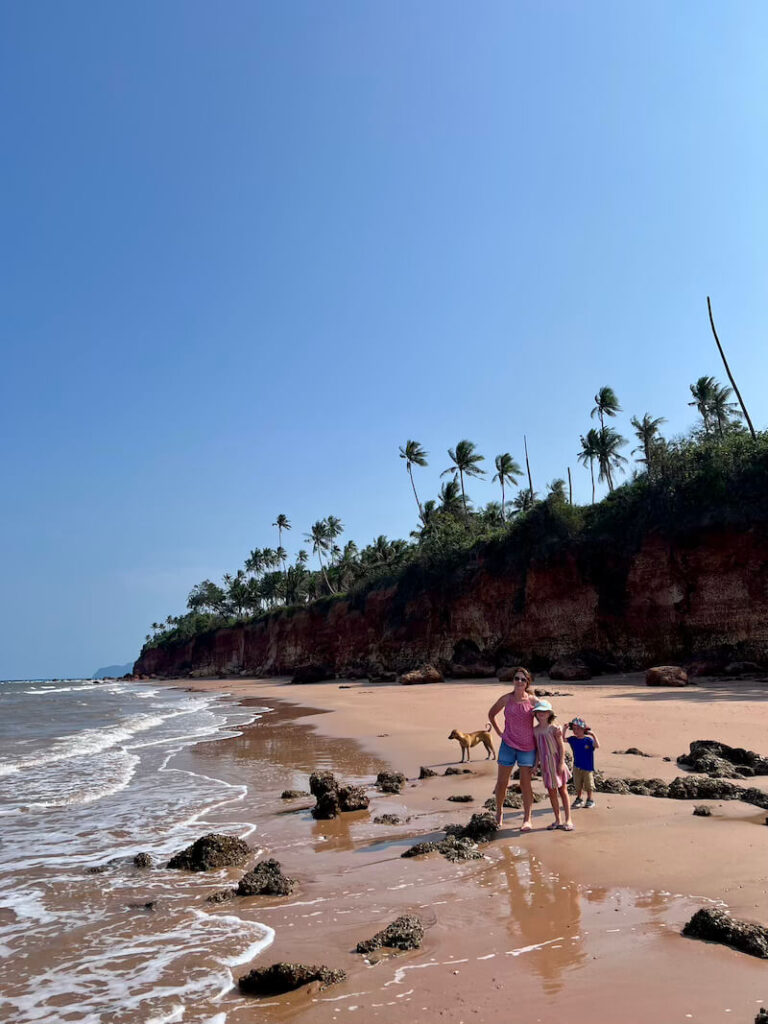
A small stray dog, as healthy and well-kept as a beloved pet, kept pace with us. He seemed confident he’d get a crab or two from the fisherman and wanted nothing more than company.
Walking slowly along this beach in the late-afternoon light was, for me, a true highlight of the trip. Thailand is rich with these unexpected treasures, places that reveal themselves with only the smallest effort. Even by Thai standards, the Bang Saphan coast seems to have more than its share.
Join us for the next installment of this 11-day journey as we move further south and explore Mu Ko Chumphon’s Pristine Islands and Thung Ka Bay’s Eerie Mangrove Trails.
If you’d like to skip ahead and start planning your own trip, take a look at our Complete 11-Day Thai Riviera Road Trip Itinerary.
Plan Your Trip to Bang Saphan and Koh Talu
Some links below are affiliate links. At no extra cost to you, we earn a small commission if you make a booking, which helps us keep our family on the road. Thank you for your support!
Getting There
We highly recommend renting a car to fully experience the Thai Riviera. The best sights, like remote beaches and national parks, require your own wheels.
Bang Saphan is approximately 5–6 hours south of Bangkok via Highway 4 (Phetkasem Road). The final leg follows the Royal Coast Road (RCR) off the main highway, which is the most scenic route.
Where to Stay
Accommodation options thins out compared to the northern stretches, but there are still plenty of options particularly around villages like Ban Krut. Koh Talu, of course, is the only option for the island.
Ban Krut
Sirarun Resort A beautiful, relaxing, and small beachfront resort known for impeccable service and great views. It offers modern rooms, an outdoor pool, and a private beach area.
Bayview Beach Resort We booked this one last minute on a Thai holiday weekend and found that it served perfectly well. Five little beds lined up in a room like something out of Snow White. Popular with Thai families.
Koh Talu Island
Koh Talu Resort The only show in town, but better than it needs to be given the lack of competition. Usually arranged as a package, which will include transport from the dedicated Koh Talu Pier.
When to Go
The best time to visit the Thai Riviera is during the dry and cool season, running from November to February. Temperatures are most comfortable (mid-20s °C), and the skies are reliably clear.
The hot season (March to May) brings high heat and humidity, while the rainy season (June to October) can bring brief, heavy afternoon showers. Unlike the Andaman coast, the Gulf of Thailand typically sees less severe monsoon weather, making travel possible year-round.
Phra Mahathat Chedi: Open daily from 8:00 a.m. to 4:30 p.m. Your best bet is to arrive right at 8:00 AM to avoid crowds and catch the best morning light, but if you’d like to see the interiors, you may want to delay by an hour.
Koh Talu Speedboats: Depart twice daily from the mainland at 10:00 a.m. and 2:00 p.m. Returning boats at 11:00 a.m. and 2:30 p.m.
Red Cliffs: Accessible all day, of course, but even more lovely when you can walk in the shade. Perfect any time after 3:00 p.p.
Booking/Tours
Because the Thai Riviera’s charm lies in its untouched, local character, this region is not defined by large package tours or all-inclusive resorts. Most of the core activities—exploring the temples, climbing the mountains, and swimming at the beaches—are done independently.
This post details our favorite experiences, but if you’re ready to book, we’ve done the rest of the work for you!
For our full daily schedule, detailed accommodation reviews (and affiliate links!), transportation breakdown, and suggested budgets, see our Thai Riviera Road Trip Itinerary & Booking Guide.