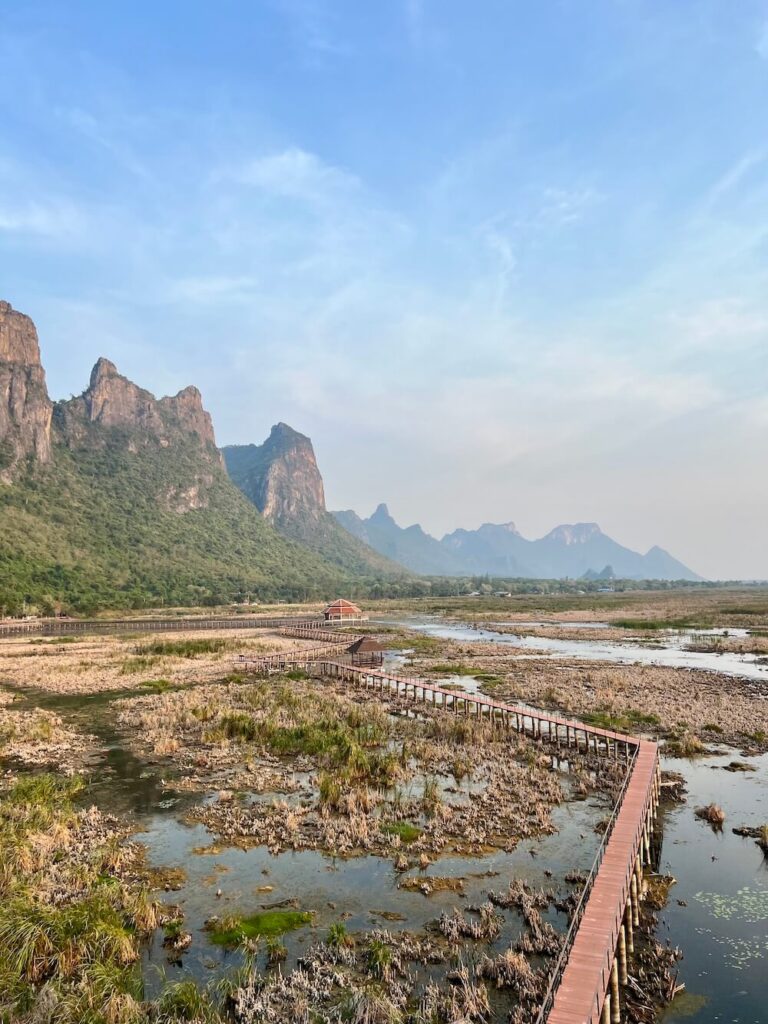
Our visit to Hup Pa Tat was part of a larger 9-day roadtrip across Northern Thailand. To see the full itinerary, visit Sukhothai Ruins to Thi Lor Su in 9 Days.
In 1979, a monk from the local Buddhist monastery scaled the limestone cliffs of the Kao Huai Sok mountains in western Uthai Thani province. At the summit, he looked down on something no other human being had ever seen. This valley had once been the heart of a massive cave until it collapsed some 10,000 years ago.
The catastrophic subsidence formed a massive sinkhole, a doline surrounded by 200 meters of vertical rock impassable by anything that couldn’t fly, climb, or float. Over the next five years, the same monk (who was surely developing a reputation at the monastery by this point) had dug and blasted a passage through the cliff walls, opening the Hup Pa Tat valley to the public.
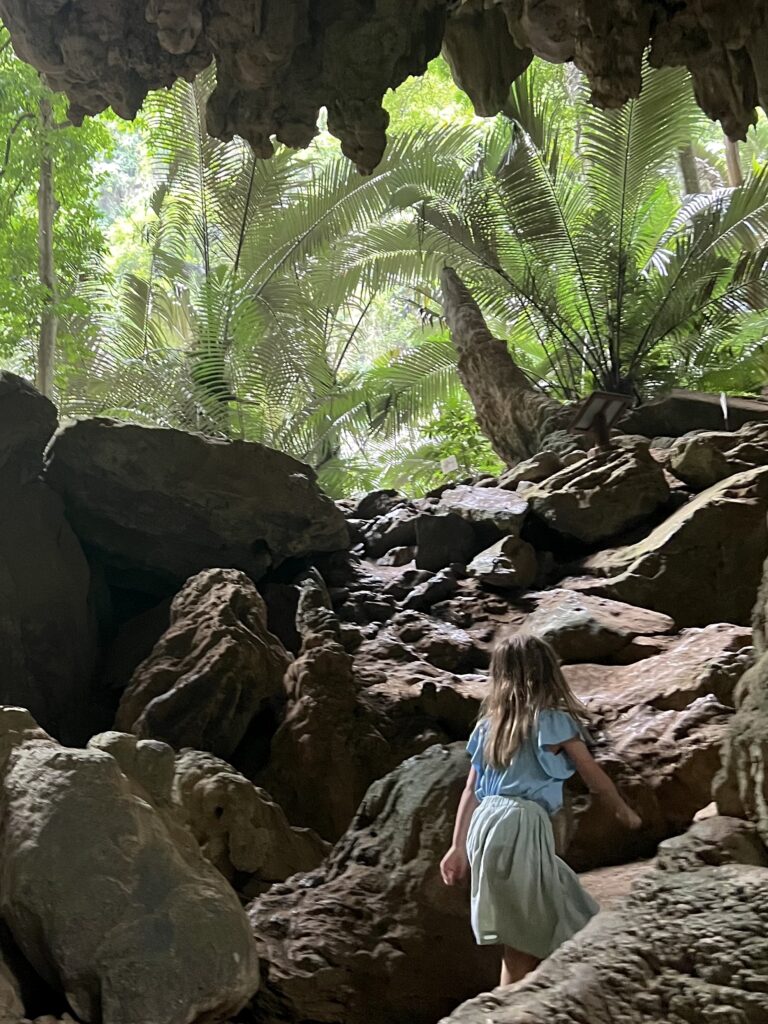
After paying national park fees and taking delivery of a powerful torch, visitors now walk that same tunnel to access the valley. Nothing excites the kids like getting a flashlight, by the way, and the park rangers searched the inventory to make sure we really had a proper spotlight. Never fails to boost their adrenaline. Walking up a (well-paved) jungle path, entering a long and dark tunnel, and emerging into a hidden jungle valley is also very potent kidnip.
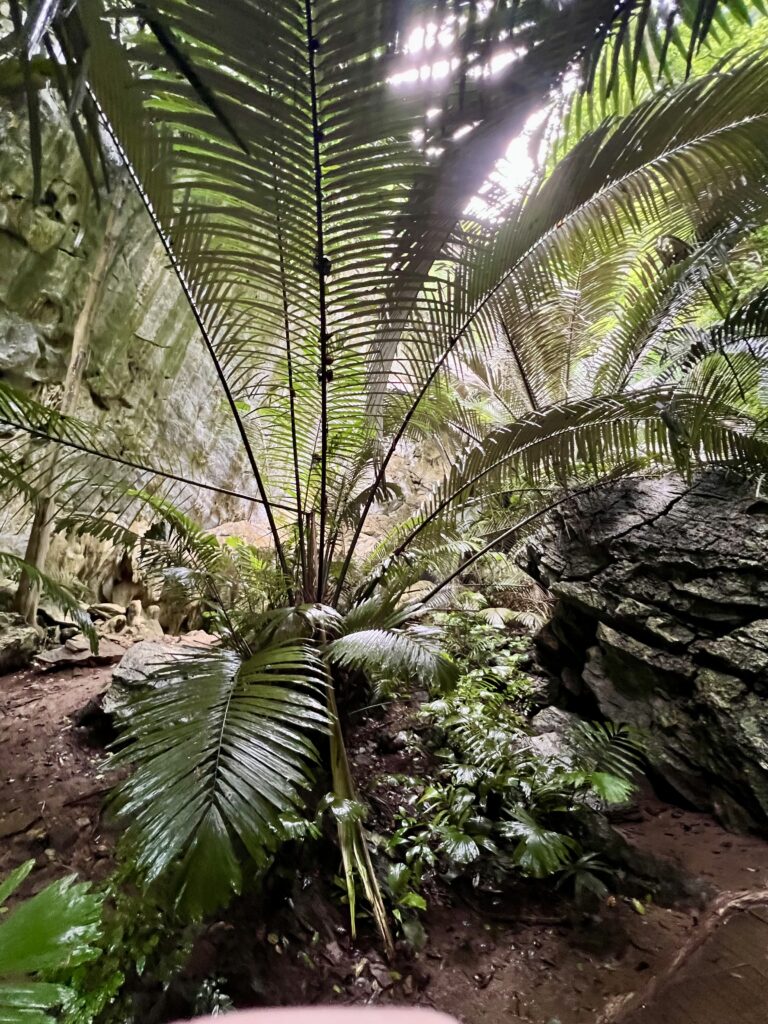
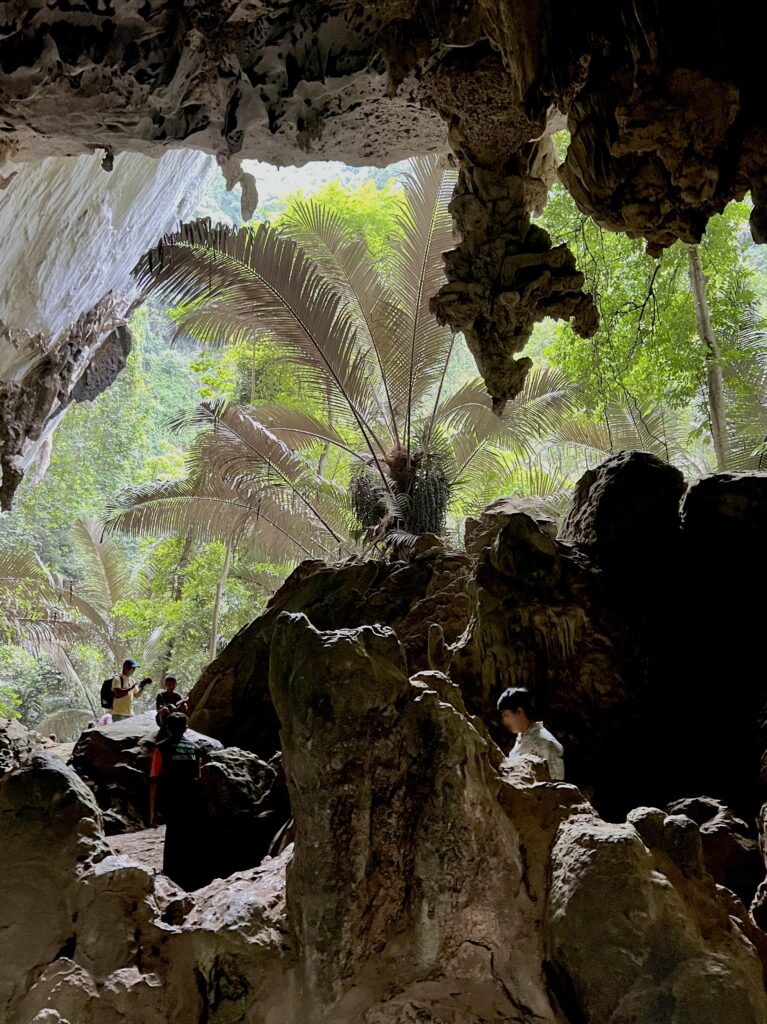
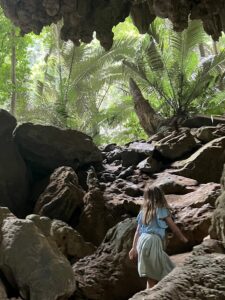
The path remerges into the light and then passes through a wide natural cave ringed with dozens of very precarious stalactites. They’re probably good for another 500 years, but we did not linger under them. It’s when you pass through this cave that you first see the massive arenga palms that inspire people to describe Hup Pa Tat as Thailand’s Jurassic Park. These colossal sugar palms are rare in the wild in Thailand, but hidden away inside the doline, a huge colony survives. In Thai, Hu Pa Tat means something along the lines of the “valley of the palm forest.”
Hup Pa Tat’s Shocking Pink Millipedes
We soon met another of the unique species native only to these hills, the fantastically named “shocking pink dragon millipede” or, for the scientifically inclined, Desmoxytes purpurosea. Only formally discovered in 2007, these toxic millipedes appear during the late rainy season (August to November). We were lucky enough to have a 10-year-old amateur naturalist to point them out and I think that despite their color, we might have missed them without his help. The kids soon learned the signs (look for shocking pinkness) and we were soon spotting dozens.
Comparisons to Jurassic Park might be a bit of salesmanship, but this Hup Pa Tat is well worth a visit. Geology and climate conspired to lock away a unique ecosystem in a remarkable setting. Velociraptors? Maybe not, though they wouldn’t be out of place among the mammoth arenga palms. While you might not find dinosaurs, if you’re lucky, you’ll see a few pink dragons.
Need to Know
Hup Pa Tat is a surprisingly popular national park, given its remoteness. It’s a little less than an hour away from Uthai Thani town, but otherwise there aren’t any large cities or even major roads nearby. I was surprised how many guesthouses and homestays were in the area, and even more surprised they were mostly fully booked even six weeks before our planned visit. What was this? A music festival? Biker gathering? Nope, so close to Thai school holidays, this can be a popular destination.
We chose instead to stay at the Uthai Heritage Hotel, which I highly recommend. Thailand is spoiled for exceptionally stylish hotels, even in areas not at all targeting foreign tourists. This hotel is a superb example of that.
Closer to the park, we liked the look of At the Mountain, but it doesn’t appear bookable from any of the sites. You’ll need to contact them through their social media page.
Plan Your Visit to Hu Pa Tat
Some links below are affiliate links. At no extra cost to you, we earn a small commission if you make a booking, which helps us keep our family on the road. Thank you for your support!
Getting There
The easiest way to access Hup Pa Tat is by private car or taxi/driver. It is located approximately 1 hour (60 km)northwest of Uthai Thani town. The roads are well-paved but remote.
From Bangkok: The drive from Bangkok takes approximately 3.5 to 4 hours (around 280 km). This makes it feasible as a long day trip, but an overnight stay in Uthai Thani is highly recommended.
Where to Stay
Due to its remote location, staying near Uthai Thani town is the best option for comfort and dining, though local guesthouses and homestays are available closer to the park. These can book up quickly, especially around Thai school holidays. We recommend staying in Uthai Thani and, if you do, there’s one choice that stands alone:
Uthai Heritage Hotel What a pleasant surprise! This unique boutique hotel was formerly the historic Uthai Withayalai School. Its colonial-style architecture retains original wooden beams and schoolhouse charm, offering families a nostalgic stay with modern amenities, including a lovely pool and central location. Absolutely loved it.
When to Go
The usual advice about the cool, dry season being the best time of the year to do outdoor activities holds, but the rainy season is the only time to be sure to see the pink millipedes. From August to October, your chances of sighting these unique creatures increase substantially. Heavy rain may make roads slick.
Booking/Tours
Hup Pa Tat is best visited independently by private car, as formal tours are rare. For transport, hire a taxi or driver from Uthai Thani town. Local guesthouses might offer transport packages, but book six weeks in advance during Thai holidays.
Day trips from Bangkok are available, however, and while we very much enjoyed the convenience of staying in Uthai Thani, this day-trip provides access not only to Hup Pa Tat, but also the Crystal Halls of Wat Chantharam.
Uthai Thani Day Trip with Floating Temple and Hup Pa Tat Visits
- Duration: 15 Hours.
- Includes: Round-trip transportation from Bangkok and all park fees.
- Vibe: Private tour.
- Flexibility: Free cancellation up to 24 hours before the trip starts.
- Cost: From THB 16,799 per person.