There’s an idealized version of coastal Thailand where sleepy fishing villages back onto broad, curved bays. The only sound: the gentle lapping of turquoise waters and the rustling needles of casuarina trees. For miles on end, the only footprints are your own.
You’ll hear that the authentic Thailand vanished decades ago, swallowed up by resorts and beachside condo developments. But what if I told you it still exists, quietly and unostentatiously, along the stretch of coast running from Pranburi to Chumphon.
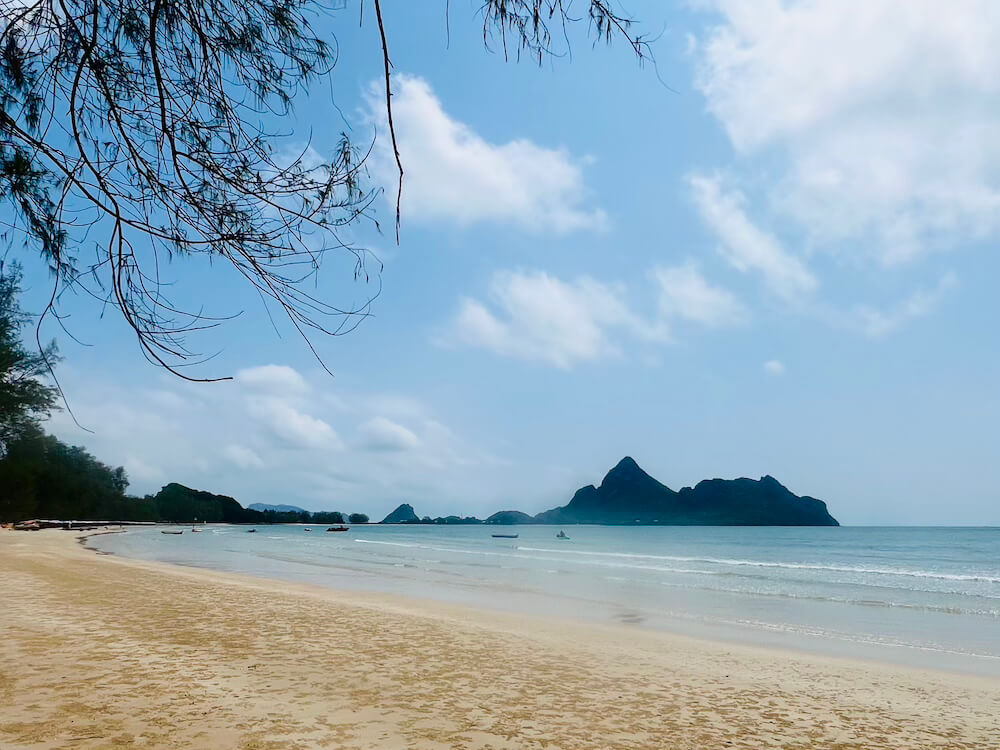
Known as the “Royal Coast” or, sometimes, the “Thai Riviera,” this unspoiled stretch of coast along the western side of the Gulf of Thailand must surely be the country’s best kept secret. Weekenders from Bangkok go no further than Hua Hin, which is lovely, but things only get better the further south you go. It’s almost like New Yorkers deciding to skip the Hamptons because Coney Island is right there.
If you want to step back in time, to a Thailand not yet defined by package tours and mega-resorts, I can’t recommend the Royal Coast strongly enough. You get endless beaches, dramatic temples, and genuinely local seaside towns, all for a fraction of what you’d pay in Thailand’s more famous coastal destinations. Below are a few of our favorite stops from recent trips, each offering its own take on the region’s quiet charm.
Pranburi: Your Gateway to the Thai Riviera
Even before we set off on our first road trip down the Royal Coast Road, we’d already identified Pranburi as one of our favorite escapes from Bangkok. Only thirty minutes past Hua Hin, and you can already feel the pace is less hurried, the atmosphere more serene.
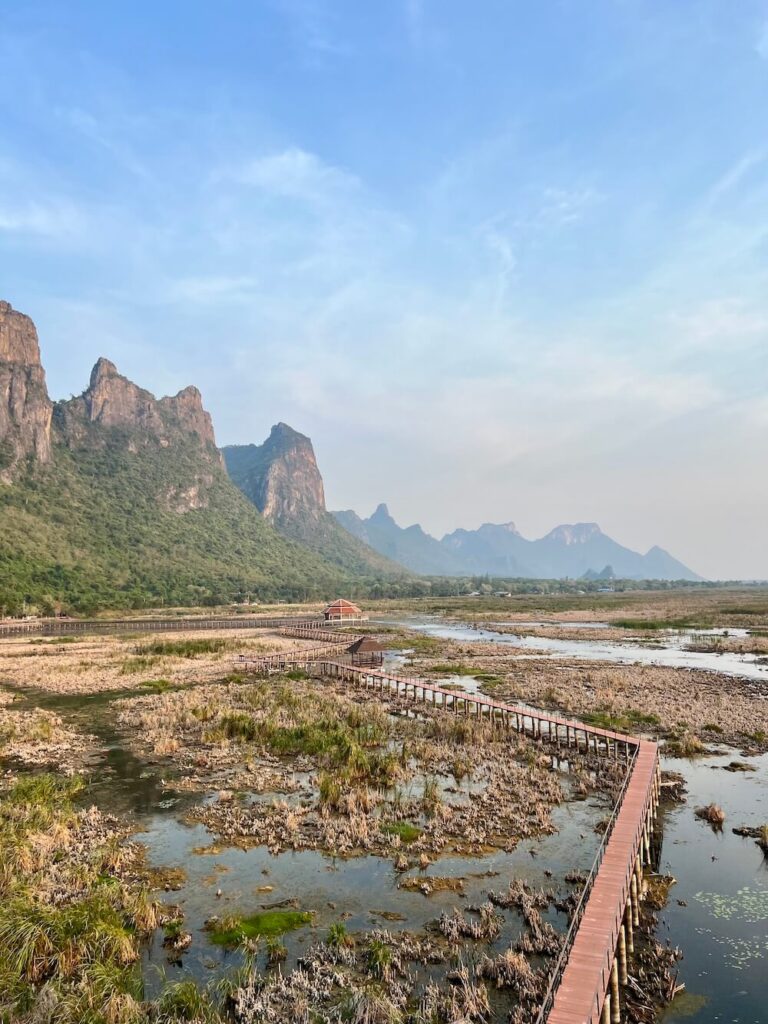
A series of long, arced bays stretch for nearly 25 kilometers from the mouth of the Pranburi River down to the village of Bang Pu, the jumping-off point for trips to Phraya Nakhon Cave. This coastal strip is blessed with affordable, beachfront guesthouses and is our usual base for exploration of Khao Sam Roi Yot and Kui Buri national parks. If you like fresh seafood as much as we do, don’t miss OX Seafood, right at the junction where the river meets the sea.
If it’s a Saturday night, we try to stay at the most southern parts of this stretch, where, from 5:00 – 11:30 p.m. the Long Lay Night Market sets up between Beach Road and the sea. Dozens of stalls sell the usual night market fare, along with a few surprises. The kids were morbidly fascinated by the whole pigs roasting over charcoal fires. Nothing unusual there, except the technique is to spin the poor thing as fast as possible, like little porcine propellers. For a nominal fee, you can have a plastic table and chairs set up anywhere on the beach and enjoy your food to the accompaniment of live music.
Prachuap Khiri Khan: The City of Three Bays
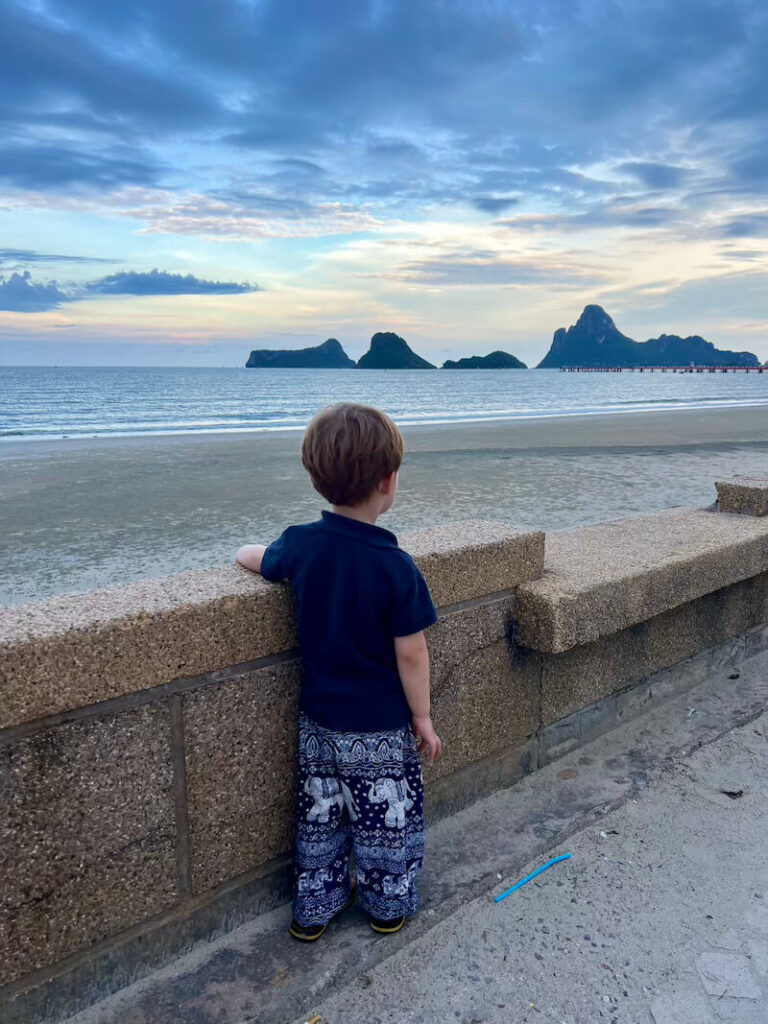
Prachuap Khiri Khan is blessed with perhaps the most naturally beautiful setting of any Thai city. The city’s main promenade follows the bend of Ao Prachuap. To the north lies Ao Noi, home to the Cave of the Reclining Buddha and, to the south, the perfect crescent of Ao Manao. “Ao,” in Thai, means “bay” and it’s from these three aos that Prachuap Khiri Khan derives its moniker, the “City of Three Bays.”
Dodging Macaques on the Climb up Wat Khao Chong Krachok
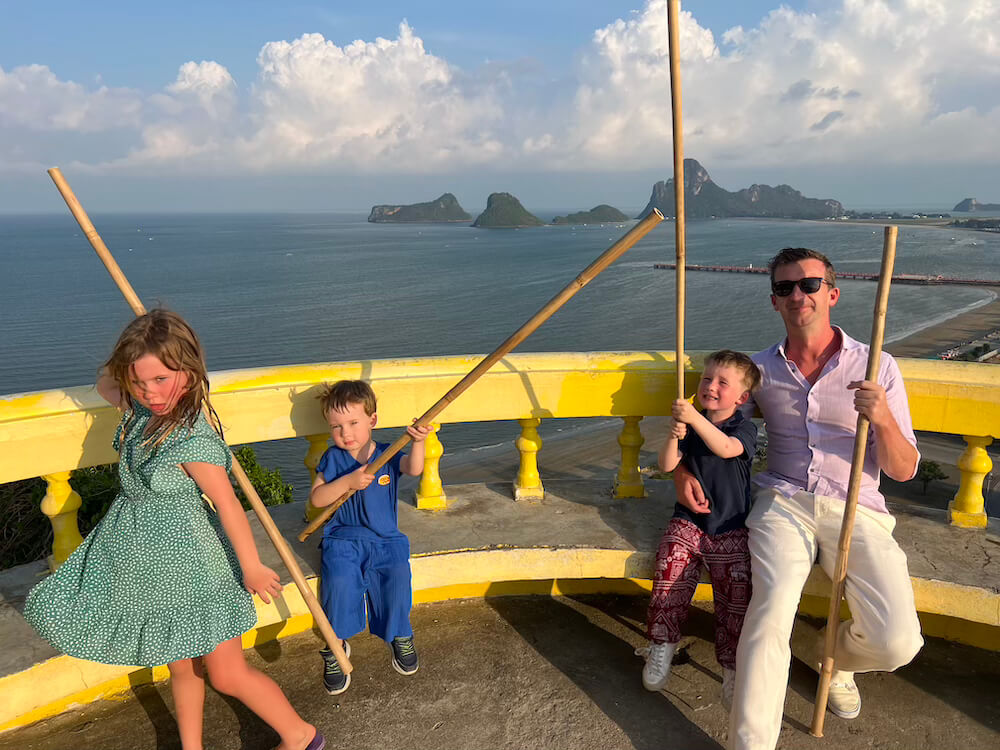
There’s no better place to view all three bays than from Wat Khao Chong Krachok, a temple perched on a dramatic spire of rock in the middle of the central bay. As you’d expect from a spire, the walk is short, but quite steep. Nearly 400 steps twist up the mountain, with banisters painted a vivid yellow to guide the path. And then there are the monkeys—so many monkeys.
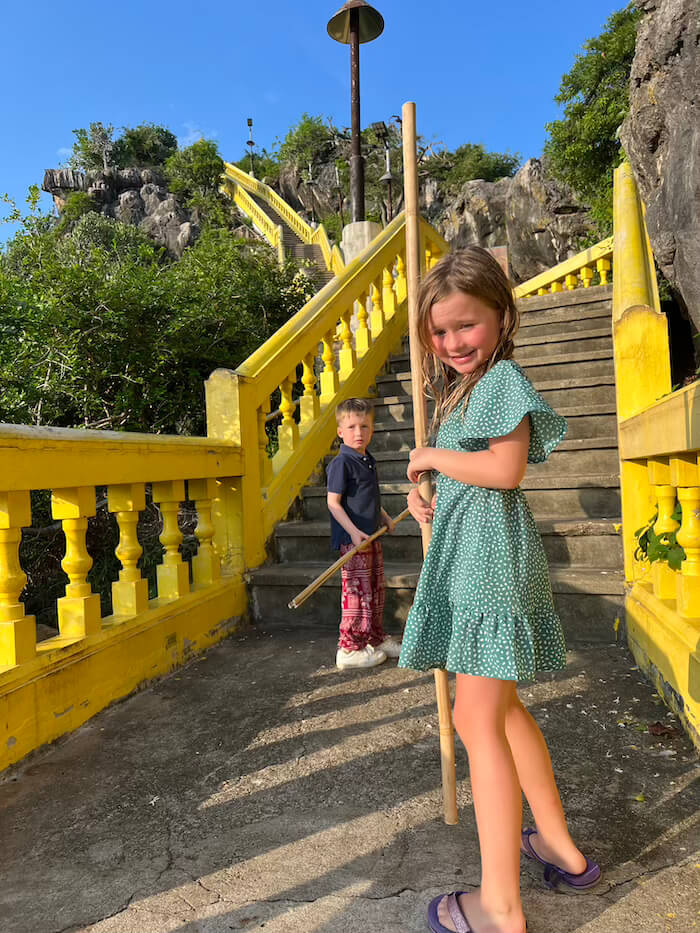
A large troop of long-tailed macaques lives on the mountain and you are as likely to find them in the middle of the path as anywhere. They’ll often approach in the hope of a handout, so the custodian hands each visitor a sturdy stick for defense. To give one of our kids a stick is like giving them a bomb with a very long fuse: there’s no doubt it will eventually hurt someone, and until then, it just makes everyone very nervous.
We reached the top to find the gate to the wat compound locked. No matter, the views alone justified the climb and we had earned those. In the early evening light, the three bays spread beneath us, the waters of the Gulf of Thailand turning a soft pink towards the horizon. Lights were beginning to flicker on in Prachuap. Dinner waited below. For the macaques, including the fattest specimen I had ever seen, one last chance of a meal. Like hired muscle called in to break a strike, the kids tightened grips on their cudgels, and we began the climb down.
The Hilltop Cave of the Reclining Buddha, Prachuap Khiri Khan
Aptly named Ao Noi (‘Little Bay’) is the smallest and the quietest of Prachuap’s bays. At low tide, the water leaves fishing boats marooned on the mud flats. All else is still but for a small flow of visitors to Wat Ao Noi, a lovely temple built from golden teak and protected by two impressive nagas. It’s from here that you begin the short walk to Tham Phra Non (Reclining Buddha Cave).
The walk to the cave is again short, but steep. Hastened by Charlie’s decision to ride my shoulders, we were up the 265 steps in not much more than 10 minutes. Do be sure to stop on the way up and enjoy the views over the bay. The path is lined with flowering plants and there are benches and pavilions to accommodate as many pauses as you care to take.
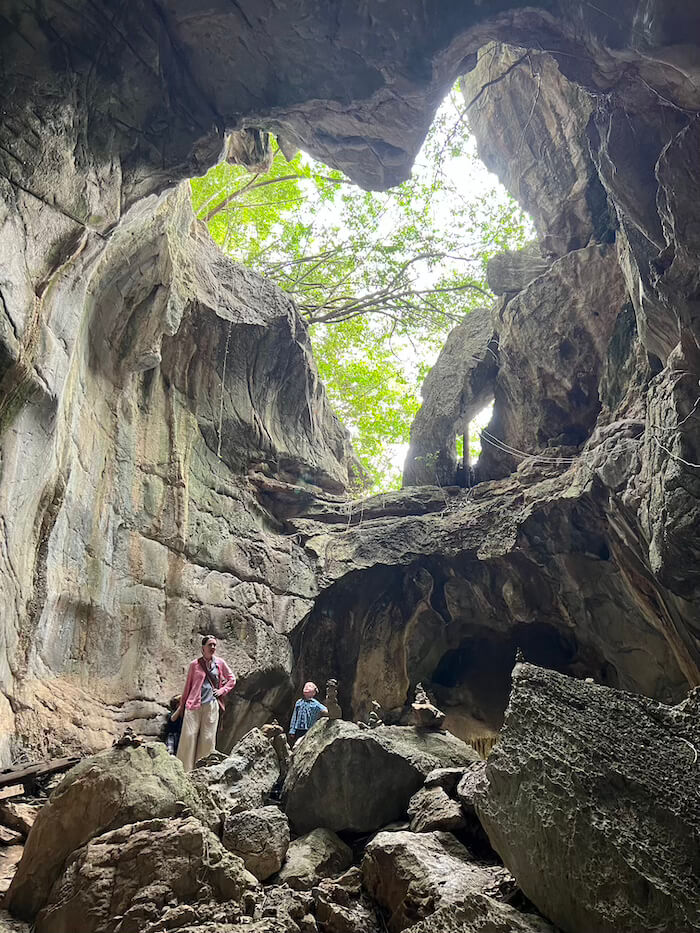
The descent into the cave itself is a short scramble, but the reward is entering the pleasantly cool, silent chamber and encountering the first Buddha image. Light from our flashlights glinted off the 20 meters of gilding covering the image, which scholars estimate to be at least 300 and maybe even 500 years old.
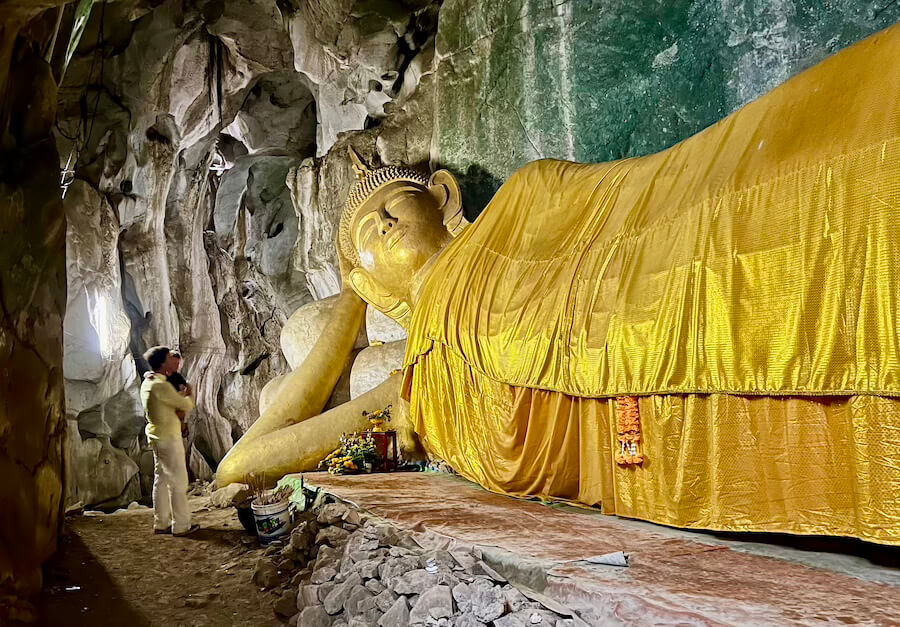
Charlie, who had little reason to complain about anything, was a little frightened. He clung tightly to my neck as we walked past en route to the second, smaller image. Unusually for a Buddha image, which are almost exclusively depicted as lying on the right side, this one lies on its left. Whether it was this artistic anomaly or just the end of a long day, Charlie didn’t relax his grip until we reached the bottom of the mountain.
Ao Manao: Prachuap’s Perfect Crescent Beach
Ao Manao’s allure is instantly recognizable: its gentle curve of sand framed at both ends by steep limestone outcrops emerging from dense jungle. Looking north to Khao Lom Muak’s lone tower of rock, you might even imagine you’ve found the Thai Riviera’s answer to Rio’s Sugarloaf Mountain. Ao Manao (which means “lime bay”) is far less crowded though; outside of weekends, this stretch of white sand may be virtually empty.
Ao Manao is located on a Royal Thai Air Force Base, which means you’ll access the beach road via a security checkpoint. I was nervous at first approach, having once been refused access to Royal Thai Marine-controlled Toey Ngam beach in Rayong. Not a bit of that here, though. Each visit, smiling airmen have waved us straight through. Your confidence will flag again as you find yourself motoring across a military runway, but rest assured, this is the right path.
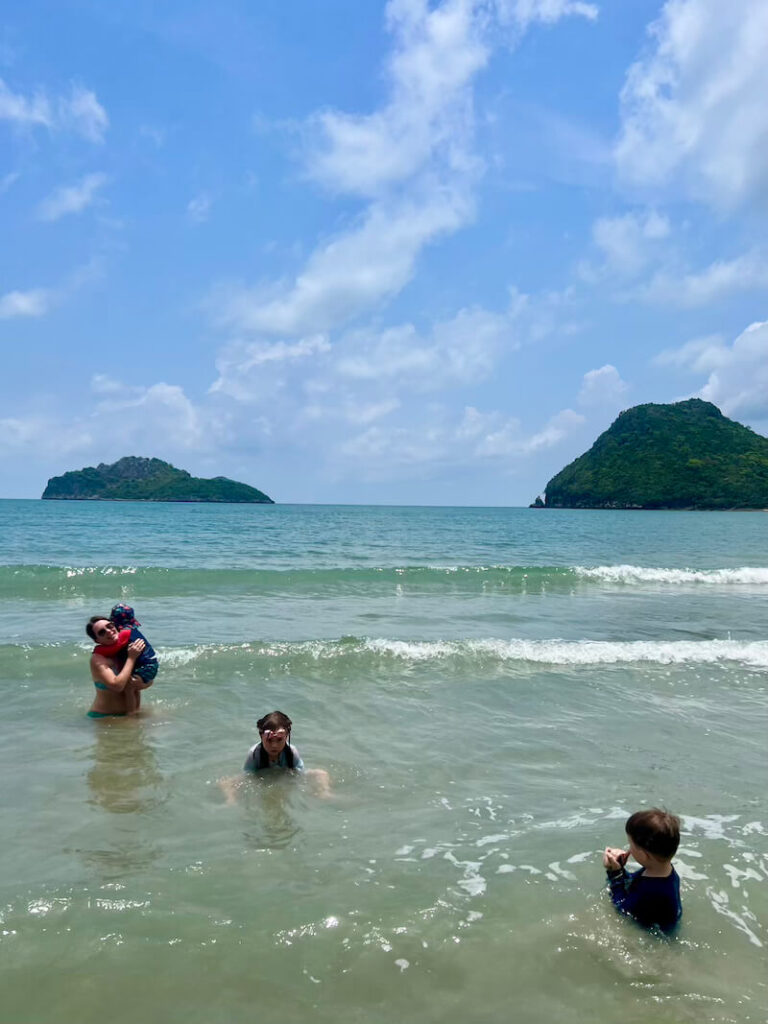
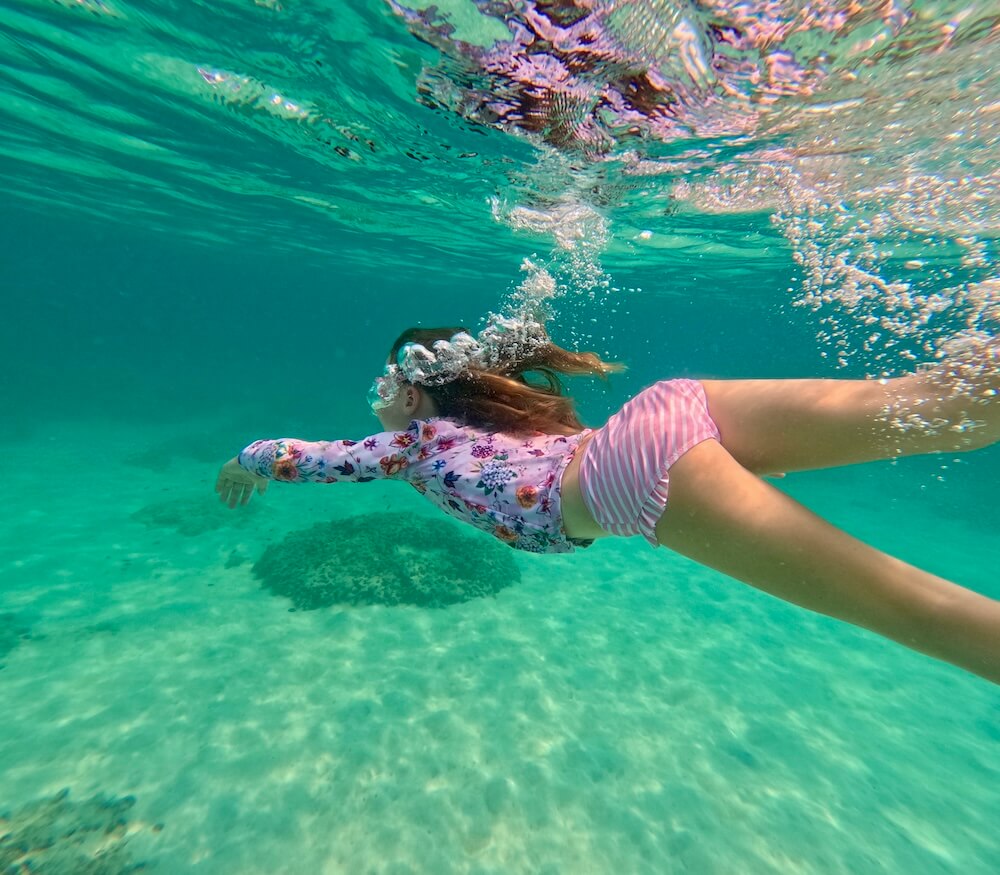
With warm, shallow water with no significant drop off, the bay is perfect for small kids. The only complaint might be that at low tide it’s almost too shallow. The waterline recedes far from the shade of the casuarina trees. Before you can get much more than thigh deep, you’ve left the white sand behind and are walking in the bay’s silty mud bottom. If that’s a concern, check the tide charts and plan accordingly.
Otherwise, this is just a very peaceful, very local way to spend a morning or an afternoon. We’d recommend setting up south of the cluster of beachside restaurants and umbrellas. The crowds (such as they are) are thinner, the sand is better, and you can doze off among the roots of the sea pines knowing that the kids risk nothing worse than a sunburn.
Plan Your Trip to Pranburi and Prachuap Khiri Khan
Some links below are affiliate links. At no extra cost to you, we earn a small commission if you make a booking, which helps us keep our family on the road. Thank you for your support!
Getting There
We highly recommend renting a car to fully experience the Thai Riviera. The best sights, like remote beaches and national parks, require your own wheels.
Driving is easy, as the main highway south (Route 4) is modern and well-maintained. From Bangkok, allow around 3.5 hours to reach Pranburi and 4.5 hours to reach Prachuap Khiri Khan.
Where to Stay
While by no means overcrowded, the stretch of coast from Pranburi to Prachuap offers plenty of lodging options for all budgets. Here are a few of the places we’ve stayed:
Pranburi
Sheraton Hua Hin Pranburi Villa Secluded, high-end tranquility defined. Relax in your private pool villa south of Hua Hin, perfect for families seeking quiet luxury and deep relaxation after a safari. Pricey, and nearly worth it.
Namaste Resort Simple, charming, and a true local gem. This budget-friendly resort offers personalized attention and invaluable local expertise for the adventurous, down-to-earth traveler.
Prachuap Khiri Khan
Rai Lung Tai Homestay Tucked beside a tranquil canal near Ao Noi, this homestay offers an authentic, quiet escape. Exceptional hosts and a beautiful garden setting. They provide free bikes—the perfect way to explore the neighborhood. Includes a self-catering kitchen.
Coco Pina Set further back from the coast, this is a lovely little resort. We booked a small, modern apartment with two bedrooms and made very good use of one of the two pools that serve the family-size accommodations.
When to Go
As elsewhere in Thailand, the best time to visit Mu Ko Chumphon is during the dry and cool season, running from November to February.
The hot season (March to May) brings high heat and humidity, while the rainy season (June to October) can bring brief, heavy afternoon showers. Unlike the Andaman coast, the Gulf of Thailand typically sees less severe monsoon weather, making travel possible year-round.
Ao Manao Beach: Since the beach is on an Air Force Base, access is limited. Plan to visit between 8:00 AM and 6:00 p.m. Weekday visits guarantee smaller crowds.
Wat Khao Chong Krachok: The climb is best tackled early in the morning or late afternoon to avoid the heat. The temple gate at the summit often closes around 5:00 p.m., so plan your descent accordingly.
The Reclining Buddha Cave: Typically closes with the rest of the temple grounds around 5:00 p.m., though the way may remain open later.
Long Lay Night Market (Pranburi): This market only runs on Saturday nights from roughly 5:00 p.m. to 11:30 p.m..
Booking/Tours
Because the Thai Riviera’s charm lies in its untouched, local character, this region is not defined by large package tours or all-inclusive resorts. Most of the core activities—exploring the temples, climbing the mountains, and swimming at the beaches—are done independently.
This post details our favorite experiences, but if you’re ready to book, we’ve done the rest of the work for you!
For our full daily schedule, detailed accommodation reviews (and affiliate links!), transportation breakdown, and suggested budgets, see our Thai Riviera Road Trip Itinerary & Booking Guide.