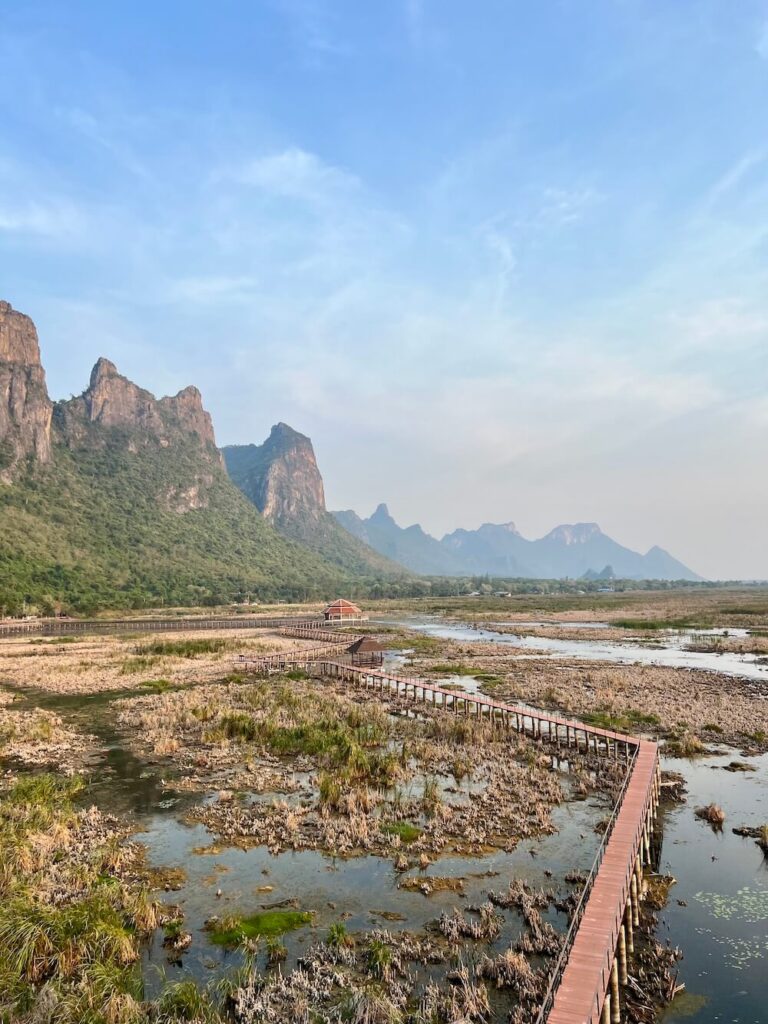
From Chumphon, we drive south along the Isthmus of Kra. We cut east across the river flats of Surat Thani, and climb into the coastal mountains of Nakhon Si Thammarat. The final stretch into Khanom is a rewarding detour: a quiet, well-paved road flanked by karst hills which leads to a secluded coast. It feels like you are well past the ‘Gateway’ and have fully entered the green, mountainous heart of Southern Thailand.
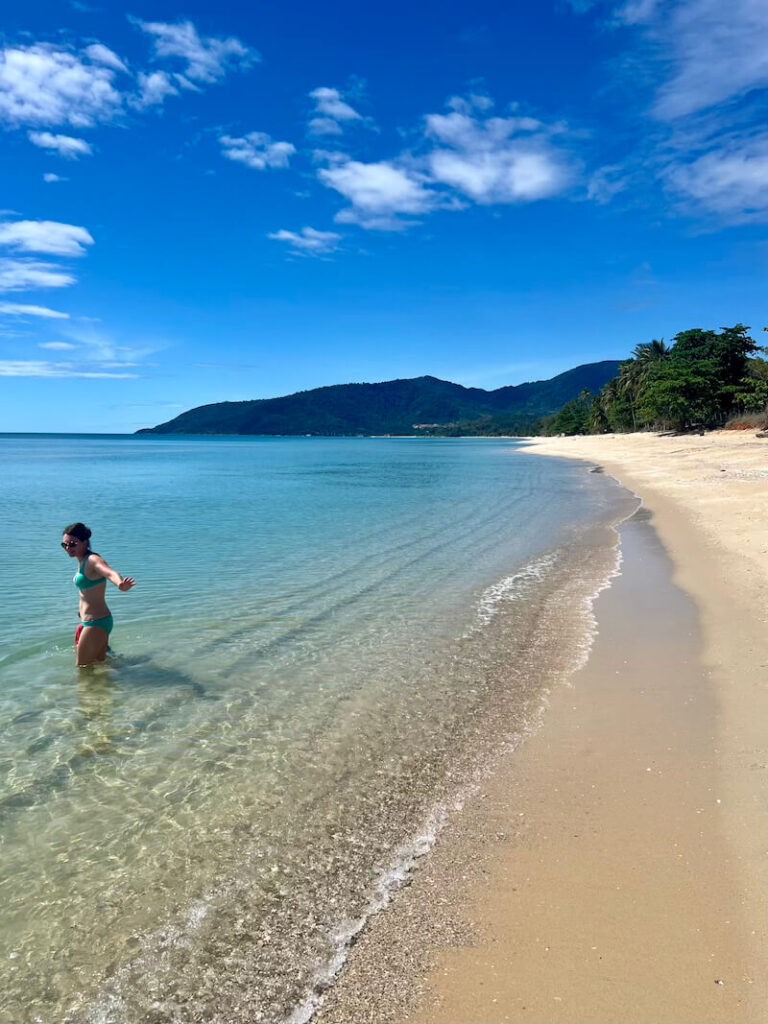
This is Khanom, a long stretch of beach nestled into the mountain coast. A short way across the water are the well-traveled islands of Koh Samui, even more popular since The White Lotus. Here in Khanom, you lose nothing of Koh Samui’s natural beauty. The water is as lovely and the beaches as perfect; you just don’t have to share it with anyone.
This is The Final Leg of Our Southern Roadtrip! Catch up on Our Journey:
- Part I: Beyond Hua Hin: A Traveler’s Guide to the Unspoiled Thai Riviera (Pranburi & Prachuap Khiri Khan)
- Part II: Gems of the Royal Coast: Bang Saphan, Koh Talu, and the Stunning Red Cliffs
- Part III: The Coast is Clear: Guide to Mu Ko Chumphon’s Pristine Islands and Thung Ka Bay’s Eerie Mangrove Trails
Lazing at the Beach: Our Choice on the Pink Dolphin Tours
Beyond the beaches, Khanom is most famous for the 50-60 Indo-Pacific humpback dolphins that live in the area. These “pink dolphins” are an important contributor to the tourist industry. If you wish to join, you can easily arrange a tour from Laem Prathab Pier. While this is the kind of adventure we would be completely up for, a French family who had just finished a tour warned us off it.
They told us that in the eagerness to deliver close-up sightings for the customers, the boats sometimes swarm the dolphins from multiple sides. Behavior that, they suggested, must surely stress the animals. If you go, it might just require a few extra questions to ensure you hire a responsible operator.
In any event, the kids had already found their own pod of pink aquatic animals: a group of German children their ages hanging about the hotel pool. Other than the friendly family running Tao Daeng Pizzeria in Prachuap, our three hadn’t seen many their own age all week. We took full advantage of this opportunity to resocialize them. They often report that playing with other kids was the highlight of the day, so we encourage it whenever we can.
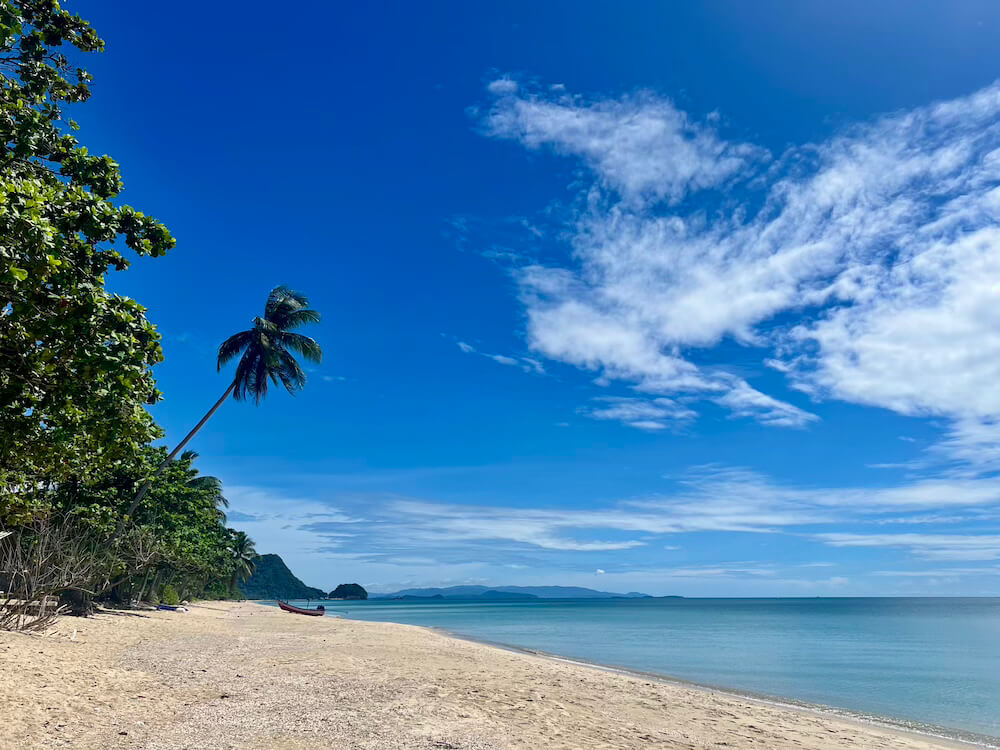
Khanom genuinely has very good beaches. We stayed at (and highly recommend) Le Petit St Tropez, but there are plenty of great options along the coast. The same is true for food and drink: fresh pasta at the hotel, or cheap drinks and basic Thai at the local kitchen next door. You don’t really need more options than that.
Discovering the Shadow Puppets of Nakhon Si Thammarat
With great reluctance, we said goodbye to Khanom. As often happens at these farewells, it was a clear, perfect morning and the water looked better than ever. From here, the trip turns slightly inland, and our next destination is the ancient walled city of Nakhon Si Thammarat.
Nakhon Si Thammarat traces its origins to the 2nd century, when it formed the heart of the Tambralinga Kingdom. This recently rediscovered kingdom once controlled territory along the Malay Peninsula and extended north to Chumphon. Though the city eventually came under the control of the Tai Sukhothai kingdom, it maintained distinct customs, culture, and traditions.
One of these, the art of Nang Talung Shadow Puppetry, had brought us here today. Nakhon Si Thammarat is home to the excellent Suchart Subsin House of Shadow Puppetry. Shadow play has a long history throughout the region, but Nakhon Si Thammarat has a special legacy: it was a center where master puppeteers, the Nai Nang, resided, trained apprentices, and perfected their craft.
Suchart Subsin was one of Thailand’s most skilled shadow puppet performers and makers. After he died in 2015, his family continued to run the museum, maintain the collection, create new puppets in the workshop, and conduct the live performances for visitors.
Whether the kids will respond to niche museums like these is always up for debate (whether we’ll go is not). But the expressiveness of the puppets, their variety, and the liveliness of the interpretations and demonstrations ensured this was a success. Lines like, “use a knife, take off meat and fat, then use acetic acid…,” are a good hook. These guys have hosted audiences aged three to seven before.
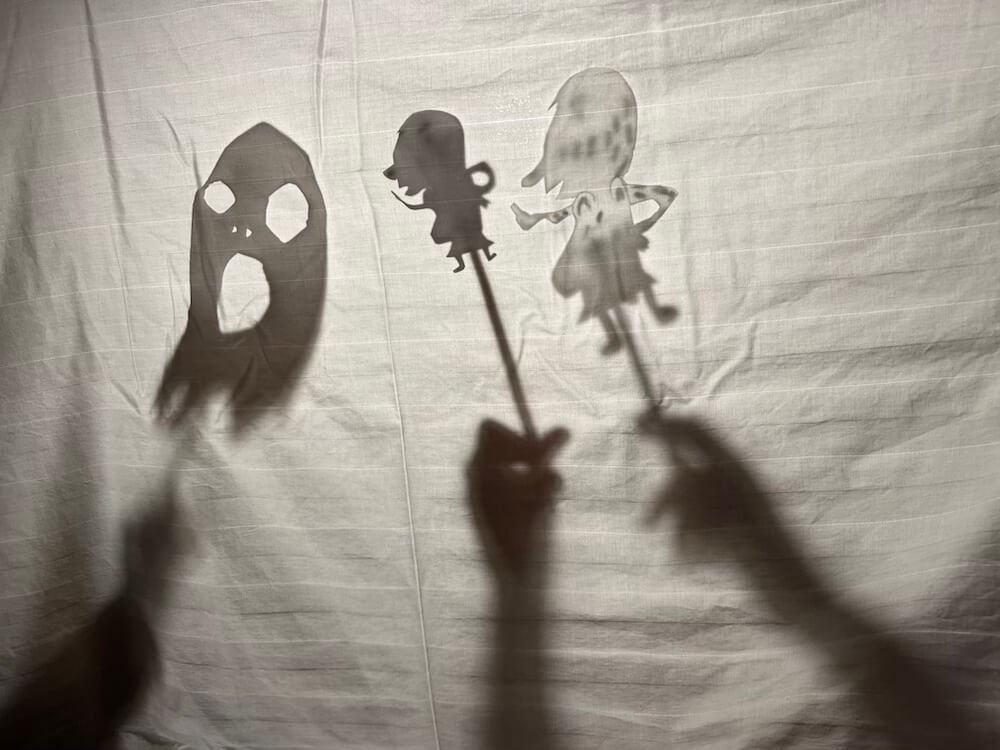
Several weeks after we’d returned to Bangkok, Isobel, Henry, and Charlie staged their own shadow puppet show. Using a fridge magnet from the museum as their model, they sketched, cut out, and painted their puppets. Their script was more “Punch and Judy” than Ramayana, but we were delighted to see Nang Talung gain three new practitioners.
Celebrating a Southern Songkran, Ready or Not
At a stoplight, two trucks pull up next to each other. They are similarly armed: a full barrel of water, up to ten combatants wielding water guns, buckets, or just bare hands. The fight begins: a drenching eruption of splash and spray which continues without rest until the light changes and each drives on to the next battle.
This is Songkran, the Buddhist purification festival that has grown into a nationwide water fight. As we drive south from Nakhon Si Thammarat, we are happily caught in the crossfire. In every small village, locals line the roadside, eager to soak passing cars. The only disappointment is when anyone holds back, worried whether it’s ok to splash the foreigners—it always is.
Even the small villages disappear as we drive deeper south towards Phatthalung. Broad stretches of rice paddies and palm oil plantations pass by. The GPS urges me off the main road; I ignore it at first, then finally relent and turn off onto a minor road. The “road” grows ever narrower, crossing a small canal and running along a dike between two newly planted rice fields. Only when it devolves into a motorbike track do I decide to turn back. Birdsong and warm evening light flood the car through rolled-down windows as Kat directs my awkward reversal from behind the car. Just outside Phatthalung, we are, literally and figuratively, off the tourist track.
Crossing the Ekachai Bridge over Thale Sap Songkhla
Back on the proper route, we reach Ekachai Bridge just as the sun sets over Songkhla Lake and Thale Noi, the still water catching the day’s last light. It’s easy to believe this is Thailand’s longest drive over water as you cross the great mirror of the country’s largest lake on this ribbon of concrete. Herds of half-submerged water buffalo are the most striking features in the landscape.
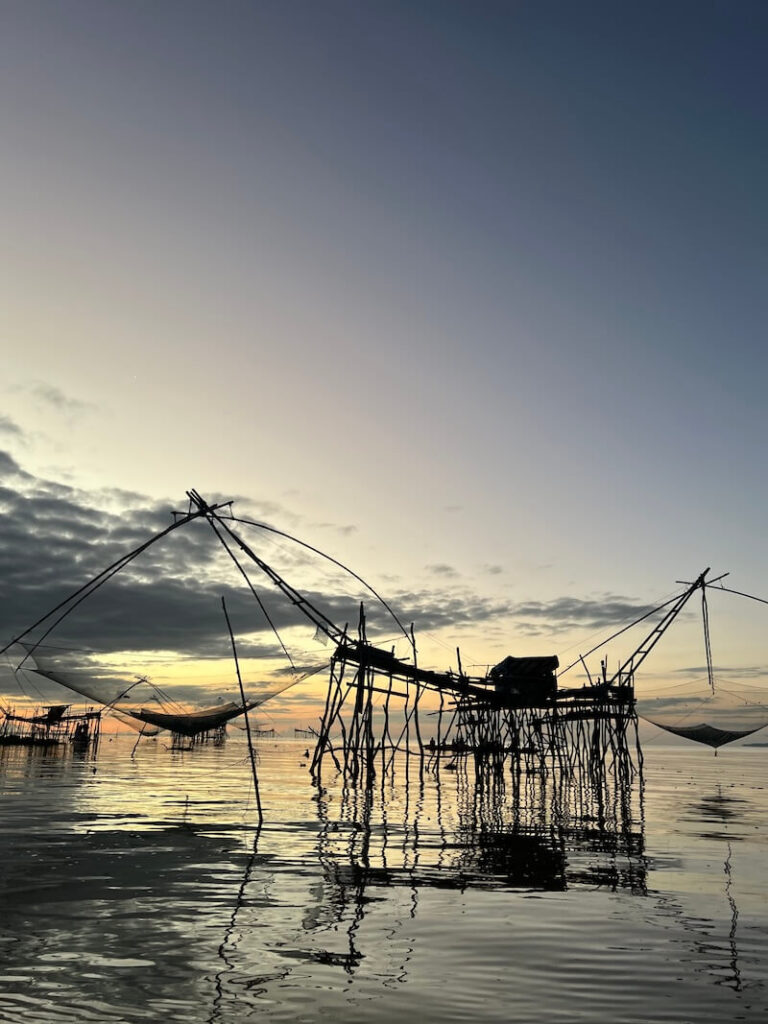
We arrive at Sripakpra Boutique Resort at dusk and see the hotel takes full advantage of its lakeside location. The rooms are suspended over the water, and from the restaurant and the pool, the giant lifting nets (the Yor Yak) for which the region is famous are reflected in the lake. The intimate connection to the water makes this an entirely appropriate place to continue our Songkran celebration, but first, to bed early for a pre-dawn wake-up call.
Sunrise Boat Ride on the Thale Noi
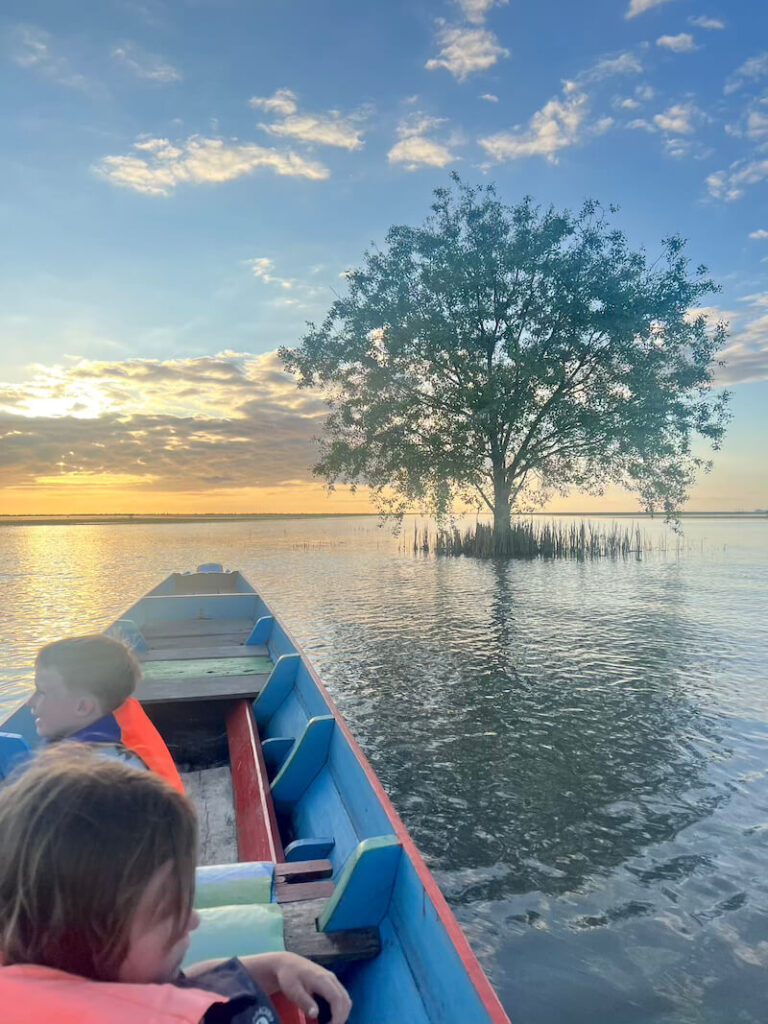
The early morning sun transforms the inland sea into liquid metal; molten silver and gold churn and mix around our bow as we motor straight toward the rising light. The land lies so low and the water so still that it feels as if we could drive straight into the sun itself, if only we could reach it before it slipped free of the horizon.
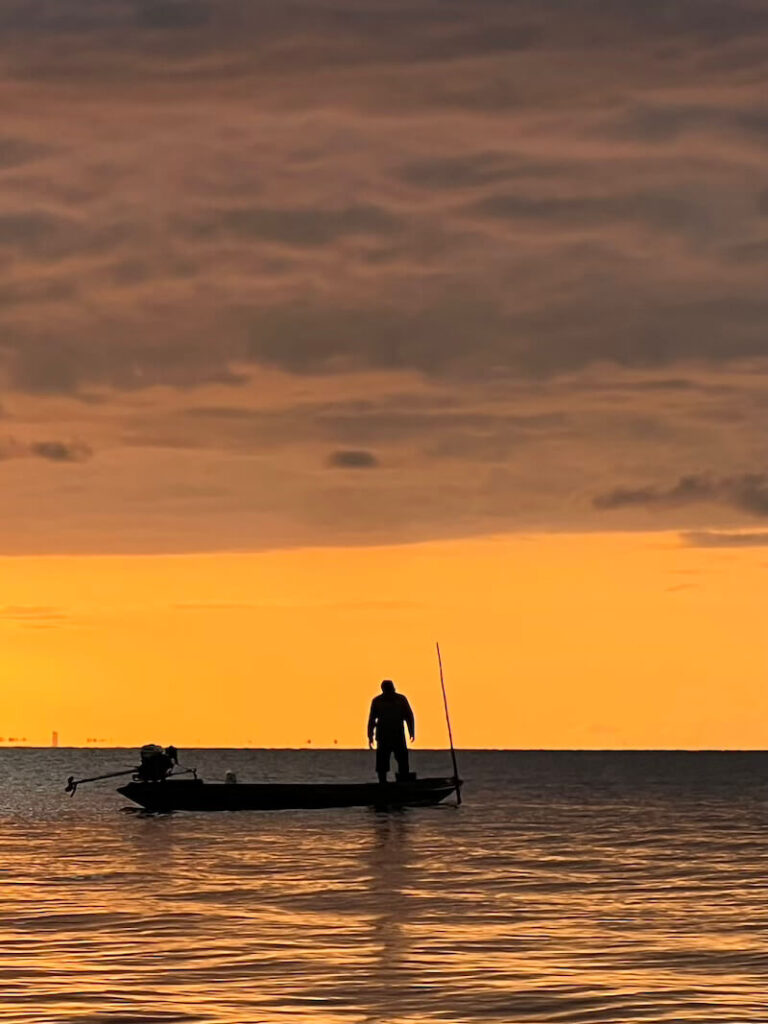
I have never seen morning light work such wonders on water. The fishing traps, already remarkable machines, become, in this glow, the silhouettes of temples; the fishermen, like monks, performing ritual devotions to a mechanical god. Even a lone tree, standing against the water, assumes an aspect of the divine.
As the sun rises further, the supernatural recedes and the physical world reasserts itself. Buffalo wade through water up to their necks, tearing at great clumps of submerged weed as they pass. Gulls and shorebirds perch on the fishing cranes, hoping to share in the catch that the fisherman draws from the lake with his ritual, yet entirely secular, labor.
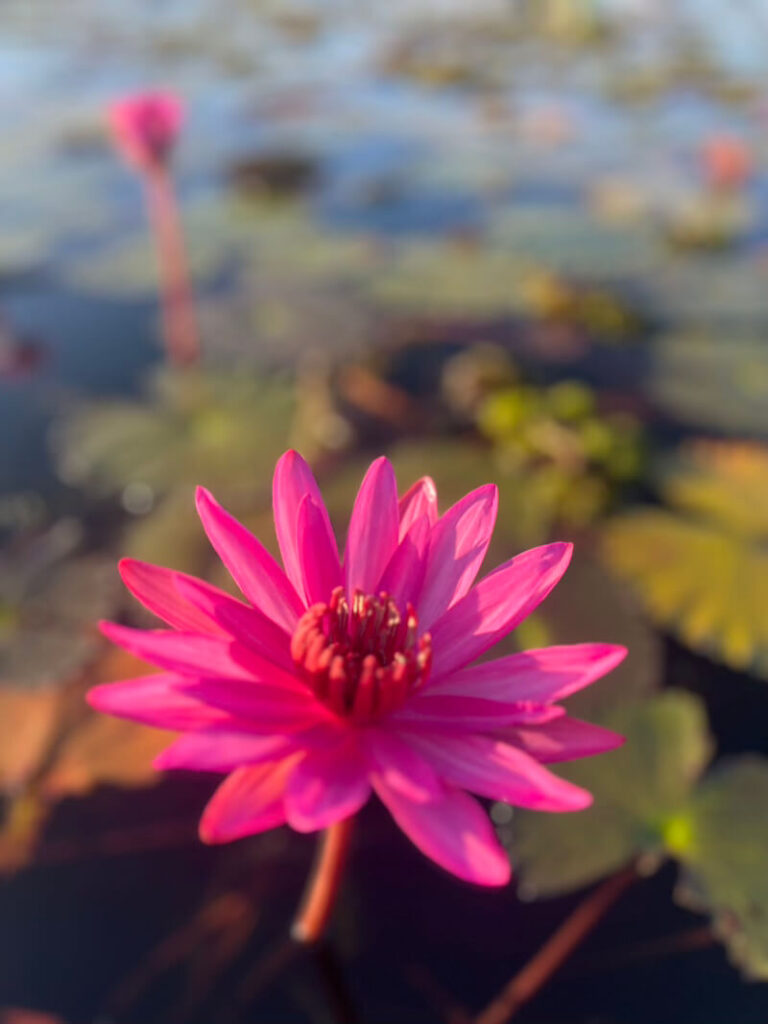
The boat crosses under the Ekachai Bridge, and we enter Thale Noi proper. Floating fields of red and pink water lilies are in bloom, and our shallow-draft boat glides easily through them. Pink and red flowers open to the morning sun pass on either side of us as we gently drift along. The boat driver picks a few blooms and presents Isobel with a beautiful bouquet of Thale Noi lilies. A few pink flowers in hand, we leave the fields behind and head back to the dock.
Plan Your Trip to Nakhon Si Thammarat
Some links below are affiliate links. At no extra cost to you, we earn a small commission if you make a booking, which helps us keep our family on the road. Thank you for your support!
Getting There
We drove from Bangkok, but if you’re working with less time, fly. Budget carriers frequently run cheap, fast services (about 1.5 hours) from Bangkok’s Don Mueang (DMK) to Nakhon Si Thammarat (NST). It’s easy, but you’ll need local transport upon arrival.
If you have the time and don’t want to drive, book a sleeper train from Bangkok. It’s slower (10-14 hours) but gives kids an unforgettable overnight adventure and saves on one night of accommodation. Book the lower bunks for stability.
If you plan to explore the coast or Khao Luang National Park, car rental is essential. Local taxis/minivans are fine for the city, but regional exploration demands your own wheels.
Where to Stay
While by no means overcrowded, the stretch of coast from Pranburi to Prachuap offers plenty of lodging options for all budgets. Here are a few of the places we’ve stayed:
Khanom
Le Petit St Tropez offers a slice of beachfront bliss. With its clean style, pristine pool, and outstanding European-Thai food, we absolutely loved this quiet luxury escape on the Thai Riviera. It’s the perfect recharge.
Thale Noi/Patthalung
Sripakpra Boutique Resort Phatthalung A sprawling complex that can feel slightly chaotic, but the views over the lake can’t be beat. For viewing the giant Yor Yai nets and sunrise water buffalo without a long commute, this is a great choice.
When to Go
As elsewhere in Thailand, the best time to visit Mu Ko Chumphon is during the dry and cool season, running from November to February. The closer you get to the equator, however, the less certain of this you can be.
The Gulf Exception: Unlike the Andaman coast (west coast of Thailand), the Gulf of Thailand typically sees less severe monsoon weather, making travel possible year-round. The main rainy season runs from June to October, bringing brief, heavy afternoon showers, but tours usually still run. Our last visit was in April and we had no weather complaints at all.
The Suchart Subsin Shadow Puppet Museum (Ban Nang Talung Suchart) is generally open daily from 9:00 AM to 5:00 PM. If you want to e sure of seeing a puppet show (and you should) call ahead (or have your hotel call for you) to ensure a performance.
Sunrise on Thale Noi: The Pak Pra Boat Tour An absolute highlight of this stretch. Easiest to book through the Sripakpra Boutique Resort, which has its own dedicated pier. Boats can depart anytime, but you’d be mad to miss the sunrise over the lake, which is sublime. Boats are around THB 1,200.
Booking/Tours
Because the Thai Riviera’s charm lies in its untouched, local character, this region is not defined by large package tours or all-inclusive resorts. Most of the core activities—exploring the temples, climbing the mountains, and swimming at the beaches—are done independently.
This post details our favorite experiences, but if you’re ready to book, we’ve done the rest of the work for you!
For our full daily schedule, detailed accommodation reviews (and affiliate links!), transportation breakdown, and suggested budgets, see our Thai Riviera Road Trip Itinerary & Booking Guide.